Now, scientists say, life on Earth could be in trouble again, with some even saying we could be entering a sixth mass extinction.
No credible scientist disputes that we are in a crisis regarding the speed at which nature is being destroyed.
But could we really be on track to lose most life on Earth?
Human-caused climate change, changes in land use and pollution are rapidly transforming the planet, making it harder for species to adapt and survive.
At a summit described as the “last chance” for nature in Canada, scientists and leaders are desperately trying to convey the scale of the crisis.
Opening the COP15 conference, UN Secretary General Antonio Guterres said that a million species now “teeter on the brink”.
“Around the world, for hundreds of years, we have conducted a cacophony of chaos, played with instruments of destruction,” he said.
What is a mass extinction?
Mass extinctions are episodes in Earth’s history when the planet rapidly loses three quarters or more of its species.
Scientists who study the fossil record refer to the “Big Five” mass extinctions that have taken place over the course of 540 million years.
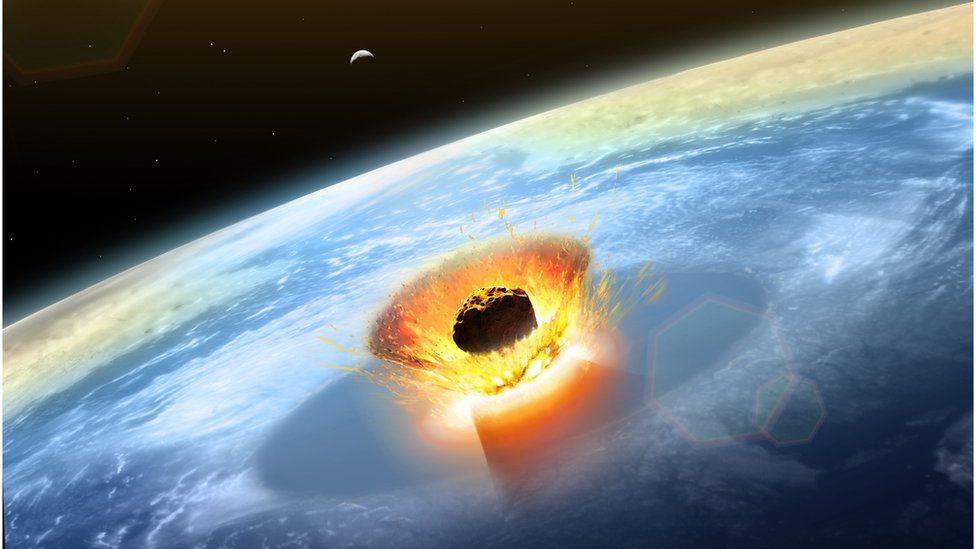 Image source, Getty Images
The impact of an asteroid is believed to have led to the death of the dinosaurs 66 million years ago.
The most recent also is the most famous – when an asteroid crashed into what is now Mexico 66 million years ago, setting the western hemisphere on fire and taking out the non-avian dinosaurs.
Other examples include the “Great Dying” 250 million years ago, when around 90% of species on Earth perished.
It’s not known exactly what caused all of the mass extinctions, but they involved fast, dramatic changes to the climate, oceans and land.
Are we causing a sixth mass extinction?
Experts say that we are losing species much more quickly than evolution is creating them, and some say that this could put us on track for a new mass extinction – which would include our own human race.
“We’re changing the path of evolution,” says Dr Gerardo Ceballos, an ecologist at Mexico City’s UNAM University. “Even if we’re not in a mass extinction, what we’re doing is putting at risk the system that has made it possible for us to survive.”
Rates of extinction are hard to measure because even today, we don’t know much about the majority of species – or how threatened they could be.
The limited records available show we’ve lost fewer than 1% of species over the last 500 years, but many scientists believe the true figure could be much higher, as most species we know of were not described until the mid-1800s.
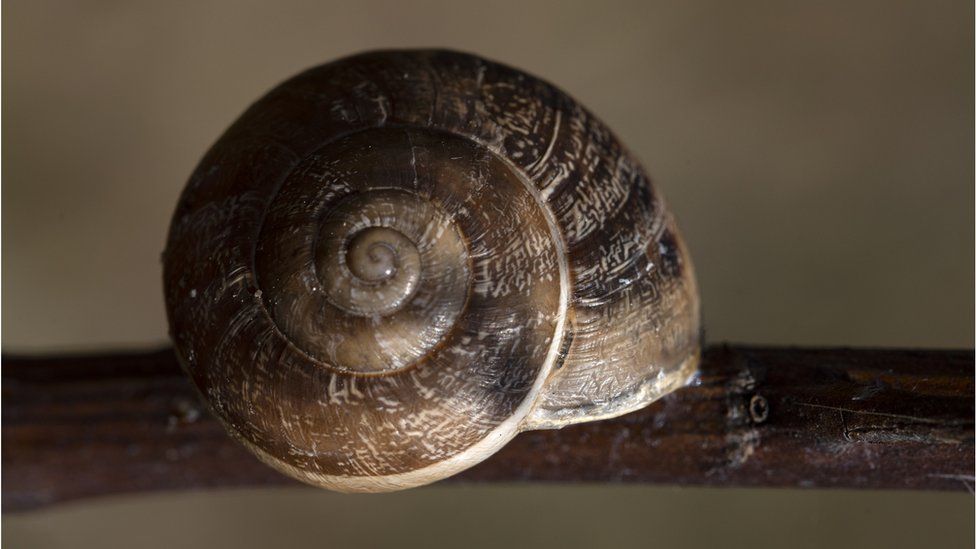 Image source, Getty Images
A study of snails raised fears about extinction rates
In 2015 scientists studied museum collections, records and expert accounts of 200 known species of land snails. They found that many hadn’t been seen in the wild since originally being classified as a species and that a tenth were most likely already extinct.
If taken to be a sign of wider trends, the authors estimate that could mean we’ve already lost between 7.5-13% of all known species.
“There’s a signal there for a very large loss that isn’t representative of the current data,” says Dr Alexander Lees, an ornithologist at Manchester Metropolitan University who was not involved in the study.
Although we don’t know how exactly how many species have been lost in recent years, wildlife numbers are dwindling rapidly.
It’s estimated that global wildlife populations have declined on average by 69% in just 50 years.
“It doesn’t take too many 50 year intervals to get you down to a point where most of those species are going to crash and disappear,” says Prof Anthony Barnosky, a biologist at the University of California, Berkeley.
Scientists have estimated how quickly we are losing species by looking at the fossil record and using it to calculate an average “background rate” of extinctions during times when no mass extinctions were occurring.
They then compare that background rate with modern rates of extinction gathered from records to see how the two line up.
Roughly averaging the estimates found by these studies tells us that extinction rates are significantly higher today – between 100 and 1,000 times higher, according to Dr Robert Cowie, an ecologist at the University of Hawaii at Mānoa.
Some scientists have doubts about the accuracy of these findings, but most experts agree that extinction rates are higher today than at most times in the past.
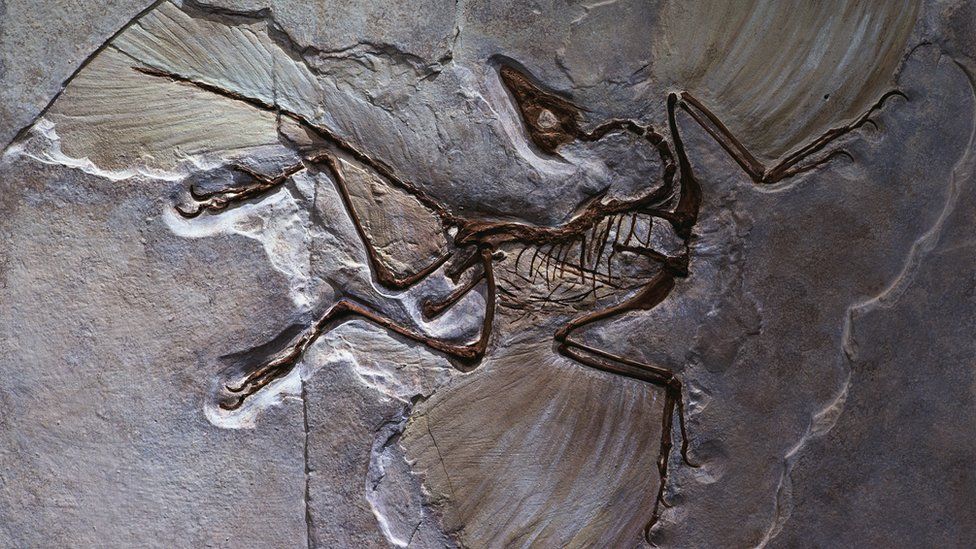 Image source, Getty Images
Researchers use the fossil record to estimate extinction rates during different periods on Earth
Whether all of this means we’re in a mass extinction or not is heavily debated.
Dr Ceballos, the ecologist at Mexico City’s UNAM university, says that he believes that we will have fully entered a mass extinction by the end of the year 2150, and that we could lose 70% of all plants and animals within the next two centuries.
Others are more conservative, saying that we just don’t know how long it will take for species to actually go extinct.
“We haven’t finished a mass extinction event, but the question is – might we be in one right now?” asks Dr Lees. “And we can’t know that. It might take thousands of years for that entire extinction sequence to be realised.”
There are even experts who say that getting bogged down in whether we’re in, or are entering a mass extinction, is missing the point.
Prof Pincelli Hull, a palaeontologist at Yale University, says it won’t take a mass extinction event for humans to feel the bite of our impact on nature, so we shouldn’t use that as a benchmark for a need to take action.
“Much smaller climate perturbations have wiped out entire societies,” she says. “A bad drought for 20 years can collapse a whole civilisation – that’s the scale that matters to us.”
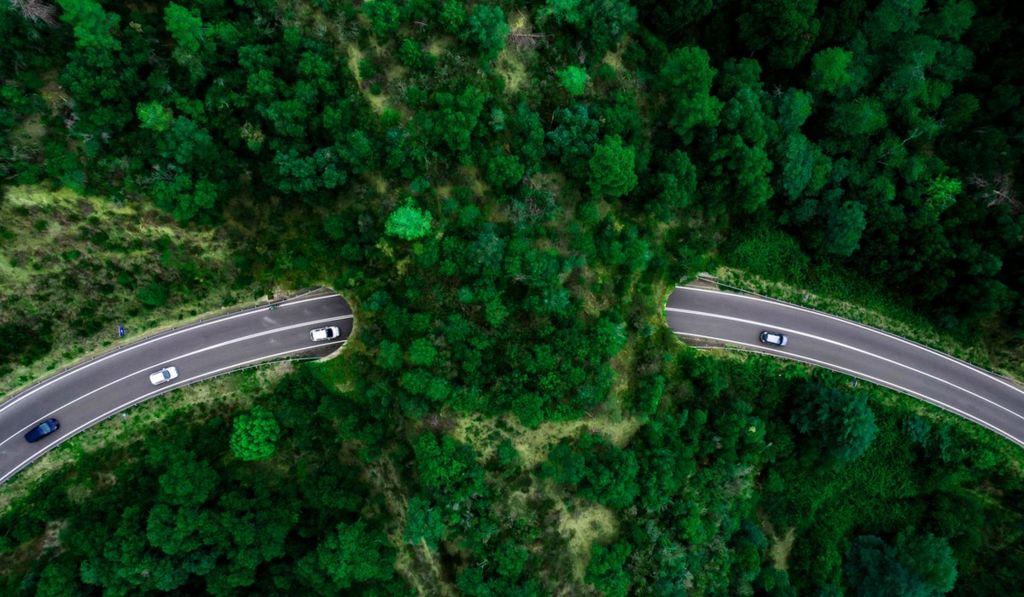 Image source, Getty Images
By protecting habitats and creating corridors for wildlife, we can help nature adapt and recover, experts say
What can we do?
As leaders at the COP15 summit try to fix targets for protecting nature for the next decade, environmentalists hope that the world will commit to protecting 30% of the land and sea by 2030.
There is still hope we can help wildlife recover and save many species from going extinct if we limit global warming to 1.5°C and protect key habitats, experts say.
Habitats that can harbour ecological networks, rather than just individual species, seem to be the best way to help nature recover, says Prof David Jablonski, a palaeontologist at the University of Chicago.
“There are species that would have gone extinct if we hadn’t tried to protect them,” says Prof Stuart Pimm, a biologist at Duke University.
.
 empowerment & inner transformation...