Updated: June 14, 2025
From Code to Community
How Practical AI, Adaptive Resiliency, and United Action Propel Humanity Toward Survival**
“Turning bold breakthroughs into everyday shields for people and planet.”
Introduction and Context
In an age of dazzling inventions, artificial intelligence (AI) has become both a shining triumph and a sober responsibility. Every few days new feats appear—AI catching early-stage cancers, forecasting hurricanes two weeks out, or composing music that stirs the soul. Yet a stubborn gap remains: if everyday people cannot reach, trust, and shape these tools, the breakthroughs stall on the laboratory shelf.
Meanwhile, record-hot oceans are priming what experts warn could be another punishing Atlantic hurricane season, following five U.S. land-falling hurricanes and more than $100 billion in damages last year. (houstonchronicle.com) The United States alone endured 27 separate billion-dollar disasters in 2024, part of 58 such events worldwide—second only to the all-time record. (climate.gov, yaleclimateconnections.org) These converging Climate calamities, mounting Ecological stress, and the imperative for Adaptive Resiliency, from the standpoint of both self and collective preservation, demand that AI innovation move quickly from “could help” to “already helping.”
Part 1
AI, Creativity, and the Innovation–Adoption Gap**
Technological progress races ahead. Models that once required supercomputers now run on a laptop. Yet farmers coping with shifting rainfall or city planners choking on smog often find AI dashboards confusing or out of reach. This mismatch is more than inconvenient—it wastes lifesaving potential.
“True innovation counts only when neighbors, not just scientists, can use it at breakfast,”
—imagined note in a seasoned MIT researcher’s lab journal.
Why the Gap Persists
- Research vs. Reality. University papers publish monthly advances, but industries integrate them yearly.
- Complex Interfaces. Too many tools assume coding fluency instead of plain-language controls.
- Uneven Access. Reliable internet and modern hardware remain scarce in many frontline communities.
Closing the Gap with Practical Steps
- Shared Literacy. Community colleges, online tutorials, and local workshops demystify concepts like neural networks and data bias.
- User-First Design. Interfaces should let non-programmers adjust settings, read plain-text explanations, and see example impacts—whether measuring greenhouse-gas spikes or plotting evacuation routes.
- Replicable Frameworks. Simple playbooks—from data collection to deployment—let neighborhood groups copy what worked elsewhere.
Real-world partnerships illustrate success. In the Netherlands, university researchers joined a river-restoration nonprofit to train image-recognition models that spot illegal dumping and predict algae blooms. The result: faster clean-up orders and healthier waterways.
Part 2
AI as a Catalyst for Deeper Curiosity and Empowerment**
AI excels at pattern-finding. For artists and scientists alike, a chat with today’s models can surface hidden links—say, how oyster-reef restoration also protects coastal roads. This back-and-forth refines human insight rather than replacing it.
Personalized Learning
Adaptive tutoring platforms adjust difficulty in real time, letting a rural 8th-grader master solar-panel maintenance at her own pace. By embedding Climate science in coding drills, learners pick up two survival skills at once.
Interactive Discovery
New open-source simulators allow conservationists to test coral-reef interventions virtually before lifting a single rock. One click changes fish-stocking levels; the next shows likely algae growth. Immediate feedback shortens trial-and-error cycles and saves precious ecosystems.
“When diverse minds converge, AI turns from code into community glue,”
—fictional reflection from a TUM.ai student organizer.
Part 3
Boosting Everyday Productivity for Planetary Good**
Time is a scarce resource in any emergency. AI-driven assistants sort email, draft grant proposals, and schedule volunteer shifts—freeing citizen-scientists to plant seedlings or install sensors.
- Content Support. Writers can ask an AI to outline a policy brief on clean-energy credits, then focus on persuasive storytelling.
- Smart Homes, Smarter Blocks. Appliances auto-shift to low-carbon hours, and neighborhood dashboards flag unusual spikes, encouraging friendly competitions to cut power use.
- Health Monitoring. Wearables now pair air-quality warnings with heart-rate data, nudging outdoor workers to hydrate or mask up on high-smog days.
These incremental gains compound. If every household in a midsize city shaved 5 percent off energy use, local grids would dodge brownouts during heatwaves.
Current Landscape Check-In (2024-2025)
- Record Heat. 2024 ranked as the warmest year ever for the contiguous United States. (ncei.noaa.gov)
- Rapid AI Uptake. Seventy-eight percent of global organizations reported using AI in 2024, up from 55 percent a year earlier. (hai.stanford.edu)
- Investment Surge. Private U.S. AI spending hit $109 billion, 12 times China’s outlay. (hai.stanford.edu)
- Forecasting Breakthroughs. Google DeepMind’s Weather Lab can generate 50 hurricane scenarios up to 15 days ahead, and a University of Amsterdam model outperforms traditional disaster-risk systems in three-quarters of tests. (venturebeat.com, sciencedaily.com)
These data points confirm that AI is maturing fast enough to matter—if adoption keeps pace.
A Sincere, Persuasive Call to Action
We stand at humanity’s pivot point. Fires scorch once-lush forests, and storm surges swallow streets that children bicycled yesterday. Yet within reach sits the most versatile tool we have ever crafted. Properly guided, AI can:
- Forecast compound disasters early enough for evacuations.
- Optimize food distribution so no child meets a day hungry.
- Reveal low-cost pathways to restore Ecological balance.
But technology alone cannot heal greed, arrogance, or shortsightedness. Healing begins with us—choosing openness over hoarding, collaboration over rivalry.
“The greatest power AI grants is illumination—showing a roadmap out of despair,”
—hypothetical appeal from an ethicist addressing the UN Climate Summit.
Let us therefore:
- Champion Equitable Access. Subsidize devices and connectivity for frontline communities.
- Embed Transparency. Push creators to publish plain-language model cards and audit reports.
- Cultivate Lifelong Learning. Treat AI literacy like reading—essential to citizenship in a warming world.
- Celebrate Collective Wins. Share case studies of river clean-ups, smarter farms, and disaster-ready towns so hope spreads faster than fear.
Conclusion
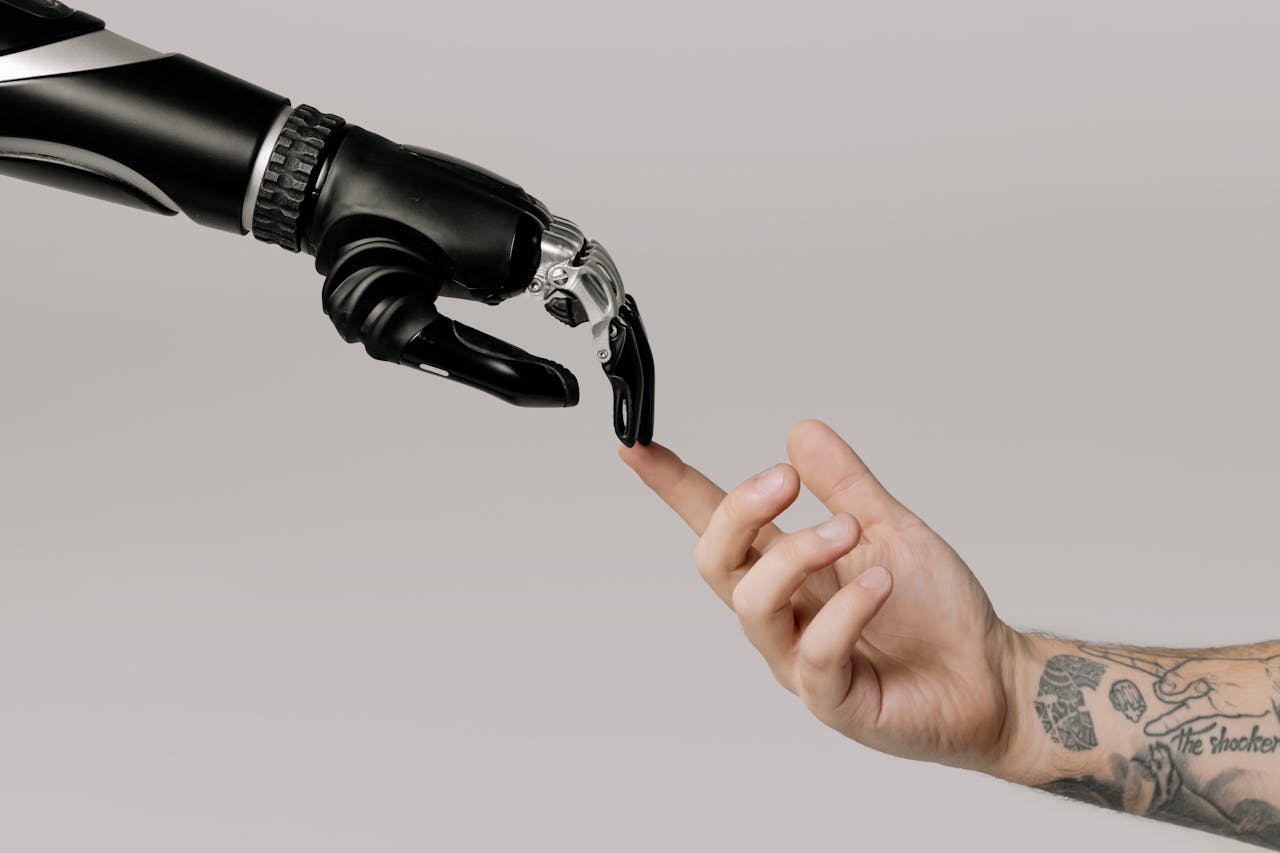
AI is a mirror, reflecting our values, and a magnifying glass, enlarging our reach. If we anchor its growth in Adaptive Resiliency, from the standpoint of both self and collective preservation, uphold ethical guardrails, and invite every willing mind to the table, we transform cold algorithms into warm hands—hands steady enough to carry humanity through the Climate and Ecological (Green) emergency and toward a just, thriving tomorrow.
Video Suggestion: “Bridging the AI Innovation–Adoption Gap,” TEDx talk by Tobias (search on YouTube).
 empowerment & inner transformation...