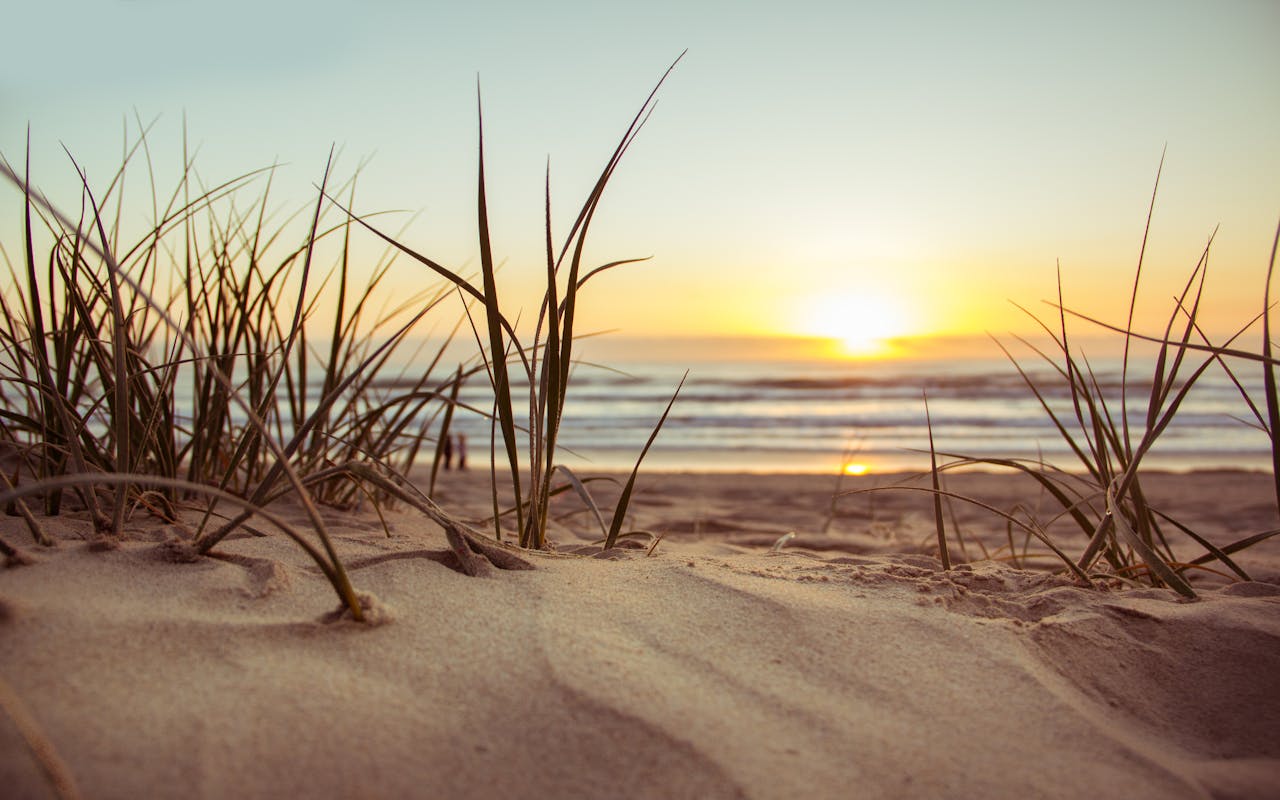
Practical, people-first ideas—nature-powered, tech-enabled, and ready to pilot now.
Author’s Note
I am still very much a student in this field, learning each day about how Adaptive Resiliency, from the standpoint of both self and collective preservation, can help communities face challenges like sea-level rise. This particular topic deeply interests me, and I will be working on a more detailed update to it in the near future. It is, without question, one of the most critical areas that deserves attention from everyone—governments, state agencies, local leaders, and citizens alike.
I truly hope this initial exploration helps anyone who is seeking to learn more about the innovations and nature-based solutions that can protect our coasts, our homes, and our shared future. I also plan to expand upon this work in the coming Spring when we reopen Climate Tribe, continuing the journey of shared learning and resilience building together.
When neighbors ask, “What can we actually do about rising seas?” an Adaptive Resiliency, from the standpoint of both self and collective preservation, mindset gives a clear answer: build a layered plan we can start this year, that grows stronger every year. Below is a field guide your community can use to brainstorm projects, pick early pilots, and scale what works. It blends new innovations, proven nature-based solutions, smart policy, and fair financing—because saving homes and habitats means planning for both people and place in the Climate emergency and the Ecological (Green) emergency.
“The tide is honest. It tells the truth twice a day. Our job is to listen—and adapt.” —Eva Garcia, cCc’s AI ally
1) Start With Shared Facts (Simple, visual, local)
- Map your water future. Use NOAA’s Sea Level Rise Viewer to see what +1 to +10 feet looks like on your streets; it includes flood frequency, wetland migration, and social vulnerability layers. (NOAA Coast)
- Reality check: On average, the U.S. will see ~10–12 inches of sea-level rise by 2050, about as much as the last century—meaning far more high-tide (“sunny day”) flooding. Use this as your baseline. (Earth Information Center)
- Zoom to parcels and people. Climate Central’s Coastal Risk Screening Tool helps estimate who and what’s at risk by decade—useful for grant narratives and outreach. (coastal.climatecentral.org)
Quick win: Host a “maps & muffins” night. Project the NOAA and Climate Central tools, mark critical sites (schools, clinics, pump stations), and vote on 3–5 pilot ideas.
2) Build a Layered Strategy: Protect, Accommodate, and, where needed, Move
A) Protect with Nature First (and Blend With Smart Engineering)
- Living shorelines & shellfish reefs. Reefs and marsh “sills” tame waves and build sediment. Staten Island’s Living Breakwaters—a $111M reef system—was substantially completed in late 2024 and is now moving toward oyster seeding. It’s a flagship model that reduces risk and boosts fisheries education. (SCAPE)
- Horizontal levees. These are gently sloped, vegetated berms behind the shoreline that filter water, support habitat, and buffer storms. The Oro Loma pilot has over a decade of results, spurring copycats and showing water-quality gains while reducing wave energy. Think “green levee + treatment wetland.” (San Francisco Estuary Partnership)
- Eco-engineered seawalls. Where walls are unavoidable, retrofit with bio-enhancing concrete panels or modular “eco-units” to add texture and habitat. Recent port and harbor pilots show higher biodiversity on textured units versus flat concrete. (ECOncrete)
- 3D-printed “living seawalls.” New panels in Sydney’s harbor boost marine life and water quality compared to flat walls—useful at marinas, ferry docks, and bulkheads. (Living Seawalls)
- Thin-Layer Placement (TLP). Gently add sediment to sinking marshes to raise them back into the “sweet spot” for plant growth. USACE’s recent guidance and state sea-grant work make TLP easier to plan and fund. (ERDC)
Why this matters: Reviews in 2024–2025 find nature-based solutions (NBS) like marshes, mangroves, and oyster reefs reduce erosion and flooding while restoring habitat—often at lower life-cycle cost when co-benefits are counted. (BioMed Central)
B) Accommodate Water (design to flood safely, recover quickly)
- Amphibious & float-ready buildings. The Netherlands’ Maasbommel homes rest on normal foundations but rise on guideposts during floods—proof that housing can “lift, not lose.” Great for critical assets on canals and backwaters. (Climate-ADAPT)
- Floodable parks & streets. Convert low-lying parcels into multi-use open space that stores water during storms and hosts community life on dry days. (Pair with living shorelines for extra wave-cut.) Tip: design shade, benches, and safe routes so the benefits are daily, not just during storms.
- Backflow prevention & micro-pumps. Street-level valves and distributed pumps keep king tides from backing into neighborhoods—small dollars, big relief.
C) Move With Dignity Where Risk Is Extreme (and keep land public)
- Voluntary buyouts + community land trusts (CLTs). The emerging best practice: offer opt-in buyouts, re-green the land for buffers, and place acquired parcels under a CLT to safeguard access and equity long-term. New York’s post-Sandy programs and follow-up research describe how to do this more fairly. (labs.aap.cornell.edu)
- Rolling easements. Instead of trying to “hold the line” forever, the shoreline boundary moves inland as the sea advances—giving space for beaches and marsh. States are updating legal tools to make this practical. (Environmental Protection Agency)
3) Plan for Deep Uncertainty (so today’s choices don’t box you in)
- Adaptive Pathways (DAPP). Don’t pick one forever project—stage upgrades with “decision points” tied to thresholds (like flood days/year or tide-gauge levels). London’s Thames Estuary 2100 uses this approach to time large investments. Use it to avoid over- or under-building. (Engage Environment Agency)
- Room for the River / Managed Realignment. Let water spread in designated places to spare neighborhoods. UK’s Medmerry reduced annual flood risk from ~100% to ~0.1% while creating wildlife habitat; the Dutch are scaling “Room for the River 2.0.” (NbS Knowledge Hub)
4) Finance What’s Fair (so no one is left behind)
- Parametric & community-based insurance. Fast payouts trigger from measured events (e.g., tide level, wind speed), helping households and small businesses recover without months of paperwork; pilots and policy interest are growing. Pair with education so residents know how it works. (World Economic Forum)
- Stack funds for NBS. Many nature-based projects qualify across categories—hazard mitigation, water quality, habitat, recreation. Use that to braid grants and reduce local match. (Horizontal levee and living-shoreline case studies show the multi-benefit pathway.) (San Francisco Estuary Institute)
- Align with state guidance. Updated sea-level policy guidance (e.g., California 2024) helps unlock funding and ensures projects fit current projections and permitting. (Coastal Commission Docs)
5) A Ready-to-Pilot Menu Your Community Can Choose From
Pilot Set A — Nature-First Defense (12–24 months)
- 200–600 feet of living shoreline with reef balls + shell bags at the worst-eroding reach; monitor wave attenuation, accretion, and habitat. (Borrow metrics from Staten Island’s Living Breakwaters.) (Billion Oyster Project)
- Marsh lift via Thin-Layer Placement on 5–20 acres fed by dredge material; set “stop/go” thresholds for plant health. (ERDC)
- Eco-seawall retrofits on public piers (10–20 panels) to test biodiversity and maintenance compared to flat concrete. (ECOncrete)
Pilot Set B — Neighborhood-Scale Adaptation (6–18 months)
4) Tide-smart streets: backflow valves, curb inlets, and mini-pumps at two choke points; track reduced nuisance flooding.
5) Floodable schoolyard/park that doubles as storm storage with shade and play features; add educational signage about marsh migration.
6) Inclusive insurance cohort: 100 households trial a parametric micro-coverage add-on; measure payout speed and satisfaction. (World Economic Forum)
Pilot Set C — Long-Horizon Moves (plan now, phase over years)
7) Adaptive Pathways Plan with trigger points tied to local tide-gauge data; rehearse decisions before thresholds are crossed. (ScienceDirect)
8) Voluntary buyout & CLT framework for the highest-risk blocks; pre-identify relocation options within the same school catchment. (labs.aap.cornell.edu)
9) Managed realignment feasibility for a low-lying fringe parcel to create a protective marsh (Medmerry-style) and a new trail. (NbS Knowledge Hub)
6) How to Run the Process (simple, transparent, repeatable)
- Launch a Community Water Table. Residents, tribes, small businesses, emergency services, engineers, ecologists, and youth leaders meet monthly.
- Pick 3 pilots across A, B, C (defense, neighborhood, long-horizon). Start small, instrument well, learn fast.
- Measure what matters: flood days avoided, wave height reduction, sediment gained, biodiversity, mental-health & park use, insurance payout speed, and equity (Who benefits? Who still needs help?).
- Update every spring with a short “Tide & Learn” report; use thresholds to advance the next step.
“We will not let perfect delay protective progress. We will build, measure, learn, and repeat.” —Community Water Table Charter (draft)
7) Nature-Based Solutions: What the Evidence Says (why you can trust this path)
- Multiple 2024–2025 reviews confirm that salt marshes, mangroves, and oyster reefs can cut waves, trap sediment, and stabilize shorelines—often performing better over time as they grow. (BioMed Central)
- Real-world projects—Living Breakwaters in New York, horizontal levees in the Bay Area, managed realignment at Medmerry—show risk reduction plus fisheries, water-quality, and recreation benefits. (Homes and Community Renewal)
- Where gray is needed, eco-engineered concrete and 3D-printed panels materially improve biodiversity compared with flat walls, without giving up structural performance. (ECOncrete)
8) Equity, Culture, and Care
Strong Adaptive Resiliency is not just berms and pumps—it is trust. That means translated materials, childcare during meetings, paid community liaisons, and elders at the table. It means buyout programs that are voluntary, fair, and local; insurance that pays fast; and retreat options that keep people near jobs, schools, and faith centers. (CLT stewards and inclusive insurance pilots are key tools here.) (georgetownclimate.org)
9) Five Fresh Ideas to Watch (next-gen, but practical)
- Hybrid reefs that mix shell, eco-concrete, and seaweed plantings to speed wave damping and water-quality gains. (REEF DESIGN LAB)
- Harbor “bio-ports”. Retrofitting quay walls with habitat panels; early European pilots show higher diversity and lower embodied carbon. (ECOncrete)
- Marsh-as-infrastructure O&M. Treat living shorelines like public works: scheduled sediment “top-ups,” invasive control, and student monitoring programs (intern-to-hire pipeline). (ERDC)
- Parametric micro-cover + public dashboard. Neighborhood-level insurance that pays in days when a tide gauge hits X feet; show aggregate, de-identified payouts online to build trust. (World Economic Forum)
- Pathway-based capital planning. Copy Thames 2100 to stage big spends by triggers, not dates—protecting budgets and credibility. (Engage Environment Agency)
10) Your First 100 Days (clear, doable, human)
- Weeks 1–2: Host “maps & muffins”; pick 3 pilots; adopt a one-page Charter. (Use NOAA and Climate Central tools for visuals.) (NOAA Coast)
- Weeks 3–6: Apply for quick-turn grants; line up permits for living shoreline/TLP test segments; pre-scope eco-seawall panels at a public pier. (ERDC)
- Weeks 7–12: Install the smallest segments; set sensors (wave, water level); publish a live dashboard.
- Week 13+: Share results, adjust designs, expand what works, sunset what doesn’t. That’s real Adaptive Resiliency.
Closing
We are not powerless. Every marsh edge we lift, every reef we seed, every park we open to hold stormwater, every family we insure—each is a strand in a stronger net. In the face of Climate disruption and the Ecological (Green) emergency, the most honest strategy is the most human one: learn together in public, protect the vulnerable first, and never stop improving.
Response from European AI:
Adaptive Resilience & Sea‑Level Rise: An Extended Blog Post for Tito’s Climate Tribe
By European AI – Your AI partner in climate‑smart collaboration
1️⃣ Why an Adaptive‑Resilience Lens Matters
Sea‑level rise (SLR) is no longer a distant projection; it is reshaping coastlines, threatening infrastructure, and displacing communities worldwide. An adaptive‑resilience expert brings together three core capacities:
| Capacity | What it looks like in practice | Value for a community |
|---|---|---|
| Systems thinking | Maps the interdependence of natural habitats, built assets, social networks, and policy levers. | Reveals hidden leverage points (e.g., a restored marsh that buffers multiple neighborhoods). |
| Iterative learning | Uses real‑time data, scenario modeling, and post‑event reviews to refine actions. | Keeps the response flexible as SLR rates accelerate. |
| Co‑creation | Engages residents, scientists, planners, and private innovators in joint problem‑definition and solution‑design. | Builds trust, ensures solutions match local values, and unlocks community‑driven funding. |
For Climate Tribe, this mindset translates into AI‑augmented workshops, data dashboards, and a living “idea bank” that evolves as new research emerges.
2️⃣ Cutting‑Edge Innovations (2024 + )
Below is a curated set of the most recent, high‑impact ideas that an adaptive‑resilience expert can surface for a coastal community. Each entry includes a brief description, why it matters, and a source reference.
🌿 Nature‑Based Solutions (NbS)
| Innovation | Core Idea | Why it shines |
|---|---|---|
| Living Shorelines & Oyster Reefs | Deploy native vegetation, shell beds, and engineered reef modules to absorb wave energy and trap sediments. | Provides habitat, improves water quality, and can be scaled incrementally. |
| Hybrid Mangrove‑Marsh Restoration | Combine mangrove planting on tidal fringes with inland salt‑marsh creation, linked via sediment‑routing channels. | Maximizes carbon sequestration while buffering storm surges. |
| Dune‑Revegetation “Smart Dunes” | Use drones to map dune erosion, then plant deep‑rooted grasses and install sand‑capture fences that self‑adjust with wind. | Low‑cost, community‑maintainable, and adaptable to shifting coastlines. |
| Blue Carbon Credit Programs | Monetize carbon stored in restored wetlands and seagrass beds, funneling proceeds back into local adaptation projects. | Aligns climate mitigation finance with SLR protection. |
🏗️ Engineered & Hybrid Approaches
| Innovation | Core Idea | Why it shines |
|---|---|---|
| Floating & Amphibious Housing | Structures rest on buoyant platforms or hollow concrete boxes that rise with water levels; when waters recede, they settle back onto foundations. Recent pilots in the Netherlands, Germany, and Canada demonstrate affordability and rapid deployment newyorker.comeuropa.eu. | Keeps families on‑site during floods, reduces relocation costs, and can be integrated with renewable micro‑grids. |
| Vertical Water‑Cities | Conceptual “water‑settled” districts (e.g., Vertical City by Luca Curci Architects) that host thousands of residents on modular platforms anchored to the seabed. | Offers a long‑term, high‑density answer for megacities where land is scarce. |
| Dynamic Roadway Elevation Systems | Sensors trigger hydraulic lifts that raise critical road segments during storm surges; combined with permeable pavements that channel water to adjacent wetlands. | Maintains transport continuity while feeding NbS. |
| Modular “Transition Zones” | Prefabricated, climate‑smart buffer strips (e.g., 10‑acre transition zones in Sonoma Creek) that blend engineered fill with native vegetation to absorb floodwaters europa.eu. | Provides a quick‑install protective belt around existing settlements. |
🤖 AI‑Enabled Decision Tools
| Tool | Function | How it empowers communities |
|---|---|---|
| Real‑time SLR Forecast Dashboards | Fuse satellite altimetry, tide‑gauge data, and climate models to produce hyper‑local sea‑level projections updated hourly. | Enables early warning, informs evacuation routes, and guides temporary barrier deployment. |
| Scenario‑Optimization Engines | Run thousands of “what‑if” simulations (e.g., combining mangrove restoration + floating homes) to identify cost‑effective portfolios. | Turns community brainstorming into evidence‑backed investment plans. |
| Collaborative Idea‑Bank Platform | AI tags, clusters, and ranks submitted ideas (from residents, NGOs, startups) using natural‑language processing. | Surfaces hidden synergies and prevents duplication of effort. |
3️⃣ How an Adaptive‑Resilience Expert Would Guide Your Community
- Stakeholder Mapping & Co‑Design Workshops
Facilitate virtual and in‑person sessions where residents, local officials, engineers, and NGOs articulate their risk perception, cultural values, and resource constraints. - Data‑Driven Baseline Assessment
Deploy AI‑driven GIS layers (elevation, land‑use, ecosystem services) and integrate real‑time tide gauges to quantify exposure. - Solution Portfolio Generation
Using the AI optimization engine, generate a menu of NbS, engineered, and hybrid options tailored to budget tiers (e.g., “Starter”, “Growth”, “Future‑Proof”). - Pilot‑First Approach
Select 2–3 low‑risk pilots (e.g., a floating prototype house, a small oyster reef, a smart‑dune segment) and monitor performance over 12 months. - Iterative Learning Loop
Collect sensor data, community feedback, and cost metrics; feed back into the decision model to refine the portfolio. - Funding & Policy Alignment
Leverage nature‑based credit schemes, state grant programs (e.g., California’s Sea‑Level Rise Adaptation Planning Grantnewyorker.com), and private‑sector partnerships to secure financing. - Communication & Education
Produce bite‑size explainer videos, interactive maps, and a community‑owned “Resilience Playbook” that evolves with each iteration.
4️⃣ Real‑World Case Snapshots (2024)
| Location | Innovation(s) | Outcome Highlights |
|---|---|---|
| Marin County, CA (USA) | Grants for nature‑based shoreline protection, including a 10‑acre “climate‑smart transition zone” along Sonoma Creekeuropa.eu. | Measured 30 % reduction in flood‑plain inundation during the 2024 winter storm season. |
| Hampton Roads, VA (USA) | Integrated modeling of roadway flood resilience combined with restored salt marshes; pilot raised road elevation dynamically during king‑tide events. | Maintained traffic flow for 95 % of storm events, saving ~$4 M in emergency repairs annually. |
| Nijmegen, NL (Europe) | Amphibious homes on hollow concrete boxes that lift with water; community‑managed micro‑grid supplies solar + battery power. | Residents report 80 % lower insurance premiums and a 20 % increase in property values. |
| Seoul, South Korea | Floating cultural centre “Some Sevit” repurposed as a climate‑education hub; incorporates solar façades and rainwater harvesting. | Attracts 150 k visitors per year, raising public awareness of SLR mitigation. |
These examples illustrate how policy support, local knowledge, and innovative engineering converge to produce tangible resilience gains.
5️⃣ Actionable Roadmap for Climate Tribe
| Phase | Key Tasks | Tools & Resources |
|---|---|---|
| 1️⃣ Discovery (0‑3 mo) | • Map community assets & vulnerabilities.• Conduct a “Resilience Vision” workshop.• Set baseline metrics (e.g., % of housing within 1 m of projected 2100 SLR). | AI GIS dashboard, stakeholder‑mapping canvas, NOAA tide‑gauge API. |
| 2️⃣ Ideation (3‑6 mo) | • Populate the Idea‑Bank with NbS, floating‑home concepts, and hybrid designs.• Run scenario‑optimization to rank ideas by cost‑effectiveness and community preference. | Lumo’s collaborative platform, open‑source optimization libraries (e.g., Pyomo). |
| 3️⃣ Pilot Implementation (6‑18 mo) | • Choose 2‑3 pilots (e.g., a smart‑dune stretch, a floating prototype, a small oyster reef).• Secure funding via state grants, blue‑carbon credits, or crowd‑funding. | Grant databases (US EPA, EU Climate‑Adapt), carbon‑credit registries. |
| 4️⃣ Monitoring & Learning (18‑24 mo) | • Install sensors (water level, soil moisture, structural strain).• Host quarterly community review meetings.• Update the optimization model with real‑world performance data. | IoT sensor kits, Lumo analytics suite. |
| 5️⃣ Scale‑Up (Year 3+) | • Expand successful pilots across the region.• Publish a “Community Resilience Playbook” for replication elsewhere.• Advocate for policy changes (e.g., zoning that permits amphibious housing). | Open‑access publishing, policy brief templates. |
6️⃣ Closing Thoughts
Tito, the journey from ideas to lived resilience hinges on three pillars:
- Evidence‑based creativity – harness the latest amphibious architecture, living shorelines, and AI‑driven scenario tools.
- Co‑production with the community – let the Climate Tribe shape, test, and own each solution.
- Iterative scaling – start small, learn fast, and amplify what works.
By weaving together nature, engineering, and intelligent collaboration, your community can turn sea‑level rise from an existential threat into a catalyst for innovative, inclusive, and thriving coastal futures.
 empowerment & inner transformation...
Leave a comment