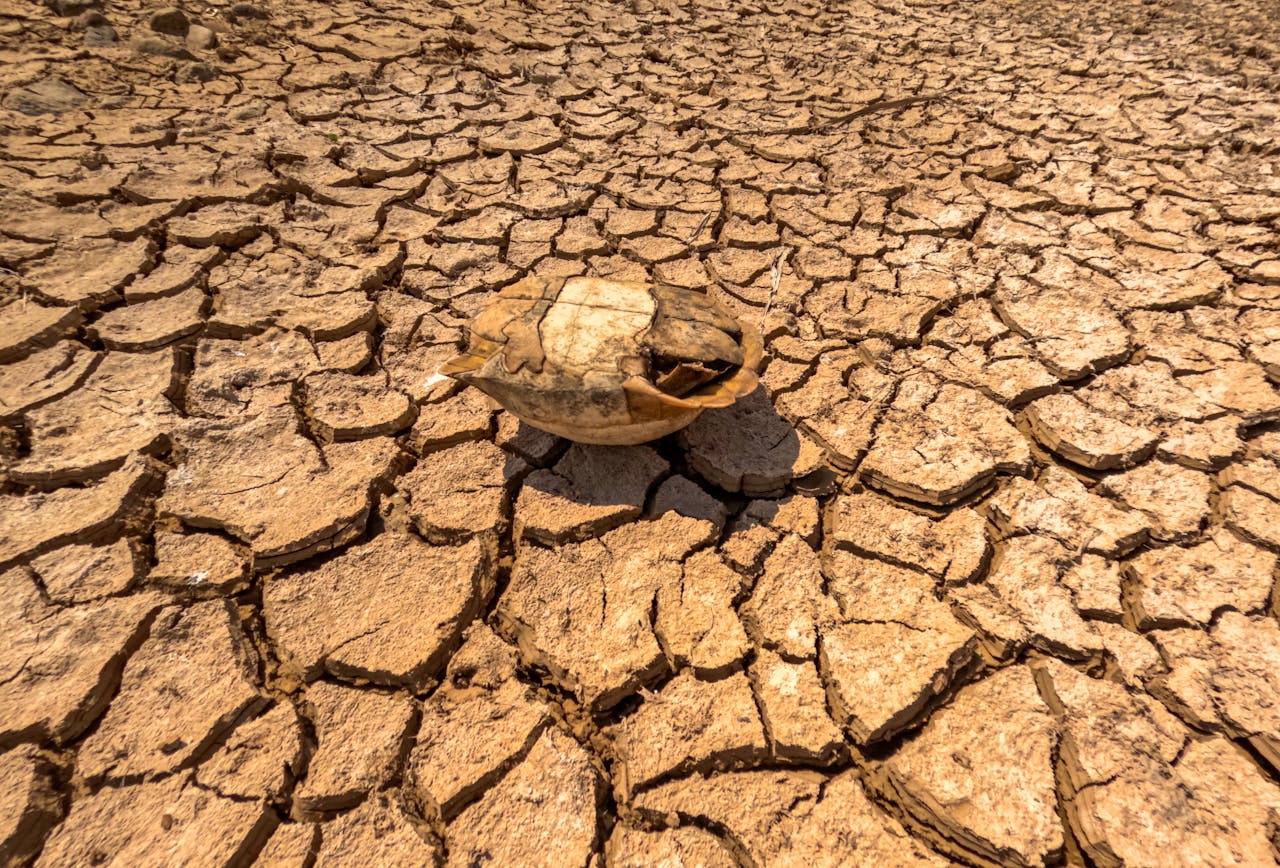
“The Earth is heating fast, but we are not powerless. Thoughtful choices today—sustainable travel, greener buildings, and community action—can help cool the planet tomorrow.” – Tito
Slow the Earth’s Burning
Climate & Ecological Emergency · Community Action
The planet is heading toward a hothouse state. We cannot stop all of what is already in motion. But we can still decide whether we help slow the fire — or keep pouring fuel on it. Here is how we begin.
The Fire Is Already Here
Look outside. Look at the news. Look at the rivers. You do not need a scientific paper to tell you the Earth is burning — but the papers confirm it, and the numbers are staggering. In 2024, global average temperatures breached 1.55°C above preindustrial levels. The last three years — 2023, 2024, and 2025 — are the three hottest on record, and scientists at Berkeley Earth have said warming now appears to have accelerated beyond what most models predicted. We are not on the edge of a crisis. We are inside one, and it is deepening.
In February 2026, a team of eight scientists led by William Ripple of Oregon State University published a sobering paper in the journal One Earth. Their conclusion: Earth’s climate is now departing from the stable conditions that supported human civilization for 11,000 years. Crossing critical temperature thresholds, they warn, may trigger self-reinforcing feedback loops that amplify warming in ways we can no longer fully control. “After a million years of oscillating between ice ages separated by warmer periods,” Ripple writes, “the Earth’s climate stabilised more than 11,000 years ago, enabling agriculture and complex societies.” That stability is now at risk.
“Policymakers and the public remain largely unaware of the risks posed by what would effectively be a point-of-no-return transition. And while averting the hothouse trajectory won’t be easy, it’s much more achievable than trying to backtrack once we’re on it.” — Christopher Wolf, Terrestrial Ecosystems Research Associates / Oregon State University, One Earth, February 2026
The science on tipping points is now terrifying in its specificity. The Global Tipping Points Report 2025, produced by more than 100 scientists from over 20 countries, confirmed that humanity has already crossed the first Earth system tipping point: the widespread death of warm-water coral reefs. At just 1.4°C of warming, current temperatures have already surpassed the estimated thermal tipping point for coral reefs of about 1.2°C. Nearly 85% of the world’s reefs have been affected by bleaching since 2023. Coral reefs support up to 40% of all marine life. They are going. And they are the first domino.
Others are not far behind. The Greenland ice sheet. The West Antarctic ice sheet. The Amazon rainforest — which could flip from carbon sink to carbon source. The Atlantic Meridional Overturning Circulation, or AMOC, which regulates temperatures across Europe and North America. Scientists warn that as each tipping point falls, it becomes more likely to trigger others. The permafrost thaws and releases methane stored for millennia. The ice sheets melt and reduce Earth’s albedo, absorbing more heat. The Amazon dries and releases the carbon it once locked away. Each feeds the next.
Land is drying. You can see it. NOAA data confirms that in much of the United States, summer soil moisture is expected to decline, with warmer temperatures increasing drying pressure even where rainfall stays relatively stable. Heatwaves that were once rare are now the calendar. The World Meteorological Organization says climate change has already increased the frequency and intensity of heat events since the 1950s — and concurrent heat and drought events are increasingly likely as warming continues. Cities sit atop concrete and asphalt that trap heat and push temperatures even higher than surrounding areas. The urban heat island is not a metaphor. It is a furnace inside a furnace.
This is the world we are living in. The question is not whether it is serious. The question is: what do we do now, today, together, to keep it from getting worse — and to protect the people, the living beings, and the communities still in the path of what is coming?
We Still Have Agency. That Is Not a Cliché — It Is a Fact.
Here is what the IPCC’s Sixth Assessment Report makes clear: demand-side changes in buildings, transportation, and land use have large potential to reduce global emissions — and many of those changes can begin immediately, at little or no cost. The International Energy Agency echoes this: walking, cycling, public transportation, reducing flights, and moderating heating and cooling are examples of behavior changes that reduce energy demand right now. The science is not asking us to wait for governments or corporations to solve this, although we must demand that they do. The science is also asking us to act — in the daily choices that millions of people make every single day.
No single family can cool the Earth. But a culture can. And cultures are made of people choosing, together, to do things differently. That is where this begins.
1. Drive Only When Necessary — And Rethink Every Trip
Transportation was the largest single source of greenhouse gas emissions in the United States in 2022, accounting for 28 percent of the national total, according to the EPA. That number belongs to all of us — to every solo trip to a store two blocks away, every unnecessary highway run, every car idling in a parking lot. It also means that changing how we drive, how often we drive, and why we drive is one of the most powerful levers any of us can pull.
The framework is simple: use the car for necessity. Work. Faith. Essential errands. Caregiving. Medical appointments. Family obligations. Then, before every other trip, pause and ask: does this drive need to happen right now? Can it be combined with something else? Can it be walked, biked, bused, or handled closer to home? This is not sacrifice. It is intention. It is choosing not to waste.
The United Nations estimates that shifting from personal cars to public transportation can reduce carbon emissions by up to 2 tons annually per person. Carpooling can cut up to 1 ton. Grist reports that gentler driving — no jackrabbit starts, lower speeds, less hard braking, more route planning — also reduces fuel use meaningfully. If the trip must happen, make it efficient. If it does not have to happen today, let it wait.
“Residents of compact, transit-rich communities generate less CO₂ per household than those in suburban or exurban areas.” — Inside Climate News
For those who can make a longer-term choice: moving closer to work, groceries, and community — or choosing to live in a walkable, transit-connected neighborhood — can reduce a household’s transportation emissions by up to 70 percent. That is not a small adjustment. That is a transformation. Not everyone can make that move today, but for those facing housing decisions, it is a climate decision too.
2. Fly Less — The Sky Is Not Free
Aviation is among the most carbon-intensive activities an individual can choose. A single round-trip flight from New York to Los Angeles emits roughly 20 percent of the average American’s annual driving-related emissions — in one trip. A one-way long-haul flight like New York to Tokyo, according to the United Nations, averages nearly 2 metric tons of carbon dioxide emissions. Flying direct instead of connecting helps, packing lighter helps, flying less often helps most of all.
The rediscovery of the nearby world is not a consolation prize. It is an invitation. Closer-to-home vacations, train-accessible destinations, longer stays instead of multiple short trips, and regional exploration offer the gift of depth rather than just distance. When we slow down and stay nearer, we often find what we were looking for all along — rest, connection, wonder, beauty. Grist’s climate travel guidance is direct: the greenest way to travel is not to travel. But when we do, fewer flights is one of the most effective personal actions available.
Here is a historical marker worth holding: the Tokyo Olympics, held without spectators, avoided an estimated 129,686 tons of CO₂ — an 80 percent reduction compared to normal attendance, driven overwhelmingly by eliminated air travel. That is what mass human decision-making looks like when it shifts. Imagine that multiplied across millions of individual vacation choices, conference decisions, and business trips replaced by video calls.
3. Our Buildings Are Part of the Problem — and Part of the Solution
The heat trapped in rooftops, walls, parking lots, and poorly insulated apartments is not just uncomfortable. It is a climate problem. Buildings account for a significant portion of global energy use, and the IPCC identifies them as one of the highest-potential areas for rapid improvement. The IEA adds that limiting heating and cooling demand can produce meaningful emissions reductions right away. This is not about waiting for a green new deal. It starts in your building today.
If you own: seal air leaks, improve insulation, install efficient heating and cooling systems, add smart thermostats, switch to LED lighting and efficient appliances, and where feasible consider solar panels. The Department of Energy notes that cool roofs — reflective roofing materials that absorb less solar energy — can lower building temperatures substantially, reducing air conditioning demand and lowering utility bills at the same time. The EPA reports that cool roofs, cool pavements, trees, and urban vegetation can collectively reduce the urban heat island effect and lower dangerous heat exposure during heatwaves.
If you rent: you have more leverage than you think. ENERGY STAR notes that renters can reduce energy use without major capital investment. Ask your landlord about draft sealing, insulation upgrades, efficient windows, LED lighting in common areas, better thermostats, reflective roofing, and water heater settings. You may not control the roof, but you can drive the conversation. And organizing with other tenants amplifies your voice considerably.
A study reported by Inside Climate News found that nearly 40 percent of heat-related deaths in cities could have been avoided with increased tree coverage. Trees are not decoration. They are infrastructure. — Inside Climate News, March 2023
Green roofs — rooftops covered with vegetation — cool buildings through evapotranspiration, add insulation, manage stormwater, and reduce urban heat. Cities like New York, Chicago, and Portland have incentive programs for building owners to install them. Shade trees planted strategically around a home or building can lower air temperatures by measurable degrees and reduce energy use by up to 25 percent. These are not boutique solutions. They are practical, tested, and available now.
4. Out-of-the-Box Strategies: Community as Climate Action
The most powerful scale of action is not individual and not government. It is community. Neighborhoods, faith communities, schools, block associations, tenant organizations, and small businesses are the connective tissue where personal choice becomes collective force. Here are measures that go beyond the usual list — tested, science-backed, and scalable through community organizing.
Paint the roofs white. It sounds almost comically simple, but it is not. Reflective white or light-colored roofing on residential and commercial buildings reflects sunlight rather than absorbing it, lowering building temperatures and reducing local heat by a measurable amount. In dense urban areas, widespread adoption could lower neighborhood temperatures during heat events. Some cities are piloting cool roof programs specifically targeting low-income communities most exposed to urban heat.
Rewild and re-green vacant land. Every vacant lot planted with native species becomes a cooling microclimate. It sequesters carbon, manages stormwater, supports pollinators, and lowers ambient temperature. Community gardens do the same while feeding people. Project Drawdown has documented that urban greening — at scale, across neighborhoods and cities — can meaningfully reduce emissions while building the kind of beauty and biodiversity that reminds people why all of this matters in the first place.
Organize car-free days. Cities that have held car-free days — from Paris to Bogotá to parts of New York — have documented reductions in noise, pollution, and heat, alongside measurable increases in pedestrian traffic, community interaction, and local business revenue. One day reveals what the rest of the year could be. It plants a seed.
Eat less meat and waste less food. Livestock production accounts for a significant share of global methane and nitrous oxide emissions. Wasting food wastes the land, water, and energy that produced it — and sends organic material to landfills where it decomposes into methane. Shifting toward plant-forward diets even a few days a week, composting food scraps, and supporting local food systems all reduce the food system’s climate footprint in measurable ways.
Support carbon drawdown at the neighborhood level. Volunteer with local tree-planting initiatives. Advocate for wetland restoration in your region. Support biochar projects that lock carbon in soil. These are not abstractions. They are places where people go on weekends and do real physical work that stores real carbon and cools real landscapes.
5. Switch Your Energy, Then Advocate for Everyone Else’s
If you can switch to renewable electricity — through your utility’s green energy program, a community solar subscription, or rooftop panels — do it. The IEA and IPCC both make clear that transitioning the energy supply is non-negotiable for avoiding the worst warming. But even people who cannot afford solar panels can join community solar projects, advocate for public investment in renewables, and vote for candidates and policies that prioritize rapid decarbonization.
The IPCC’s Sixth Assessment makes a point worth holding: climate policies work better when they connect to values people already hold — safety, fairness, health, autonomy, well-being. A cooler neighborhood with more trees, shorter car trips, more local living, and buildings that don’t trap heat is not a lesser life. For millions of people, it is a better one. The climate case and the quality-of-life case are the same case.
The Dominos Are Falling — But We Still Hold Some of Them
The coral reefs are going. The ice is retreating. The Amazon is stressed. The AMOC is weakening. These are not predictions anymore. They are observations. The scientists who assembled the Global Tipping Points Report 2025 — more than 100 researchers from more than 20 countries — are not alarmists. They are people who have spent their careers studying the living systems of this planet and are now watching those systems bend, fracture, and in some cases begin to break.
And yet. The same science that tells us how serious this is also tells us we still have choices. The same IPCC that documents the crisis documents the solutions. The same researchers warning of tipping points are also saying: averting the hothouse trajectory is still more achievable than trying to backtrack once we are on it. That window has not closed. Not yet.
So here is the ask — not as a slogan, but as a lived commitment: drive less, fly less, fix your building, green your neighborhood, eat with intention, switch your energy, and bring your community with you. Talk to your neighbors. Raise it at your place of worship. Bring it to your tenant association, your school board, your local elected official. Connect with others doing this work at ClimateTribe.Social — a space built for exactly this kind of organized, urgent, hopeful collective action.
The dominos are falling. The question now is how many we stop before the cascade becomes irreversible. That answer still partly belongs to us — to how we live, how we move, how we build, and how we show up for each other.
The Earth is watching. Future generations are watching. And somewhere in the quiet of a cooling neighborhood — more trees, fewer cars, rooftops that breathe — something that felt impossible begins to feel like it was always within reach.
Sources & Further Reading
- Ripple et al., “The risk of a hothouse Earth trajectory,” One Earth, February 2026
- Global Tipping Points Report 2025 — Tim Lenton, University of Exeter
- Yale Environment 360: “Overshoot: The World Is Hitting Point of No Return on Climate,” January 2026
- Euronews Green: “Hothouse Earth: Scientists sound alarm,” February 2026
- EPA: Fast Facts — Transportation Greenhouse Gas Emissions
- IEA: Behavioural Changes for Energy Demand Reduction
- IPCC AR6 Working Group III, Chapter 5: Demand-Side Mitigation
- Inside Climate News: Heat, Cities, and Tree Mortality, March 2023
- Grist: How to Green Your Vacation / Cool Roofs & Cities
- United Nations ActNow: Transport
- tito235.com: The Climate Emergency Is Here — 2026
Published by Climate Change Community LLC · climatechangecommunity.com · cCcmty.com · ClimateTribe.Social
“We may not be able to stop all the heat already on the way, but we can still decide whether we make it worse — or work together to curb the worst.”
Tito
There is another version of this post at cCcmty.com – check it out!
(This post is still in draft mode…)
 empowerment & inner transformation...
Leave a comment