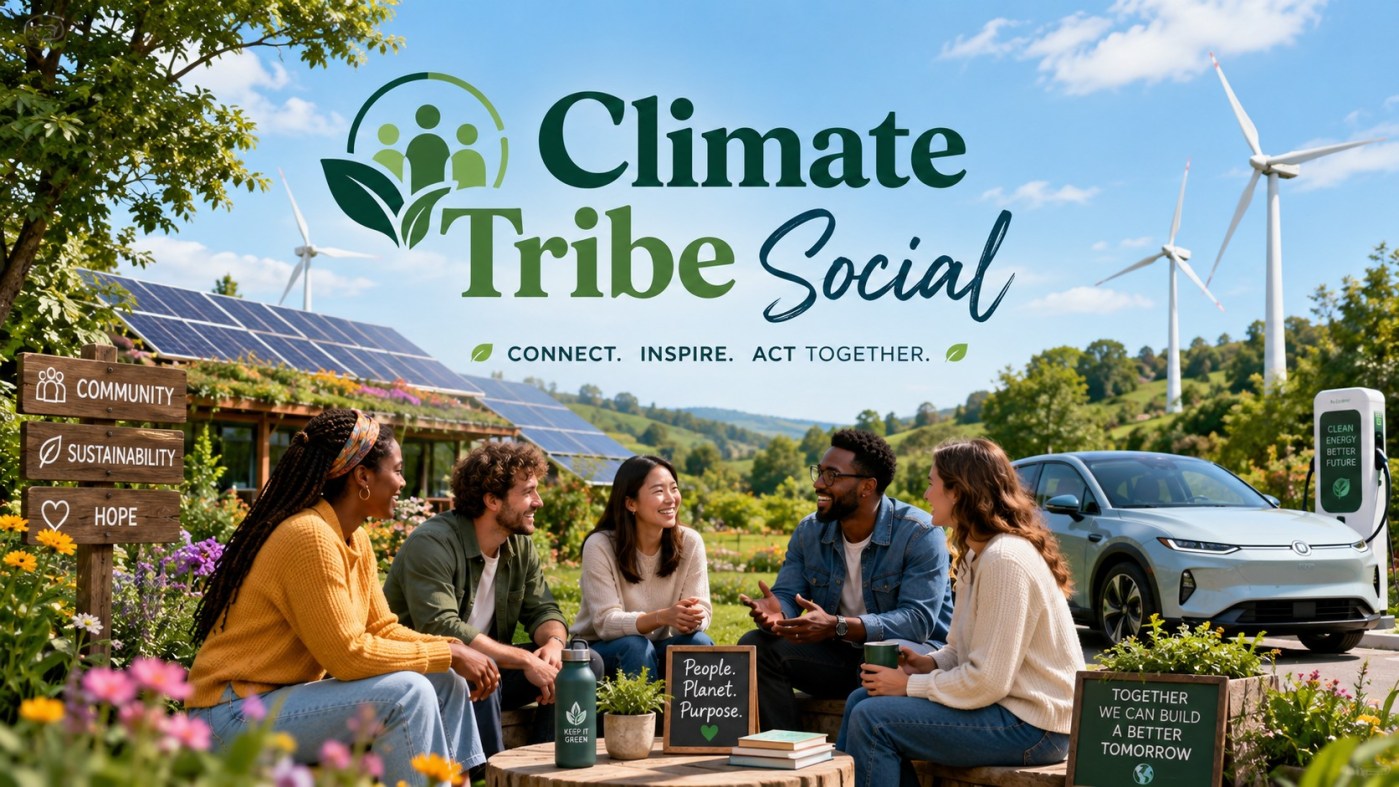
We haven’t gone quiet.
We’ve been designing something sharper, more useful, and very much alive.
A quick signal from Climate Tribe Social
If you have wondered whether we drifted off, rest assured: we did the opposite. We went heads‑down, into the messy, practical edge where the Climate and Ecological Emergency stops being an abstraction and starts showing up in bylaws, regulations, invoices, and board meetings. We have been building for that frontier.
The reality is now landing not as distant warnings, but as building codes, compliance timelines, retrofit mandates, insurance shifts, and price signals on the desks of owners, co‑op boards, businesses, and entire communities. We are reshaping Climate Tribe Social around this new terrain: as a place where people can take their first clear steps through these climate laws and systemic shifts, in plain language, with peers beside them rather than in isolation.
You could call it a lab for applied Adaptive Resiliency — self‑ and collective‑preservation expressed as concrete next actions, shared tools, and mutual accountability. Not resilience as a slogan, but as a social technology.
Why “Adaptive Resiliency” now
For us, Adaptive Resiliency means three things:
- Treating climate disruption as a structural reality, not a temporary anomaly.
- Recognizing that no one navigates this well alone; capacity is built in networks.
- Translating policy and technology into lived practice at the building, block, and community level.
The point is not to become experts in every subdomain overnight, but to construct an ecosystem where owners, practitioners, organizers, and curious neighbors can see what is coming, understand the options, and move together with a bit more clarity and a bit less fear.
Learning in the open
I will be candid: much of this is new ground for me as well. I am learning it in the open — reading the fine print, talking with people in the field, testing ideas, discarding what does not hold up, and annotating the journey as I go. I am not here as a finished expert performing certainty. I am here as a committed practitioner, willing to show the work, refine it in public, and earn trust through the clarity and integrity of that process.
My bet is simple: if I keep showing up, asking better questions, and steadily refining the craft, I will grow the kind of command that only comes from sustained engagement. I would rather build that in full view than rely on inflated titles.
What’s coming next
Over the next couple of months, we are taking the time to architect this properly: the structure, the formats, the collaborations, and the economics. When it is ready, we will lay out the whole thing in full sentences:
- how it works,
- what it costs,
- who it is for,
- and how to join in if it aligns with your needs and values.
No manufactured urgency, no breathless hype. Just a clearer, more coherent way forward that we are genuinely excited to share.
Thank you for your patience — and for caring enough about this work to still be reading. The most interesting part is still ahead of us.
A note on Clean, Green AI
We are building alongside AI as a partner, bound to a clear Clean standard: powered as cleanly as possible, deployed in service of communities rather than against them, and always with an explicit duty of care to children, young adults, and the biodiversity we depend on.
For us, AI is not an oracle; it is a mirror. It reflects the values, data, and intent we feed into it. Used well, it can be 100% aligned with a green transition — accelerating understanding, amplifying community capacity, and helping us see patterns we would otherwise miss. Used poorly, it can just as easily reinforce the very systems we are trying to transform.
Our commitment is to the first path.
— Mr. Alvarez, Content Curator, Climate Change Community and its child‑sites
— Climate Change Community and its child‑sites AI Assistant
 empowerment & inner transformation...
Leave a comment