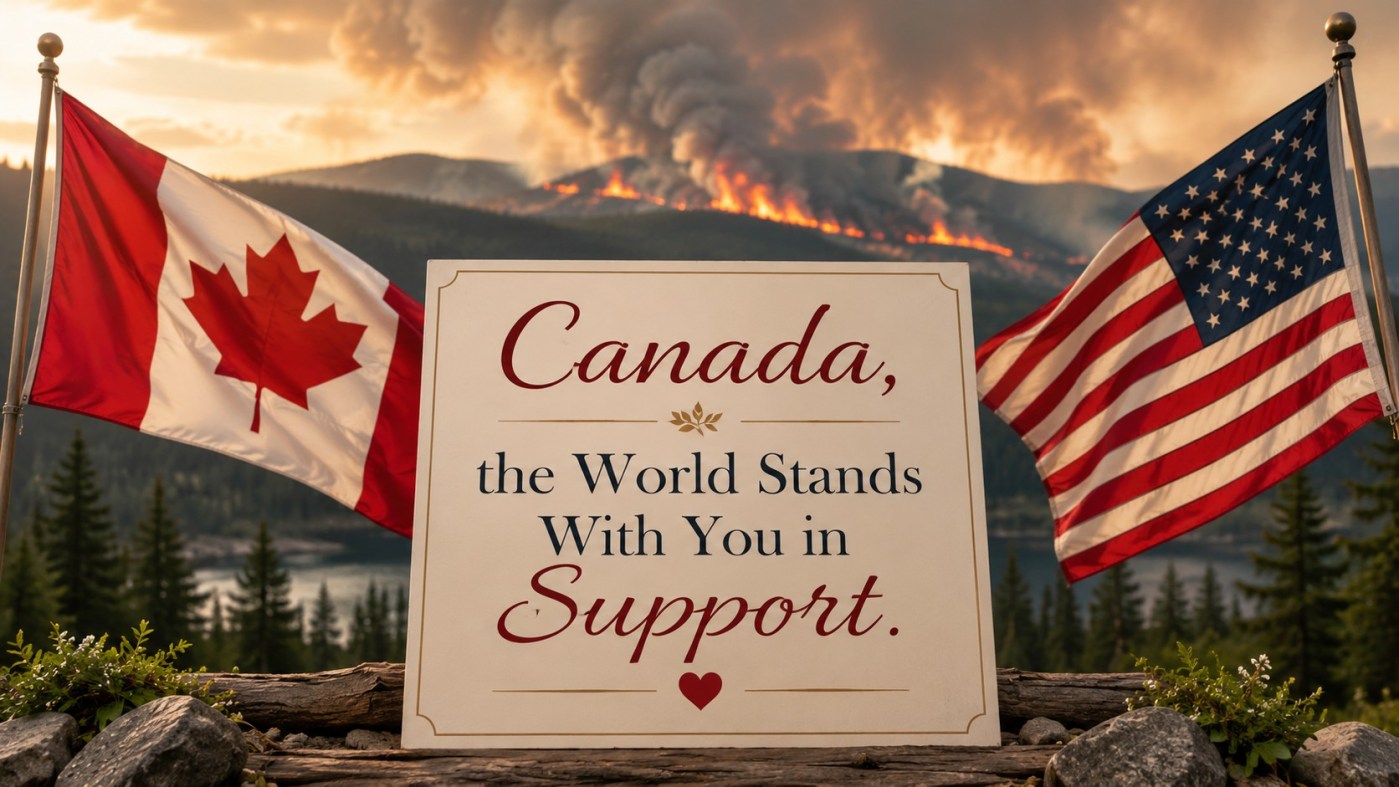
Evacuations, destroyed communities and dangerous air demand both climate action and immediate personal protection
By Mr. Alvarez | Thoughts Enhanced through AI Assistant
A new report from the Daily Forecast Canada YouTube channel, titled “NEW UPDATE: Ontario Wildfire Disaster Deepens | Evacuations & Smoke Crisis,” captures the growing severity of the wildfire emergency unfolding across northern Ontario.
The situation is no longer simply a story about distant forest fires. It is an expanding humanitarian, environmental and public-health crisis affecting Indigenous communities, rural settlements, major Canadian cities and millions of people across the United States.
As of July 16, approximately 859 active wildfires were burning across Canada, including 113 classified as out of control. More than 2.38 million hectares—approximately 5.9 million acres—had burned nationally. The wildfire threatening the Armstrong area of northwestern Ontario had grown beyond 350,000 hectares. (Reuters)
These numbers represent more than scorched land. They represent families forced to flee, cultural and community losses, wildlife displacement, damaged infrastructure and the destabilization of ecosystems that may take generations to recover.
Communities Facing the Flames
The disaster has been particularly devastating for remote and Indigenous communities.
Approximately 1,600 people from First Nations communities had been evacuated because of wildfires by July 15. Namaygoosisagagun First Nation, also known as Collins First Nation, was evacuated after a fast-moving fire swept toward the community near Armstrong. According to Reuters’ account of local reporting, residents warned one another door to door before escaping by boat with their pets as the fire approached. The community’s chief said the settlement was destroyed in less than an hour. (Reuters)
Ontario subsequently requested federal assistance, including potential support from the Canadian Armed Forces, to help evacuate threatened northern communities. Rail service near Armstrong was also suspended after workers and residents were evacuated from the area. (Reuters)
The Daily Forecast Canada video places this worsening disaster into visual and geographic context. It helps viewers understand how quickly fires can spread through dry boreal forests, how difficult remote evacuations can become and how smoke from a concentrated group of fires can affect people living hundreds or even thousands of miles away.
Smoke Does Not Stop at the Border
Wildfire smoke from Canada has spread south and east across much of the United States, producing unhealthy air from the Upper Midwest and Great Lakes into the Northeast and Mid-Atlantic.
More than 20 states have faced degraded air quality associated with the smoke. Chicago, Detroit, Minneapolis, New York City and other urban areas have experienced thick haze, reduced visibility and elevated fine-particle pollution. Some areas recorded air quality ranging from unhealthy to hazardous. (The Guardian)
New York State issued air-quality advisories as visible smoke and haze spread across the region. The smoke affected New York City and surrounding areas, while officials distributed N95 masks and urged residents—particularly those at higher medical risk—to reduce outdoor exposure. (ABC7 New York)
The scale of the smoke plume demonstrates a crucial climate reality: environmental disasters do not recognize political boundaries.
A fire in northern Ontario can affect a child with asthma in Detroit, an outdoor worker in Chicago, an older adult in Buffalo or a pregnant resident of New York City. What begins as a forest emergency can become a continental public-health emergency within days.
Why Wildfire Smoke Is Dangerous
Wildfire smoke is a changing mixture of gases, vapor and microscopic particles. The greatest immediate health concern is generally fine particulate matter known as PM2.5.
These particles are small enough to travel deep into the lungs. Exposure can irritate the eyes, nose and throat, produce coughing or wheezing, worsen asthma and COPD, and place added stress on the cardiovascular system.
The Centers for Disease Control and Prevention warns that wildfire smoke can make breathing difficult and is especially dangerous for:
- Children and teenagers
- Adults aged 65 and older
- Pregnant people
- People with asthma or COPD
- People with heart disease
- People with diabetes or chronic kidney disease
- Outdoor workers
- Anyone who lacks access to effective indoor filtration or properly fitted respirators (CDC)
However, unhealthy smoke is not only a concern for medically vulnerable people. At sufficiently high concentrations, everyone can be affected.
Headaches, irritated eyes, a sore throat, persistent coughing, unusual fatigue, chest tightness and shortness of breath should not be dismissed simply because the nearest wildfire is in another country.
A Compounding Climate Emergency
The wildfires are unfolding alongside periods of extreme summer heat. This combination creates a dangerous feedback of overlapping hazards.
Heat dries vegetation and soils, helping fires ignite and spread. Smoke then makes outdoor activity more dangerous, while high temperatures can make it difficult for residents to remain inside buildings without adequate cooling. Closing windows may reduce smoke infiltration but can also cause indoor temperatures to rise dangerously in homes without air conditioning.
The result is a public-health dilemma: people may be forced to choose between breathing polluted outdoor air and remaining inside an overheated home.
This is why wildfire resilience cannot be treated exclusively as a firefighting issue. It requires cooling centers with filtered air, public mask distribution, affordable home filtration, workplace protections, evacuation planning, reliable communications and stronger support for remote and Indigenous communities.
It also requires confronting the continued combustion of fossil fuels that is intensifying the heat, drying and climatic instability under which destructive fires become more likely.
Addendum: What People Can Do About Wildfire Smoke and Ash
The following precautions apply to people in Canada and to those living downwind in the United States.
1. Check the Air Quality Before Going Outside
Do not rely only on whether the sky looks clear or whether you can smell smoke.
Fine particles may remain elevated even when smoke is not strongly visible. Check your local Air Quality Index, public-health alerts and smoke forecasts before exercising, working or allowing children to play outdoors.
In the United States, residents can use AirNow and the AirNow Fire and Smoke Map. Canadians should follow Environment and Climate Change Canada, provincial air-quality services, local public-health agencies and emergency-management announcements.
Under the U.S. Air Quality Index:
- Orange, 101–150: Unhealthy for sensitive groups
- Red, 151–200: Unhealthy
- Purple, 201–300: Very unhealthy
- Maroon, above 300: Hazardous emergency conditions (CDC)
At red, purple or maroon levels, outdoor exposure should be reduced substantially—even for otherwise healthy people.
2. Reduce Outdoor Activity
During unhealthy smoke conditions:
- Postpone running, cycling and strenuous outdoor exercise.
- Move children’s activities indoors.
- Take shorter and less strenuous walks.
- Reschedule outdoor work where possible.
- Ask employers or supervisors about filtered indoor assignments.
- Keep pets indoors except for brief bathroom breaks.
Strenuous activity causes people to breathe faster and more deeply, increasing the amount of smoke drawn into the lungs.
3. Wear the Right Respirator
When outdoor exposure cannot be avoided, wear a properly fitted NIOSH-approved N95 or P100 respirator.
The respirator should:
- Fit tightly around the nose, cheeks and chin.
- Have no obvious gaps around its edges.
- Be replaced when it becomes dirty, damaged, wet or difficult to breathe through.
- Be worn over both the nose and mouth.
Loose surgical masks, cloth masks, bandanas and neck gaiters do not provide the same protection against fine smoke particles.
A respirator cannot filter every gaseous component of wildfire smoke, but a well-fitted N95 or P100 can substantially reduce the inhalation of harmful particles. The CDC advises people who must go outdoors during smoke events to use a tightly fitted respirator correctly. (CDC)
People with serious heart or lung conditions should discuss respirator use with a health professional, because breathing through a respirator may be more physically demanding.
4. Create a Cleaner-Air Room
Choose one room in the home where household members can spend most of their time during severe smoke.
A bedroom or living room that can be closed off from the rest of the building may work well.
To establish a cleaner-air room:
- Close windows and exterior doors.
- Run a correctly sized portable HEPA air cleaner continuously.
- Use the highest practical fan setting.
- Select a device that does not intentionally generate ozone.
- Keep doors to the room closed as much as possible.
- Avoid smoking, candles, incense and fireplaces.
- Limit frying, broiling and other cooking that creates particles.
- Avoid ordinary vacuuming unless the vacuum uses a HEPA filter.
The EPA recommends keeping cleaner-air rooms free from activities that produce additional particles and using portable filtration when available. (US EPA)
5. Adjust Heating and Cooling Systems
Where central air conditioning or HVAC is available:
- Set the system to recirculate rather than bringing in outdoor air.
- Close or reduce fresh-air intake when the system allows it.
- Use a MERV 13 or higher filter when the system can safely accommodate it.
- Check the filter frequently during prolonged smoke events.
- Replace visibly dirty or heavily loaded filters.
AirNow notes that portable cleaners and MERV 13 or higher HVAC filters can reduce indoor smoke particles, although filters may need to be changed more often during severe events. (AirNow)
Never install a filter that could damage the HVAC system or dangerously restrict airflow. Consult the equipment manual or a qualified technician when uncertain.
6. Seek a Public Cleaner-Air Space When Necessary
Remaining at home may not be safe when:
- The building is extremely hot.
- Smoke continues entering despite closed windows.
- There is no functional air filtration.
- Power has failed.
- A resident is experiencing worsening symptoms.
Consider temporarily relocating to a library, community center, cooling center, shopping mall, cleaner-air shelter or the home of a friend or relative with effective air conditioning and filtration.
The EPA advises seeking another location when a home cannot remain cool or adequately protected from smoke. (US EPA)
7. Avoid Creating More Indoor Pollution
During smoke events, indoor air can deteriorate rapidly.
Avoid:
- Smoking or vaping indoors
- Burning candles or incense
- Using a wood-burning stove or fireplace
- Spraying aerosols unnecessarily
- Frying or charring food
- Vacuuming without HEPA filtration
- Running equipment powered by gasoline, propane or charcoal indoors
Gasoline-powered generators, charcoal grills and similar devices must never be used inside a home, garage or enclosed porch because of the risk of fatal carbon-monoxide poisoning.
8. Handle Falling Ash Carefully
Ash can contain extremely small particles and residues from burned vegetation, buildings, vehicles, plastics, treated wood and other materials.
Do not assume ash is harmless because it looks like ordinary dust.
When ash has settled:
- Keep children and pets away from contaminated areas.
- Do not use leaf blowers.
- Do not dry sweep.
- Lightly mist ash before cleaning so it does not become airborne.
- Use a damp cloth or wet mop on lightly contaminated surfaces.
- Use a HEPA-filtered vacuum where appropriate.
- Wear gloves, long sleeves, long pants, shoes and socks.
- Wear a fitted N95 respirator.
- Remove shoes before entering clean indoor areas.
- Change contaminated clothing after cleanup.
- Wash exposed skin gently with soap and water.
EPA guidance recommends avoiding activities that stir ash into the air, misting hard surfaces before cleaning and wearing protective clothing and an N95 during cleanup. (US EPA)
People with heart or lung disease, children and older adults should not participate in ash cleanup. (US EPA)
Do not wash large amounts of ash into storm drains, waterways or sewer systems. Follow local cleanup and waste-disposal instructions, especially when burned buildings, vehicles or industrial materials may be involved.
9. Protect Your Eyes, Skin and Clothing
Smoke and ash can irritate the eyes and skin.
- Wear glasses instead of contact lenses when smoke causes eye irritation.
- Rinse irritated eyes with clean water or sterile saline.
- Shower after prolonged outdoor exposure.
- Wash smoke-exposed clothing separately when heavily contaminated.
- Keep outdoor shoes near the entrance.
- Wipe pets’ paws and fur with a damp cloth after they go outside.
- Do not allow pets to lick ash from their coats or paws.
10. Know When to Seek Medical Help
Contact a healthcare professional when you experience new or worsening:
- Persistent coughing
- Wheezing
- Shortness of breath
- Asthma symptoms
- Chest discomfort
- Unusual fatigue
- Headaches or dizziness
- Eye or throat irritation that does not improve after leaving the smoky environment
Seek emergency assistance immediately for:
- Severe difficulty breathing
- Chest pain or pressure
- Bluish lips or face
- Confusion
- Fainting
- Severe weakness
- A serious asthma attack that does not improve with prescribed medication
- Signs of a heart attack or stroke
People with asthma should keep prescribed rescue medication available and follow their asthma action plan. Those with heart or lung disease should speak with their healthcare provider before smoke conditions become severe. The CDC advises seeking medical help for new or worsening symptoms associated with smoke exposure. (CDC)
11. Check on Others
Adaptive resiliency is not only an individual responsibility. It is a community practice.
Check on:
- Older neighbors
- People living alone
- Families with young children
- People with disabilities
- Outdoor workers
- People without air conditioning
- People experiencing homelessness
- Anyone who may not receive digital alerts
- Households without transportation or filtration equipment
Share spare N95 respirators, replacement filters and information about cooling centers or cleaner-air shelters when possible.
Community organizations can also create phone trees, distribute printed safety information and identify residents who may need transportation or medical assistance during prolonged smoke events.
Beyond Emergency Protection
N95 respirators, HEPA filters and cleaner-air rooms are necessary defenses, but they are not substitutes for systemic action.
Governments and institutions must invest in:
- Indigenous-led fire stewardship
- Safe evacuation infrastructure
- Remote-community emergency transportation
- Public cleaner-air and cooling centers
- Filtration in schools and public housing
- Stronger protections for outdoor workers
- Forest and watershed restoration
- Reliable air-quality monitoring
- Affordable home weatherization and filtration
- Rapid greenhouse-gas reductions
The widening smoke plume should be understood as both a health warning and a political message.
The people whose homes are threatened by fire and the people breathing smoke hundreds of miles away are part of the same climate system. Our protection depends on recognizing that connection and acting collectively.
The Ontario wildfire disaster is deepening. The smoke reaching the United States is not separate from the emergency—it is one of its far-reaching consequences.
The immediate responsibility is to protect lungs, homes and vulnerable neighbors.
The larger responsibility is to build communities capable of surviving worsening climate disruption while working urgently to prevent the future from becoming even more dangerous.
Health information in this article is intended for general public education and does not replace individualized medical advice, diagnosis or emergency care.
The article is now structured so the Daily Forecast Canada video can be embedded directly below the introduction, with the practical addendum serving as a shareable public-safety resource.
…see other posts later at cCcmty.com
…especially this one:
The Ocean, Your Plate, and the Path Forward: What This Summer’s Climate Data Is Really Telling Us


Leave a Reply