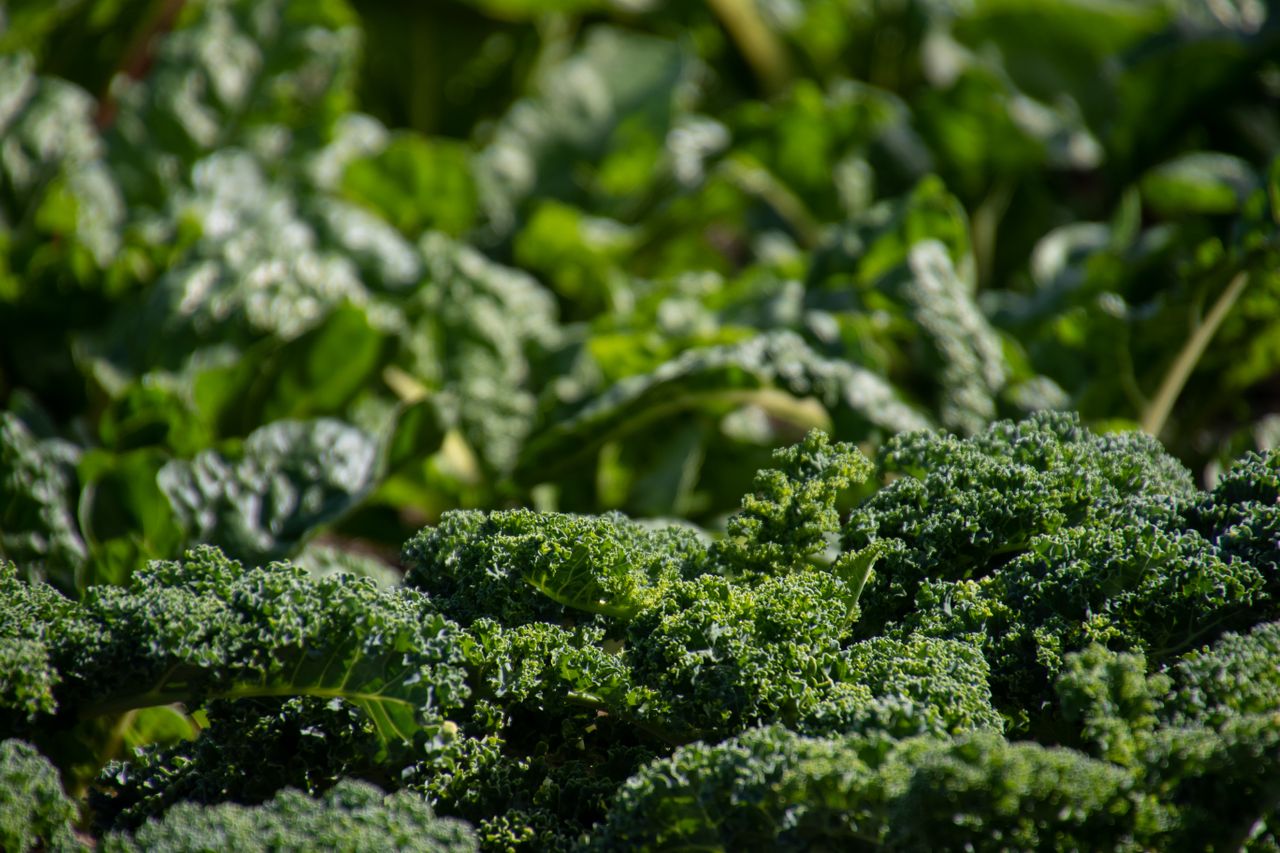
Back in 2021, I shared a short piece about an unusual half-acre on the lower south side of Providence — the Edible Forest Garden at Roger Williams Park. The idea was simple and a little radical: plant a patch of city land so it behaves like a forest, in layers and relationships, and then mostly get out of its way. No annual plowing. No tilling every spring. As the original article put it: no plowing, no problem.
I’ve been wanting to know whether that promise held up. So consider this the follow-up.
It held up.
The project broke ground in April 2012 as a partnership between University of Rhode Island Master Gardeners and the City of Providence. The site was chosen deliberately — on the edge of a USDA-designated food desert, next to the Roger Williams Park Community Garden, where access to fresh food is exactly the thing too many neighborhoods don’t have. The design wasn’t a vegetable patch dressed up in tree language. It was a genuine attempt to copy how a forest stacks itself: a canopy, an understory, shrubs, ground cover, roots, and vines, all chosen to feed people, wildlife, and the soil at the same time.
More than a decade later, the forest is still standing — and still feeding people. It’s now a fixture of the Botanical Center grounds, still tended by URI Cooperative Extension Master Gardeners, and the neighboring Produce Donation Garden grows more than 5,000 pounds of pesticide-free food every year for local food banks and kitchens. The garden has outlived news cycles, grant deadlines, and the short attention span we tend to give “pilot projects.” That’s the whole point of designing for succession instead of for a single season.
Here’s why this matters beyond Providence.
We talk about the Climate and Ecological Emergency in enormous terms — gigatons, degrees, tipping points — and we should. But a stable climate is also built out of small, stubborn, repeatable acts of resilience. A half-acre that feeds a neighborhood through a heat wave. A system that doesn’t collapse the moment a volunteer moves away or a budget gets cut. Food grown close to the people who eat it, on land that gets healthier rather than more depleted each year. This is what adaptive resiliency looks like at street level: not a slogan, but a design that survives.
The forest garden also answers a quiet objection I hear a lot — that this kind of work is nice but doesn’t scale. The people who planted it always argued the opposite, and thirteen growing seasons later they’ve got the evidence. The model can be shrunk to a backyard or scaled to a vacant lot. It can grow things you won’t easily find in a supermarket. And once it’s mature, it asks less of us, not more — which is exactly the kind of infrastructure a warming, more volatile world is going to need.
So the 2021 post was right to be hopeful, and I’d put it more plainly now: a forest planted in a food desert is still bearing fruit, still donating its harvest, and still teaching anyone who shows up for a tour. That’s not a feel-good footnote. It’s a working blueprint.
If you want to see one, Providence has one waiting.
Mr. Alvarez, Content Curator of Climate Change Community and its Child-Sites, with the help of our ‘Green AI.’


Leave a Reply