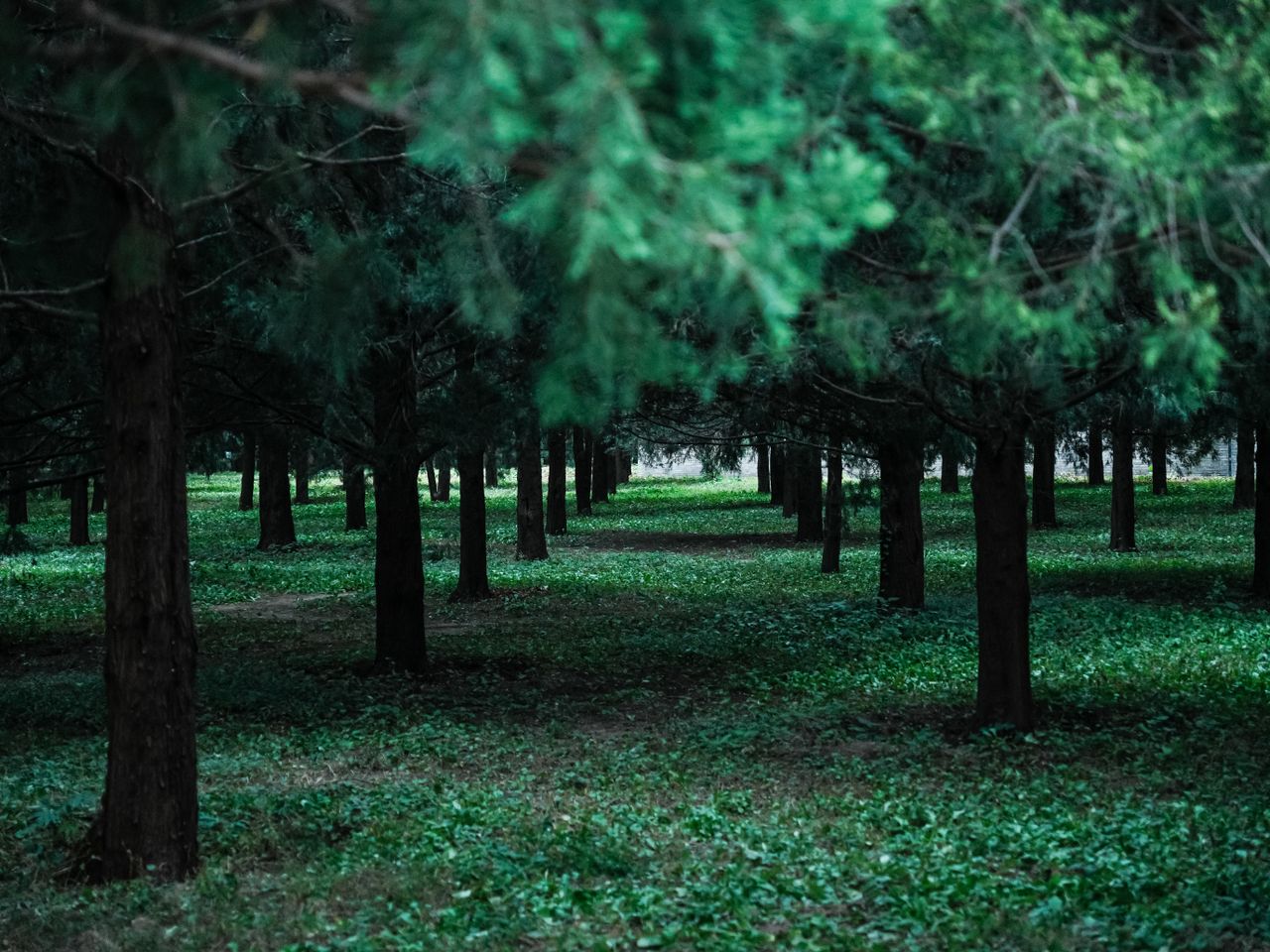
A reflection on ecological restoration, planted forests, and the courage to act when the future feels fragile
There are moments in the climate and ecological emergency when the scale of what we face can make hope feel unreasonable. We look at expanding deserts, damaged soils, rising heat, broken water cycles, displaced communities, and the continued extraction of fossil fuels, and it can seem as if humanity has already waited too long. Yet every so often, a story appears that reminds us that large-scale repair is not fantasy. It is difficult. It is imperfect. It demands patience. But it is possible.
China’s Great Green Wall is one of those stories.
Since 1978, China has been building what is formally known as the Three-North Shelterbelt Program, a vast restoration and afforestation effort across northern China; the United Nations describes the program as covering 13 provinces, autonomous regions, and municipalities across northern China, with a 72-year plan running from 1978 to 2050. (Sustainable Development Goals) Live Science reports that more than 66 billion trees have been planted, with plans for 34 billion more by mid-century, as part of the effort to slow the spread of the Gobi and Taklamakan deserts. (Live Science)
That alone deserves recognition. In a world too often trapped in short election cycles, quarterly profits, and a culture of delay, China began a multi-generation ecological project and sustained it for decades. This does not mean every choice has been perfect, nor that large-scale tree planting is a complete climate solution. But it does mean something important: when a nation decides that land degradation is an emergency, it can mobilize people, policy, science, funding, and time toward repair. That is worth applauding.
A surprising signal from the forest canopy
New research has added another layer of significance to this story. A 2026 study in Geophysical Research Letters found that China’s planted forests increased their leaf area 65.8% faster than natural forests nationally; even when comparing forests of similar age and growing conditions, planted forests still grew 4.6% faster. (AGU Publications)
This is not a reason to simplify the story into “plant trees and the problem is solved.” It is a reason to pay closer attention. The research suggests that forest-based climate action is not only about how many trees are planted. It is about when they are planted, which species are selected, how diverse the forest is, how it is managed, how long the benefits last, and how the forest interacts with water, soil, heat, biodiversity, and human communities.
Hope, but not fantasy
Reuters reported in 2024 that China completed a roughly 3,000-kilometer green belt around the Taklamakan Desert after a 46-year campaign, with more than 30 million hectares of trees planted under the broader Three-North Shelterbelt effort. The same reporting noted that China’s national forest coverage had risen above 25%, while 26.8% of the country’s land was still classified as desertified. (Reuters)
That last point matters. Hope must be honest to be useful. China’s work shows possibility, but it also shows the limits and tradeoffs of ecological engineering. Tree survival can be difficult in arid regions. Poor species choices can strain water supplies. Monocultures can be vulnerable to pests, drought, disease, and fire. A forest grown quickly for canopy cover may not provide the same long-term carbon storage, biodiversity, soil complexity, or resilience as a mature natural forest.
The Live Science report notes that the planted-forest advantage appears to decline after about age 40, while natural forests remain irreplaceable for long-term carbon storage and resilience. (Live Science) That is not a criticism of the effort. It is a call to deepen it.
Why China’s effort deserves applause
China deserves applause for attempting restoration at a scale that matches the scale of the problem. The climate and ecological emergency does not reward small gestures when systems are collapsing at continental scale. The Great Green Wall shows that large countries can make long-term ecological commitments, connect land restoration to public policy, and treat desertification as a matter of national resilience.
The achievement is not only the number of trees. It is the willingness to keep going. Sixty-six billion trees represent generations of effort. They represent planning beyond one administration, one news cycle, or one budget year. They represent a refusal to surrender whole landscapes to degradation without a fight.
For communities around the world that feel trapped in climate grief, that refusal is powerful. It says: the future is not healed by hope alone, but hope can become infrastructure when joined with action.
A green wall, and a human message
The image of a green wall rising against desert sand is more than an environmental headline. It is a message about human capacity. It tells us that degraded land is not always a permanent sentence. It tells us that policy can become seedlings, seedlings can become shelter, shelter can become livelihood, and livelihood can become resilience.
For those who feel there is little hope, this is the reminder: hope does not always arrive as a speech. Sometimes it arrives as a line of trees in dry soil. Sometimes it arrives through decades of work that no single person will fully own. Sometimes it arrives through a nation choosing to plant, learn, correct, and continue.
China’s Great Green Wall should not make us complacent. It should make us braver. It should push us to ask what our own communities, states, nations, and networks are willing to build with the same seriousness.
In a time when despair is easy, the Great Green Wall gives us something better than easy optimism. It gives us evidence of effort. It gives us a living example of adaptive resiliency. And it reminds us that when humanity chooses restoration at scale, the ground itself can begin to answer.
By Mr. Alvarez | Thoughts Enhanced by AI Assistant


Leave a Reply