COMMENTARY | DISASTER JUSTICE
Wildfire Relief Is Not a Political Reward
My disappointment, disbelief, and unapologetic anger at America’s disaster-aid divide
When fire threatens a community, the federal response must be governed by need–not loyalty, leverage, or a president’s electoral map.
By Mr. Alvarez | Thoughts Enhanced by AI Assistant
Updated August 9, 2026
I am disappointed.
I am in disbelief.
And yes, I am angry—deeply and unapologetically angry.
That anger is not reckless. It is not partisan theater. It is the morally proportionate response to a nation reaching the point where Americans have legitimate reason to ask whether federal disaster assistance depends, even partly, on how their state voted.
No family watching flames move toward its home should have to ask that question. No firefighter standing between a community and a wall of fire should have to wonder whether the federal government considers the people behind that fireline politically worthy of help. No governor, county, tribe, rural fire district, mayor, or emergency manager should have to decode an electoral map before estimating whether national assistance will arrive.
Disaster relief is not a loyalty reward. It is not presidential charity. It is not campaign currency. It is a public obligation funded by the people of the United States—all of us—and it must be administered according to danger, damage, need, and the protection of life.
Yet recent events in Oregon, a widening national disparity in disaster approvals, and a documented history of threats to use aid as political leverage have made disbelief reasonable and anger necessary.
What happened in Oregon
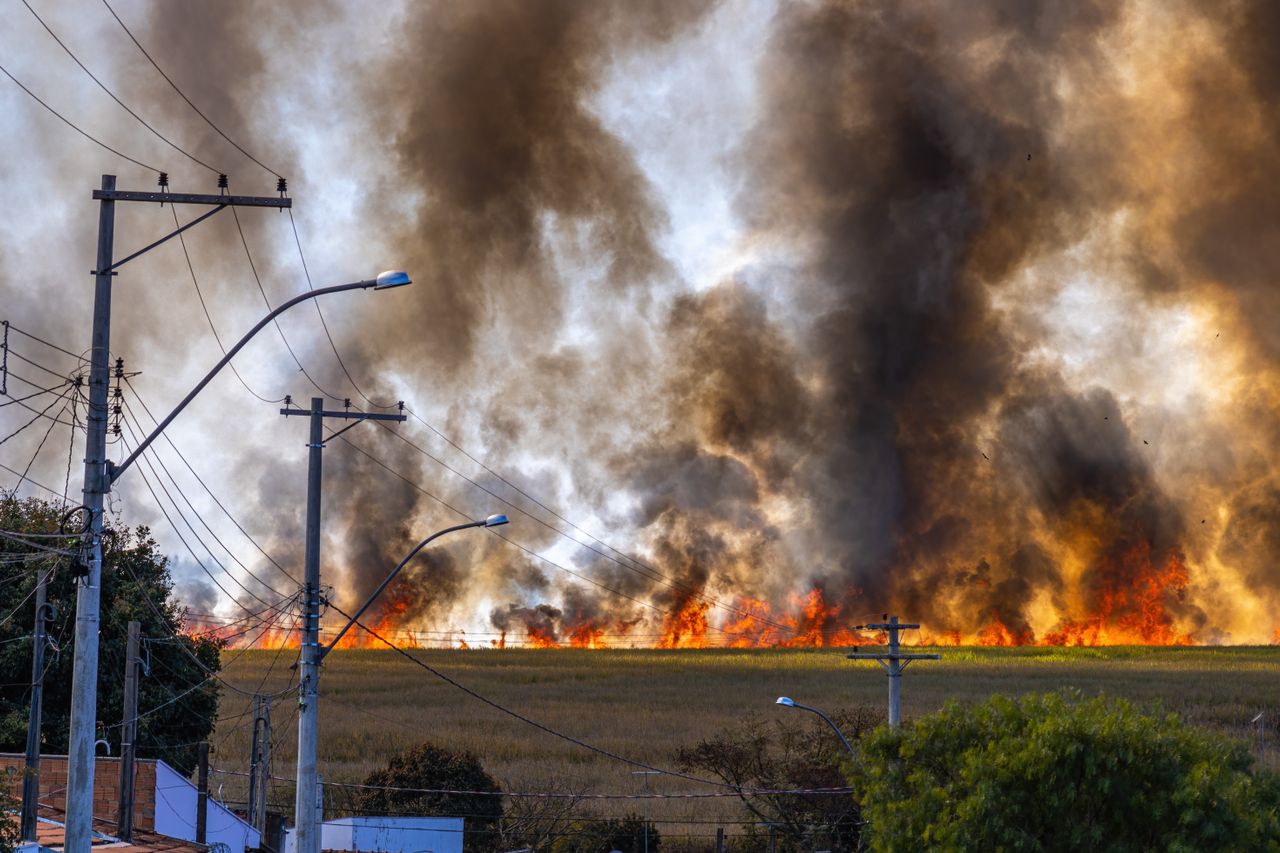
In July 2026, Oregon was confronting what its U.S. senators described as the worst wildfire situation in the country. By July 27, the state had 86 active fires burning more than one million acres, with more than 33,000 people under some level of evacuation. Water, electric power, communications, warning systems, and 911 capabilities were under strain.
Oregon requested Fire Management Assistance Grants, known as FMAGs, for five fires. FEMA approved assistance for the Lower Dry Creek, Akawa Butte, and Grasshopper fires. It initially denied assistance for the East Evans Creek Fire and the Rowe Creek Fire Complex.
Those were not minor incidents.
When Oregon sought assistance for East Evans Creek, the fire had burned nearly 16,000 acres, and more than 230 homes were under Level 3 “Go Now” evacuation orders. Roads, bridges, communications towers, utilities, businesses, irrigation systems, and agricultural operations were threatened.
When the state sought assistance for Rowe Creek, more than 401 people were under Level 3 evacuation orders. The fire threatened electrical systems and public-safety communications. It later grew beyond 300,000 acres and required thousands of firefighters and support personnel.
Oregon Sens. Ron Wyden and Jeff Merkley called the denials a “significant departure from FEMA’s historical criteria and agency guidance.” They asked FEMA to identify the criteria it used, explain any changes made between 2025 and 2026, disclose who participated in the decisions, and provide a decade of state-by-state approval and denial data. Their questions were not rhetorical; they requested answers by August 10. (Merkley and Wyden’s letter)
The concern crossed party lines. Republican and Democratic Oregon lawmakers demanded reconsideration. Republican State Rep. Vikki Breese-Iverson said her constituents “did everything right and FEMA still shut the door.” Republican State Sen. David Brock Smith joined Democratic lawmakers in insisting that communities and fire districts urgently needed federal support. (KLCC)
That bipartisan reaction matters. Fire does not care whether a threatened home belongs to a Republican, Democrat, independent, or a person who never voted. The people closest to these fires understood that simple truth.
A partial reversal—and questions that still demand answers
On August 1, FEMA authorized federal funds for the West Zone of the Rowe Creek Complex. Local reporting described the decision as a reversal of the earlier denial. The authorization can cover up to 75 percent of eligible firefighting costs; it is not direct compensation for destroyed homes or businesses. (FEMA; KLCC)
I welcome that assistance. I am relieved that some federal support is now available. But relief does not erase the original decision, the delay, or the confusion.
And it does not answer the central question: What changed?
Did the fire finally become destructive enough to satisfy a newly tightened standard? Did additional facts reach FEMA? Did political pressure force a second look? Was the later West Zone request technically different from the first request? Why did a fire complex have to grow so enormous before the federal answer became yes?
As of August 9, the FMAG request for East Evans Creek remained denied. That makes transparency even more urgent, not less.
Public scrutiny should not be necessary to make objective disaster standards function. Communities should not have to generate headlines, congressional letters, and bipartisan outrage before federal criteria become understandable or aid becomes available.
What the law says—and why the dispute is so serious
The federal regulation governing FMAG declarations says FEMA should approve assistance when a fire “threatens such destruction as would constitute a major disaster.” It directs FEMA to consider threats to lives, property, infrastructure, and watersheds; the availability of state and local firefighting resources; fire-danger conditions; and potential major economic impact. The decision is supposed to reflect conditions at the time of the state’s request. (44 C.F.R. Part 204)
That language is preventive. It does not say a community must first be destroyed. The purpose is to help stop a threatening fire from becoming a major disaster.
This is why Oregon officials objected so strongly to FEMA’s reported explanation that the two fires did not meet the criteria for a major-disaster declaration. The distinction is not semantic. Waiting for devastation defeats the purpose of helping to finance the fight before devastation spreads.
FEMA maintains that it evaluates requests objectively under statutory criteria. The administration is entitled to present its evidence and reasoning. But “trust us” is not enough when standards appear inconsistent, when experienced state officials say the practical threshold has shifted, and when the national data reveal a partisan-looking divide.
The government owes the public records, criteria, timelines, and a decision trail that can be independently examined.
What has—and has not—been proved
Accuracy matters to me, especially when I am angry.
I have not found a public FEMA document stating that a state is denied assistance because it voted against President Donald Trump. I will not claim that such a formal rule has been proved when it has not.
But that does not make the concern imaginary.
An Associated Press analysis of FEMA data found that, during President Trump’s second term, about 80 percent of major-disaster requests from Republican governors had been approved, compared with roughly 60 percent from Democratic governors. Measured by the 2024 presidential vote, the administration had approved more than three-quarters of requests from states Trump won but fewer than half from states he lost. AP also found that the president was taking an average of about six weeks to approve major-disaster declarations—longer than any president in the data going back to 1989. (Associated Press)
To be precise, that analysis concerns presidential major-disaster declarations, while Oregon’s controversy centers on a different program: Fire Management Assistance Grants. The AP data do not prove why these particular Oregon requests were denied.
But the difference in programs does not make the national pattern irrelevant. It adds to the demand for transparency across the federal disaster system.
The White House told AP that “there is no politicization” in the president’s decisions and said the longer reviews protect taxpayers. That denial deserves to be reported. It also deserves to be tested against complete data and disclosed decision records.
When approval rates diverge so sharply, the burden is on the government to demonstrate that objective conditions—not political preference—produced the difference.
This fear did not appear out of nowhere
Americans are not imagining this concern in a historical vacuum.
Reporting about President Trump’s first term described aides using voter-registration maps to persuade him to approve California wildfire assistance by showing that Republican voters also lived in affected areas. Former administration officials have alleged that disaster decisions were influenced by political resentment toward states and leaders the president considered hostile.
More directly, before returning to office, Trump publicly threatened to withhold California wildfire money unless Gov. Gavin Newsom complied with his demands. “We won’t give him money to put out all his fires,” Trump said in September 2024. (E&E News by POLITICO)
Washington state provides another reason for public unease. The administration denied—and then denied on appeal—a request for federal disaster assistance after the November 2024 bomb cyclone caused at least $34 million in damage to public roads, utilities, and electrical systems. Neither denial supplied a detailed public explanation. That was not a wildfire request, but it was another Pacific Northwest community asking what standards governed the federal response. (KUOW)
None of these facts, standing alone, proves the motive behind every denial. Together, however, they make concern about political influence entirely rational.
We do not need to invent a conspiracy. The documented statements, statistical disparity, unexplained denials, inconsistent-looking standards, and history of political threats are alarming enough.
Behind every data point is a human life
Government language can sterilize disaster. “Thresholds.” “Eligible costs.” “At the time of application.” “Supplemental assistance.” Those phrases may be administratively necessary, but they can hide what fire actually does to people.
Rick Steber escaped through a wall of flame from the cabin his family had built decades earlier. The Green Mountain Fire, which merged into the Rowe Creek Complex, destroyed it. “I lost everything. It was like a gut punch,” he told Oregon Public Broadcasting. (OPB)
Ranchers described cutting fences and opening gates in the hope that cattle could outrun fast-moving fire. Families packed pets, medicines, documents, and whatever they could carry. People on the Warm Springs Reservation faced road closures, power interruptions, water warnings, and confusion while trying to evacuate. Communities organized donations because neighbors were forced from their homes with almost no time to prepare.
Meanwhile, firefighters worked across an overstretched system. On the Rowe Creek Complex, Oregon State Fire Marshal spokesperson Gert Zoutendijk said agencies were stretched and working long hours together. His fear was blunt: “We’re asking a lot from them.” (KPTV)
This is the reality behind an aid decision. Not an abstract contest between a governor and a president. Not a red state or a blue state. Human beings running from fire. First responders risking their health and lives. Rural districts facing costs they cannot absorb. Tribal communities protecting lives, water, land, and livelihoods. Families confronting the possibility that the place containing their memories will be gone when they return.
This is the climate emergency—and retreat is not a response
These fires are also part of a much larger warning.
NASA says Earth’s warming climate is amplifying wildfire activity, particularly in northern and temperate forests. NOAA cites research finding climate change to be the main driver of increasing fire weather in the western United States. The causes and behavior of any individual fire are complex—ignition sources, fuels, land management, settlement patterns, drought, heat, wind, and response capacity all matter—but a hotter climate loads the conditions toward greater danger. (NASA; NOAA)
And the crisis is not confined to Oregon. Across the Northern Hemisphere in 2026, communities in Canada, Europe, and the United States have faced destructive fire, evacuations, hazardous smoke, and escalating response costs. On August 8, British Columbia declared a provincial state of emergency as rapidly growing wildfires forced more than 20,000 people to flee. European countries have confronted billions of euros in wildfire-related costs. (Associated Press; Reuters)
At exactly the moment when climate disruption demands more preparation, more coordination, more mutual aid, and more public capacity, the United States should not be normalizing delay, opacity, or abandonment.
States must strengthen resilience. Communities must prepare. We need responsible land stewardship, hardened infrastructure, safer evacuation systems, clean energy, prescribed and cultural burning where appropriate, defensible space, accessible shelters, support for tribes and rural districts, and serious protection for workers and vulnerable people.
But state and local responsibility is not an excuse for federal retreat. Disasters routinely cross jurisdictions and overwhelm local tax bases. That is why a national government exists: to do together what individual communities cannot reasonably do alone.
My anger is rooted in solidarity—not party loyalty
I would be angry if a Democratic president appeared to punish Republican states. I would be angry if an independent president appeared to favor political allies. The principle does not change with the party in power.
Every American pays into the federal system. Every community is entitled to fair treatment. The resident of a rural Oregon county is not less American because Oregon’s electoral votes went to someone else. A family in Washington does not become disposable because the state’s governor criticizes the president. A person in Texas, Florida, California, Vermont, Puerto Rico, a tribal nation, or any other jurisdiction should never have to demonstrate political loyalty before receiving an impartial disaster decision.
As someone devoted to climate knowledge, community resilience, cooperation, and collective preservation, I reject the idea that survival should be divided along partisan lines. Resilience is not “every state for itself.” Real resilience is reciprocal. It is the promise that when one community is overwhelmed, others do not stand back and calculate its political value. They respond.
That is not weakness. That is civilization.
What accountability must look like
Anger should not end in outrage alone. It should become a demand for reform.
Congress, FEMA, the Department of Homeland Security, inspectors general, and the public should insist on:
- Full publication of disaster-aid criteria and scoring methods. States should know the rules before a disaster, not discover them through unexplained denials during an emergency.
- Written, case-specific explanations for approvals and denials. A community deserves more than “not warranted.” The record should show which facts were accepted, which criteria were not met, and who made the determination.
- Firm decision deadlines. Emergency assistance loses value when it arrives after critical choices have already been made or local budgets have been exhausted.
- Independent audits for political disparity. Approval rates, processing times, partial approvals, appeals, and program changes should be analyzed by state, territory, tribe, disaster type, severity, and political control—with methods and data open to scrutiny.
- Protection against unrelated political conditions. Disaster relief must never be traded for concessions on elections, immigration, environmental policy, or any other president’s political agenda.
- A strong appeals process with genuine emergency speed. A nominal right to appeal is insufficient if the fire changes faster than the government reviews the case.
- Renewed investment in prevention and adaptation. Firefighting assistance cannot substitute for mitigation, resilient infrastructure, community preparation, public-health protection, and action on the climate pollution making dangerous fire weather more likely.
These are not partisan demands. They are minimum standards for competent and democratic government.
When the flames are at the door, every community counts
I am glad federal assistance was ultimately authorized for the West Zone of the Rowe Creek Complex. I remain disturbed that it was initially denied. I remain disturbed that East Evans Creek was still denied as of this writing. I remain disturbed by a national approval gap that tracks political divisions closely enough to warrant serious investigation. And I remain furious that any American community has reason to fear that presidential favor might matter during catastrophe.
My anger is justified because the stakes are life, home, memory, livelihood, public safety, and trust in democracy itself.
Wildfire smoke does not stop at a county line. Flames do not inspect ballots. Floodwater does not ask for party registration. A tornado does not distinguish allies from opponents. The federal government must be at least as impartial as the disasters it exists to confront.
We can disagree about budgets, federalism, land management, climate policy, and the design of FEMA. Those debates belong in the open, governed by evidence and law. What we cannot accept is emergency relief becoming a loyalty test—or even a system so opaque and uneven that millions of Americans reasonably fear it has become one.
We must demand the truth. We must demand the records. We must demand consistent standards. We must defend every community’s right to fair treatment before the next fire, flood, hurricane, or storm arrives.
Because when the flames are at the door, democracy means every community counts.
Sources and further reading
- FEMA: Fire Management Assistance Grants
- Federal FMAG regulations: 44 C.F.R. Part 204
- Sens. Merkley and Wyden: Oregon FMAG denial letter and wildfire data
- FEMA: August 1 authorization for the Rowe Creek Complex West Zone
- Associated Press: Analysis of disaster approvals, denials, and delays
- Oregon Public Broadcasting: Evacuations, losses, and community accounts
- KPTV: Firefighter strain on the Rowe Creek Complex
- KUOW: Washington bomb-cyclone disaster-aid denial and appeal
- NASA: Wildfires and climate change
- NOAA: The wildfire–climate connection


Leave a Reply