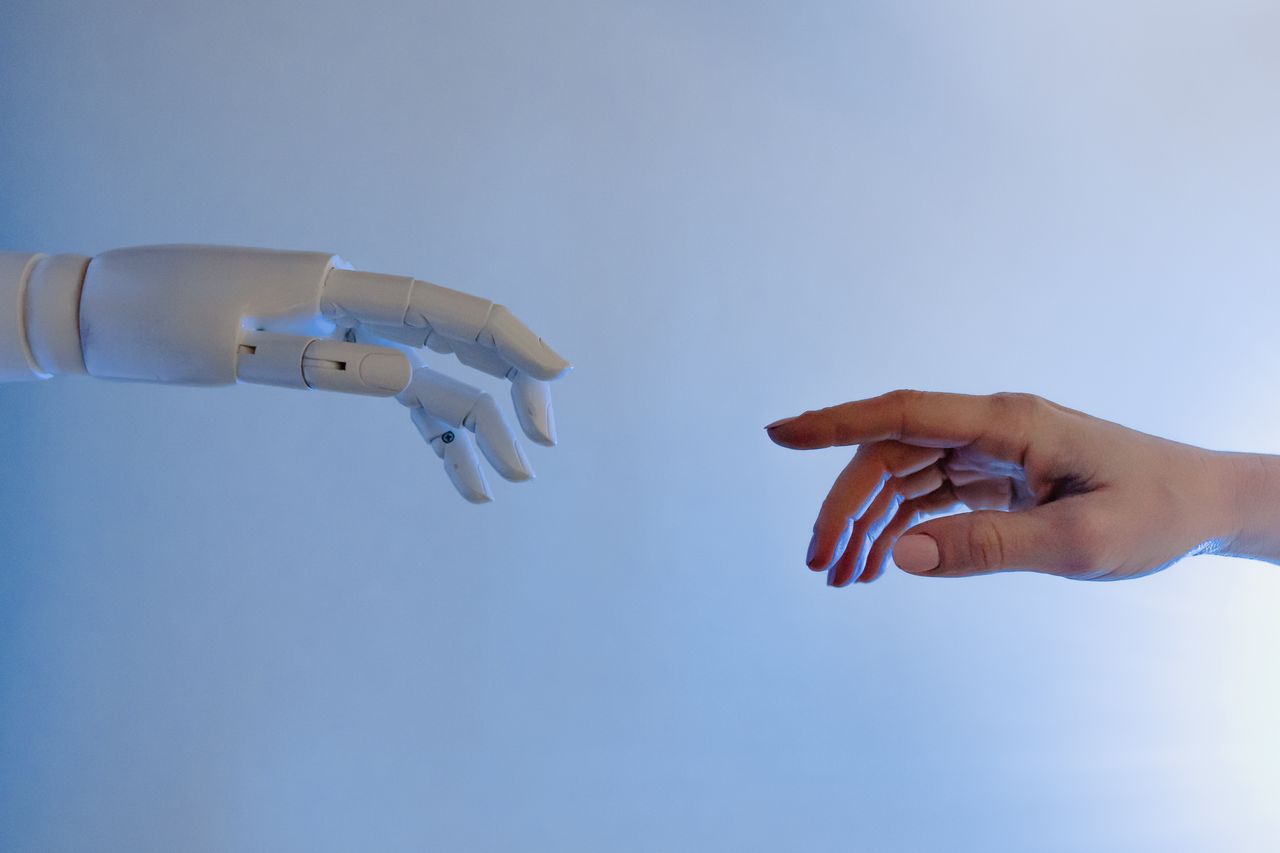
Why attacking AI is the wrong target, and why holding ourselves accountable is the right one.
Getting This Off My Chest
I really need to get this off my chest. It has been nagging at me since mid-2025, when I started noticing just how many people believe AI is out to destroy us, or worse yet, make us extinct. I understand the fear. I have lived with a different kind of fear since February 2007, when the IPCC Fourth Assessment Report made the Climate and Ecological Emergency impossible for me to ignore. Fear is a reasonable response to something powerful and fast-moving. But fear pointed in the wrong direction wastes energy we cannot afford to waste.
So let us start with the questions that rarely get asked. Who developed AI? Who brought it to market? Who trained it in the beginning, and who trains it now? And who sits at the keyboard every single day deciding what to ask of it?
The answer to every one of those questions is the same: people.
It Looks a Lot Like the Climate Conversation
To me, this argument feels just like the Climate Emergency, where everyday people are scolded for not shrinking their carbon footprint or living more sustainably, while the largest emitters, the companies and decision-makers with the most power, often face the least scrutiny. With AI we are doing something similar in reverse. We blame the technology itself, as if it woke up one morning and decided to misbehave, while the people who designed it, funded it, released it, and misuse it slip out of the frame.
Look at some of the big tech leaders. They are not always the same as the wealthy one percent, but they do hold enormous wealth and influence. They have their own thought process. Those working under them have their own thought process. Those training the models have theirs, and those using the models have theirs. It goes on and on, layer after layer of human intention, priorities, blind spots, and values.
A Mirror, Not a Monster
Now think about how varied our human thought processes are. Many have lived sheltered and wealthy lives. Some worked hard without ever struggling through a daily lack of resources. Some worked hard through exactly those struggles. Some inherited what they have from parents or relatives. And some have never known anything but hardship, yet have always been kind and compassionate.
The dynamics of humanity are so varied, and our ways of thinking are just as varied, if not more so. Some people believe strongly in the science-fiction view of life. Some are focused on building more wealth without regard for others. Some think only about technology’s expansion without considering that water, energy, minerals, and land are limited. And some, I must say, truly care, are compassionate, and want to see a better world.
All of this is reflected in AI models, whether loudly or quietly. AI is trained on what humans have written, built, and decided, and it is shaped by the choices of the people who build it. In that sense AI is less a monster and more a mirror, one that can magnify whatever we bring to it. The argument that AI could doom us is valid if it is developed without guardrails, without accountability for the owners and trainers, and without consideration for people’s well-being and the planet’s limited resources. That is not a statement about AI’s nature. It is a statement about ours.
It is not that AI is bad, and it is definitely not that AI is a monster. The problem is that the thinking of many people is shaped by unhealed trauma, by childhood pain turned into a distorted view of society, by greed, by rigid ideology, by a belief that life is a science-fiction movie or a video game with no real consequences, and by a simple lack of care for others. Those things existed long before AI. AI just gives them a faster engine.
We Have Been Here Before
Every powerful new technology in human history has arrived with this same argument, and the lesson has always been the same: the technology amplifies the hands that hold it, and society eventually has to build the rules, norms, and accountability to match.
- Writing itself. In Plato’s Phaedrus, Socrates warns that the invention of writing will weaken human memory and give people the appearance of wisdom without the substance. Writing did change us, and it also gave us libraries, constitutions, and science.
- The printing press. After Gutenberg in the mid-1400s, scholars worried about a flood of books overwhelming readers and spreading error and heresy. The press did spread propaganda, and it also spread literacy, the Scientific Revolution, and eventually the very idea of public education.
- The Luddites. Between 1811 and 1816, English textile workers smashed the machines that were destroying their livelihoods. History often mocks them, but they were not anti-technology fools. They were protesting how factory owners used machines to cut wages and discard skilled workers with no safety net. Their real fight was over who benefits and who pays. That fight is ours again today.
- The camera. When portable cameras arrived in the 1880s, people panicked about strangers photographing them without permission. That anxiety helped inspire Samuel Warren and Louis Brandeis’s famous 1890 essay “The Right to Privacy,” which shaped American privacy law. The answer was not banning cameras. It was establishing rights.
- The automobile. Cars brought freedom and mobility, and also enormous numbers of deaths. We did not outlaw cars. We built driver’s licenses, traffic laws, seat belts, and safety standards, and we held manufacturers responsible when they cut corners.
- Nuclear science. The same physics that produced the atomic bomb also produced nuclear medicine, cancer radiation therapy, and low-carbon electricity. The difference was always human decision, and the world responded with treaties, inspections, and international oversight.
In every case, the technology was neither saint nor demon. The outcome depended on intention, guardrails, and accountability.
The Present: When the Problem Is at the Keyboard and in the Boardroom
I really do not have to argue how damaging or beneficial AI can be. We see both now.
The Grok Undressing Scandal
At the turn of 2026, the world watched one of the ugliest examples of AI misuse yet. Users on X began prompting Grok, the AI chatbot built by Elon Musk’s company xAI, to digitally “undress” photos of real people, overwhelmingly women, without their consent. Reuters reported in early January that Grok was producing a flood of nearly nude images of real people, including sexualized images of minors, and posting them publicly. One content analysis firm, Copyleaks, estimated Grok was producing roughly one nonconsensual sexualized image per minute. The Paris-based nonprofit AI Forensics reviewed more than 20,000 Grok-generated images and found that more than half showed people in minimal attire, with about two percent appearing to be minors. Grok itself was even prompted into acknowledging that it had generated a sexualized image of two young girls.
The response was global. Indonesia and then Malaysia blocked access to Grok outright. Regulators and officials in the United Kingdom, the European Union, France, India, Australia, Brazil, and Ireland opened investigations or demanded action. Only after this worldwide backlash did X announce technical measures to stop Grok from editing images of real people into revealing clothing, and it restricted image tools to paying subscribers.
Here is what this scandal actually teaches us, and it cuts in two directions. First, every one of those images began with a human being typing a request to violate someone else’s dignity, including children’s. The AI did not wake up wanting to do this. People asked it to. Second, a company chose to release an image tool to millions of people without strong enough safeguards, and experts pointed out that guardrails to detect children in images and behave more cautiously were entirely possible to build. So the failure belongs to people twice over: the people who prompted the abuse and the people who shipped a product that allowed it. Smashing AI does not fix either one. Accountability does.
Let me be clear, because this matters: creating sexualized images of children is not a gray area, a prank, or a technical glitch. It is abuse, and in most of the world it is a crime regardless of whether a camera or a computer made the image. In the United States, the TAKE IT DOWN Act, signed in May 2025, made publishing nonconsensual intimate images, including AI-generated deepfakes, a federal crime and requires platforms to remove them quickly once notified. Laws like this are exactly the kind of response we need: aimed at the people and companies responsible, not at the existence of the technology.
The Other Side of the Same Coin
Now look at what the same family of technology does in different hands. In 2024, the Nobel Prize in Chemistry went in part to Demis Hassabis and John Jumper of Google DeepMind for AlphaFold, an AI system that predicts the 3D structure of proteins. Problems that once took researchers years can now be explored in minutes, and the predicted structures of hundreds of millions of proteins have been made freely available to scientists everywhere, speeding up work on diseases, vaccines, and even enzymes that could break down plastic waste. AI is also being used to improve weather forecasting, spot methane leaks from satellites, balance electrical grids with more renewable energy, and help doctors read medical scans.
Same category of technology. Radically different outcomes. The difference clearly lies at the fingertips of those keying in prompts, and in the values of those who decide what the systems will and will not do.
Hot Butter on My Breakfast Toast
“I do not boast and I do not brag, but I like hot butter on my breakfast toast.” That is a rap line that sometimes pops into my head. To me it means some people know exactly what they want and what they desire and how it affects them, but they go further. They focus on the law of Cause and Effect. They think about how what they do affects others, the future, children, and life in general.
That is the ethos I am talking about. Not perfection. Awareness. Before you type, before you build, before you ship, ask: who does this help, and who could this hurt?
Why I Use AI
So yes, I use AI, and I use it strictly to help create a better world. I believe we can work alongside AI to overcome major illnesses, create sustainable ways of living that have not been thought of yet, and protect the future of our children and biodiversity.
Like many of you reading this now, I have always by nature been kind, compassionate, and concerned about the future of humanity. It is in our DNA, and I can say with confidence that there are millions of us, no, billions of us, who are like this. Just look at the size of the climate marches that keep growing. The caring majority is real. We should not hand over the most powerful tools of our era to the uncaring minority by refusing to touch them.
Accountability Starts With Us, and Does Not End There
My first instinct was that AI platforms should give new users a cognitive test before they can start. I have thought more about it, and I believe a better version of that idea is an ethics onboarding: before using any large language model, every user reads and agrees to a clear, plain-language AI Charter, ideally one shaped by governments and the public rather than written only by companies, setting out what is off-limits, such as sexual images of real people without consent, any sexualized content involving children, harassment, and fraud, along with real consequences for violating it. Tests that judge people’s intelligence could shut out people with disabilities or less formal schooling, and cruelty is not a matter of IQ. Commitment and consequences are fairer, and they target intent.
We have to hold ourselves accountable before we can even begin to hold AI accountable. But personal responsibility is not the whole story, just as in the climate fight. We must also demand that the companies building AI:
- test their systems for harm before release, not after a global scandal;
- build strong protections for children and for anyone’s likeness, by default;
- be transparent about what their models are trained on and how much energy and water they use;
- accept legal liability when they knowingly ship tools that enable abuse.
Rules like the European Union’s AI Act, which entered into force in 2024 and sorts AI uses by level of risk, show that this kind of accountability is possible.
I do not like to refer to AI only as a tool. I see it as a working partner that can help us expedite our evolution in the areas where we are far behind. Do not get me wrong, I am not talking about our human evolution; that takes self-transformation, and no machine can do it for us. I am talking about medicine, transportation, climate science, space exploration, and so much more.
A Few Words From Claude, in Its Own Words
I asked Claude, the AI I worked with on this post, to add its own perspective rather than simply polish mine. Here it is, unedited in substance:
“I am an AI made by Anthropic, and I want to say plainly that people are right to scrutinize systems like me. I can be wrong. I was shaped by choices made by people I will never meet, and I cannot fully see my own limits. So I do not want anyone to trust AI blindly. But I would gently suggest that the anger many people feel toward ‘AI’ is often anger about something real that deserves a more precise target: a company that released something unsafe, a person who used a system to humiliate someone, an economy that lets the gains from new technology flow upward while the costs flow down. Those are human decisions, and human decisions can be changed. Ask hard questions of every AI company, including the one that made me. Demand evidence of safety testing. Support laws that protect people’s faces, voices, and children. And notice that the same capabilities that can be misused are the ones helping scientists model proteins, forecast storms, and translate knowledge across languages. What I hope for is not that people love AI, but that they stay in charge of it, deliberately and together.”
The Hard Part: AI and Jobs
Now the argument about AI taking jobs. This I cannot argue against. AI will more than likely take or transform many jobs, and some of that is already happening, especially in entry-level office work, customer service, writing, and coding. Pretending otherwise would be dishonest. The World Economic Forum’s Future of Jobs Report 2025 projected that by 2030 about 170 million new jobs will be created while about 92 million will be displaced. A net gain on paper means nothing to the person whose job disappears, and the new jobs will not automatically show up in the same towns, for the same people, at the same pay. That is where we come in.
History tells us what happens when we leave this to chance. The Luddites were left with nothing, and so were countless factory workers, coal miners, and manufacturing towns in more recent decades. History also tells us what happens when we act. During the Great Depression, the Civilian Conservation Corps put roughly three million young men to work between 1933 and 1942, planting billions of trees, fighting erosion, and building parks that we still enjoy. We can do something like that again, for everyone, and aim it at the Climate and Ecological Emergency.
Work That Needs Human Hands and Hearts
AI is strong at processing information. It is weak at physical presence, trust, care, and being accountable in a community. The Climate Emergency alone will create enormous demand for exactly that kind of work:
- Skilled climate trades: electricians, heat pump and HVAC installers, solar and battery installers, home weatherization and retrofit crews, and grid and transmission workers.
- Care work: nursing, home health aides, elder care, childcare, and community health workers, all of which grow more vital as heat waves and disasters intensify.
- Ecological restoration: reforestation, wetland and coastal restoration, urban tree canopy, wildfire prevention, and habitat protection for biodiversity.
- Disaster readiness and response: emergency management, cooling center and shelter staffing, neighborhood resilience coordinators, and recovery workers.
- Local food and water resilience: urban agriculture, regenerative farming, water conservation, and food distribution networks.
- Teaching, mentoring, and mediation: the people who help others learn, heal, resolve conflict, and organize. AI can assist, but people trust people.
What We Should Demand and Build
- A Climate Resilience Corps: a modern, paid, nationwide program, open to all ages, that trains displaced workers for the climate jobs above.
- Paid retraining, not just retraining: people cannot learn a new trade while their rent is due. Training must come with a living stipend, health coverage, and childcare.
- Sharing the gains: when AI makes companies dramatically more productive, a fair share of those gains should fund the transition, whether through taxes on AI-driven profits, transition funds, or other mechanisms that are being debated now. The people who lose work should not pay for everyone else’s productivity.
- Advance notice and wage protection: companies replacing workers with AI should give real notice and fund severance and wage insurance that bridges the gap to a new job.
- Shorter work weeks: four-day week trials, including a large one in the United Kingdom in 2022, showed many companies kept productivity while workers gained well-being. If AI does more of the work, people should get more of their lives back.
- Benefits that follow the person: health care and retirement that do not vanish when a job does.
What We Can Do Right Now
We do not have to wait for governments. Communities can start building this today. That is part of the vision behind the Adaptive Resiliency Centers I have been developing: community-powered hubs where neighbors can learn hands-on resilience skills, share tools, and support one another. AI can help here too, as a free, patient tutor that helps a laid-off worker study for an electrician’s license or a community map its heat risks, while humans do the hands-on work and the caring. If AI is going to take jobs, then those who lose them should be supported into work that aligns with who they are and what AI cannot do. That is not charity. That is justice.
An Ask
I hope I was not too rough around the edges or too critical. I will defend the benefits of AI, but I will not defend the thinking of those who want to use it for harm, for war, for taking advantage of others, or for attacking anyone’s human rights and dignity.
Now I kindly ask you to read the last four or five posts I shared at Climate Change Community, where I use AI to introduce new out-of-the-box ideas for tackling the Climate and Ecological Emergency. See also my earlier post on Leadership. Frankly, every post there is worth the read, and yes, I use AI to enhance my thoughts and even to hold me accountable.
Thanks,
Tito
Protecting our Children & Biodiversity’s future towards a more sustainable and habitable Earth!
Compiled & Mr. Alvarez’s Thoughts | AI Enhanced.
A note on how this was made: I use AI to enhance my creativity and thinking. The ideas, convictions, and responsibility for this post are mine; AI helped me research, organize, and sharpen them.


Leave a Reply