Seven Decades…
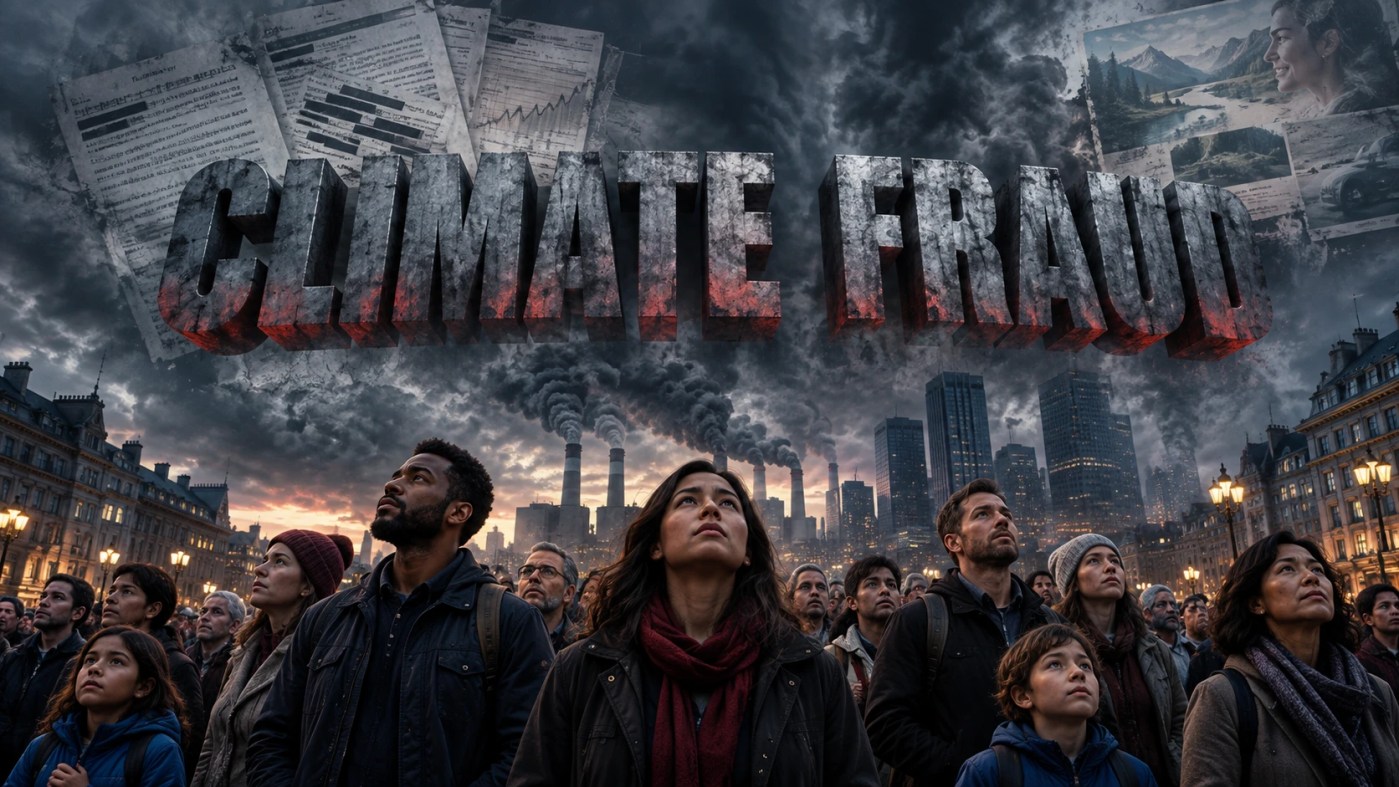
Amplifying the Center for Climate Integrity’s new report, Climate Fraud 101, released September 30, 2026
Every so often a message arrives from someone I have never met, someone who found their way here through these posts and decided to reach out. This week, one such reader sent me a link and a simple request: could I help amplify a report she felt people needed to see? I opened it, and within minutes I understood why she asked. Thank you for trusting this space with it.
The report is Climate Fraud 101: Big Oil’s Climate Deception Explained in 101 Documents, 1957–2026, published by the Center for Climate Integrity (CCI). It went public on Wednesday, September 30, 2026, just two days before this post, and it was timed deliberately. On Monday, October 5, the U.S. Supreme Court opens its fall term by hearing ExxonMobil and Suncor Energy’s bid to stop the City and County of Boulder, Colorado, from taking them to trial over climate deception. CCI describes this release as a newly updated collection, and it arrives at exactly the moment the evidence matters most.
What the Report Is
This is not a think piece or an opinion essay. It is an evidence file. CCI has gathered 101 primary-source documents spanning nearly seventy years and organized them into ten chapters that read like a timeline of a crime scene. The collection includes confidential corporate planning documents, internal memos and emails, presentations to boards of directors, executive speeches, trade association strategy papers, congressional testimony, advertising briefs, and even equipment patents. Each document is linked so you can open and read the original yourself.
The companies and organizations that appear again and again are familiar names: Exxon and Humble Oil (its predecessor), Mobil, Shell, BP, Chevron, Texaco, the American Petroleum Institute, and the industry-funded Global Climate Coalition. The newest entries are from this very year, which is the point. The story is not finished.
The Arc of the Deception
Read in sequence, the documents tell a story in distinct acts. Here is how I would summarize them for our community.
Act One: They Helped Write the Science (1950s–1970s)
The first document dates to 1957, when researchers at Humble Oil, which later became part of ExxonMobil, published work tracing the large volume of carbon dioxide entering the atmosphere from burning fossil fuels. The industry was not a bystander to early climate science. It was in the room, funding it and contributing to it.
Act Two: They Understood the Stakes (late 1970s–1980s)
By the late 1970s the industry was investing serious money in understanding how its products would warm the planet. According to CCI, a 1980 American Petroleum Institute presentation to representatives of Exxon, Texaco, Standard Oil of Ohio and others laid out that large-scale climate impacts were likely within fifty years, with the potential for globally catastrophic effects later in the century. Four years later, an Exxon researcher framed the choice with remarkable clarity: humanity could either “adapt our civilization to a warmer planet or avoid the problem” by sharply reducing fossil fuel use.
Sit with that for a moment. In 1984, inside one of the world’s largest oil companies, the exact dilemma we are living through today was written down plainly. Adaptation or prevention. They chose neither on our behalf. They chose profit and delay.
Act Three: They Manufactured Doubt (late 1980s–1990s)
Once the business risk became clear, the posture changed. A confidential 1988 Exxon memo cited in the report advised that the company’s public position should stress uncertainty in the science. Through the 1990s, the Global Climate Coalition and the American Petroleum Institute ran coordinated communications programs, pamphlets, and media campaigns designed to cast doubt. In 1997, an API executive told Congress that climate change was no crisis demanding urgent action, directly contradicting what the industry’s own scientists had already concluded.
Act Four: They Rebranded the Delay (2000s–Today)
As outright denial became untenable, the strategy shifted from denying the problem to selling false solutions. The report documents the industry downplaying renewables, presenting “cleaner” fossil fuels as the way forward, and heavily promoting natural gas and carbon capture even as internal materials acknowledged their limits. One confidential 2018 BP presentation noted the criticism that methane leakage undermines gas as a climate solution.
After the Paris Agreement, the language turned to net zero. Yet a confidential 2020 Shell presentation, according to CCI, cautioned employees against implying that net zero was actually a company goal, and reminded them that the growing number of climate lawsuits made careful messaging necessary. In other words, they were not changing course. They were managing legal exposure.
Why This Matters Right Now
I spent just shy of fourteen years working in the court system, in daily conversation with judges, court officers, and clerks. One lesson from those years has never left me: in a courtroom, feelings and slogans do not carry the day. Evidence does. Documents do. And the right to have that evidence heard by a jury is one of the most important protections ordinary people have against powerful institutions.
That is precisely what is at stake on October 5. Boulder’s lawsuit, filed back in 2018, argues that Exxon and Suncor deceived the public about the dangers of their products and should help pay for the local climate damages that followed. The Colorado Supreme Court allowed the case to move toward trial. Now the companies are asking the U.S. Supreme Court to shut it down. Meanwhile, according to CCI, the industry is also lobbying Congress and state legislatures for laws that would grant it immunity from climate liability altogether. Dozens of similar cases brought by states, cities, counties, and tribes are watching closely.
CCI’s president, Richard Wiles, put the industry’s motive bluntly in the report’s release: these are the kinds of documents the fossil fuel industry does not want a jury of Americans to see. Whatever happens next week, the public can see them now.
Reading It With Clear Eyes
Our community values honesty, so I want to be fair about what this report is and is not. CCI is an advocacy organization committed to holding the fossil fuel industry accountable, and the companies named strongly dispute the deception claims. Industry-aligned groups have criticized CCI’s earlier reports as litigation blueprints. It is also worth knowing that the Supreme Court’s question on Monday is primarily legal, not factual: whether federal law preempts Boulder’s state-law claims, and whether the Court even has jurisdiction to hear the case at this stage. The justices will not be ruling on whether the documents prove fraud.
That is exactly why the primary sources matter. You do not have to take CCI’s word, or mine. The documents are there to read in their own words, and I encourage every one of you to open a few, especially from the chapters covering the 1980s and 1990s. I plan to work through the report more deeply myself, and I will share what I find.
From Concern to Competence: What You Can Do
- Read the report. Start with the overview, then open five or six original documents from different decades. Notice how the tone shifts over time.
- Follow Suncor v. Boulder. Oral arguments are Monday, October 5, 2026. The outcome will shape whether communities anywhere can bring these cases in their own state courts.
- Know your local cases. CCI tracks every climate deception lawsuit in the country. Find out whether your state, city, or tribe has filed one, and what your representatives think about liability-immunity bills.
- Bring it to the circle. Join the conversation in the Reports & Policy space on Climate Tribe Social. Pick a document, summarize it for the group, and let us learn out loud together.
- Share with care. When you pass this along, link the original documents. Evidence persuades in a way outrage never will.
A Closing Thought
My own climate awakening is anchored to February 2007, when the IPCC released its Fourth Assessment Report. I remember feeling that the world was only beginning to grasp what was coming. This report is a hard reminder that some of the most powerful companies on Earth grasped it decades earlier, and made a choice. Our children and the living world around us have been paying for that choice ever since.
We cannot rewrite those decades. But we can refuse to let the record be buried, and we can insist that communities have their day in court. That, too, is part of adaptive resiliency: protecting the truth so that we can build honestly on top of it.
Read the full report: Climate Fraud 101 (Center for Climate Integrity)
CCI press release, September 30, 2026: New Report: Big Oil’s Climate Fraud in 101 Documents
A note on how this post was made: I use artificial intelligence as a tool to enhance my creativity, research, and thinking. The ideas, judgment, and responsibility for what is published here remain my own.
Protecting our Children & Biodiversity’s future towards a more sustainable and habitable Earth!
Compiled & Mr. Alvarez’s Thoughts | AI Enhanced.


Leave a Reply