Why can China build an electric car for around $5,000 while America struggles to sell truly affordable new vehicles?
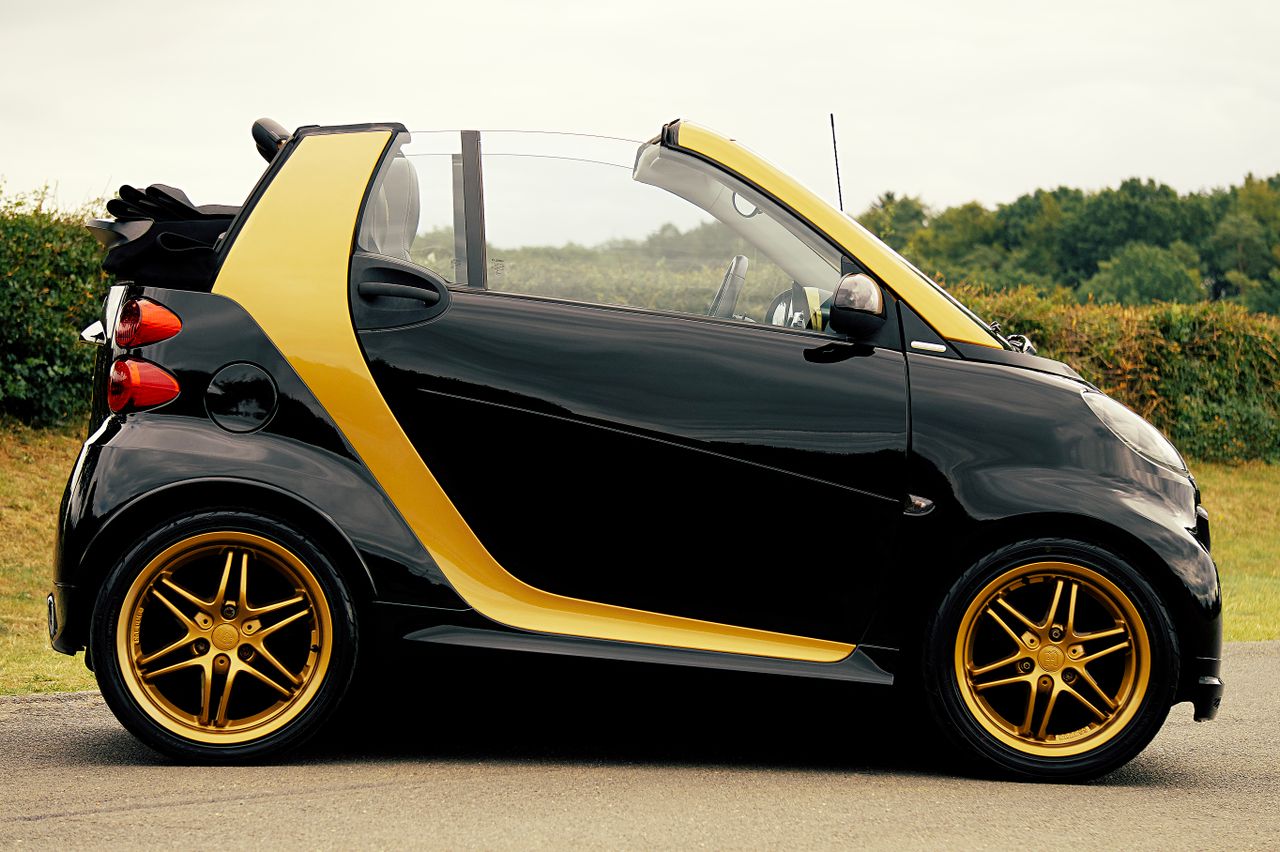
Que Humanidad / Compiled & Mr. Alvarez’s Thoughts | AI Enhanced | Image from Pexels – not vehicle mentioned
A new video from Motion Evolution Studio asks a provocative question: why can China build an electric car for around $5,000 while America struggles to sell truly affordable new vehicles? The honest answer is not a secret formula. It is an ecosystem, built over nearly two decades of industrial policy, battery innovation, supply-chain clustering, brutal domestic competition, and a willingness to design cars for “enough” rather than “everything.”
This post traces that evolution from early government pilot programs to global export dominance. It unpacks the battery breakthroughs and cost structures behind China’s price advantage, follows Chinese EVs as they pour into world markets, and answers three questions many American readers are asking: why small, cheap EVs have never caught on here, how safety rules shape cheap imports in the West, and which trade barriers stand in the way.
Key Takeaways
- China sold about 16.5 million new energy vehicles (NEVs) in 2025, up from roughly 1.3 million in 2020, and NEVs now make up more than half of new-car sales in many months.
- Battery packs are cheapest in China, averaging $84/kWh in 2025, versus 44% more in North America and 56% more in Europe, according to BloombergNEF.
- China’s cost edge comes from scale, clustered supply chains, LFP battery chemistry, vertical integration, fierce competition, and state support, not from any single trick.
- Chinese vehicle exports are breaking records in 2026, but tariffs, security rules, and safety standards keep Chinese EVs almost entirely out of the U.S. market.
- The deeper lesson for America is about right-sizing: affordable, efficient, purpose-built vehicles for everyday trips, with safety kept front and center.
The Video That Sparked the Question
Motion Evolution Studio’s video centers on the Wuling Hongguang Mini EV, the tiny battery-electric city car that became a symbol of China’s affordable-EV boom. Its premise is simple: provide enclosed, electric, short-distance transportation without trying to duplicate every capability of a large SUV or long-range family car.
The earliest versions became famous for extremely low Chinese-market prices in the rough $5,000 range. That is not the price of every current version, and it is not a price an American buyer could expect to pay. Still, the concept reveals something important: affordability begins by deciding what a vehicle does not need to do. To understand how China got there, we need to go back to 2009.
How China’s EV Industry Evolved: A Timeline
2009 to 2015: Seeding the market
China’s modern EV push began in 2009 with the “Ten Cities, Thousand Vehicles” pilot program, which placed electric buses, taxis, and government fleet vehicles on city streets. Purchase subsidies followed, and in 2014 the government exempted NEVs from the vehicle purchase tax. Major cities such as Beijing and Shanghai, which ration new license plates to fight congestion and smog, made plates far easier to obtain for electric cars. That single local rule turned EVs into the fastest route to car ownership for millions of urban households.
2016 to 2019: Mandates, shakeouts, and a foreign catalyst
Early subsidies attracted fraud and low-quality products, and Beijing responded by cracking down and tapering payments. In their place came a market-based mandate: the “dual-credit” policy, which took effect in 2018 and requires automakers to earn credits by producing NEVs. At the end of 2019, Tesla began delivering cars from its Shanghai Gigafactory, its first wholly owned plant abroad. Tesla’s demanding quality standards pushed local suppliers to level up, and those suppliers soon served Chinese brands as well.
2020 to 2022: The breakout
Two launches in 2020 changed the market’s trajectory. In March, BYD introduced its Blade Battery, a safer, denser lithium-iron-phosphate (LFP) design. In July, SAIC-GM-Wuling launched the Hongguang Mini EV at a starting price of RMB 28,800, roughly $4,200 at the time. By 2022, BYD stopped producing gasoline-only cars altogether, and national purchase subsidies ended that December. The market no longer needed them to keep growing.
2023 to 2026: Scale, price wars, and the world
In 2023 China passed Japan to become the world’s largest auto exporter. Domestic sales kept climbing: NEV sales reached 16.49 million units in 2025, a 28.2% increase over 2024, according to CAAM data. In October 2025, NEVs accounted for 51.6% of all new vehicle sales, the first month they passed the halfway mark. Hyper-competition, which Chinese commentators call “involution,” triggered a bruising price war that squeezed margins and pushed automakers to look overseas.
Battery Breakthroughs: The Engine of Affordability
The battery is the single most expensive component in an electric vehicle, so every advance in battery chemistry, design, and manufacturing flows directly into price. Chinese companies, led by CATL and BYD, have driven many of the decade’s most important breakthroughs.
The comeback of LFP chemistry
Lithium-iron-phosphate batteries use no nickel or cobalt, which makes them cheaper, more thermally stable, and longer-lasting, though historically less energy-dense than nickel-based chemistries. Designs like BYD’s Blade Battery and CATL’s cell-to-pack approach removed bulky intermediate modules, squeezing more usable energy into the same space and closing much of the range gap. The price difference is now striking: BloombergNEF found average LFP pack prices of $81/kWh in 2025, compared with $128/kWh for nickel-manganese-cobalt packs.
The charging-speed race
In 2023, CATL’s Shenxing battery brought 4C fast charging to LFP. By 2026, the race had accelerated dramatically. BYD released its second-generation Blade Battery and flash-charging system in March 2026, claiming a 10% to 70% charge in 5 minutes and 10% to 97% in 9 minutes. A month later, CATL showed its third-generation Shenxing battery, which it says recharges from 10% to 98% in 6 minutes and 27 seconds. For drivers, charging times are approaching the length of a gas-station stop.
Sodium-ion: batteries without lithium
Sodium is abundant and cheap, which makes sodium-ion batteries a potential hedge against lithium price spikes. CATL’s Naxtra sodium-ion cells reached 175 Wh/kg by September 2025, earned China’s new national safety certification, and are rated for more than 10,000 charge cycles. The company says the batteries will begin reaching passenger EVs by the end of 2026, starting with the Changan Nevo A06. Sodium-ion also holds up better in extreme cold, which matters for affordable cars in northern climates.
Raising the safety bar
China has also tightened battery safety rules. The GB 38031-2025 traction battery safety standard becomes mandatory on July 1, 2026, setting stricter thermal-runaway requirements. This matters for the debate in the West: Chinese batteries are no longer competing on price alone.
Why this matters for small EVs
Cheaper, safer, faster-charging batteries make short-range city cars more practical. A small LFP or sodium-ion pack that charges in minutes reduces the need to oversize the battery, and a smaller battery is the fastest way to a lower sticker price.
Cost Structures: Why Chinese EVs Cost Less
China’s advantage is not simply lower wages. It comes from several reinforcing cost levers working at the same time.
Batteries are cheapest in China
Average battery pack prices in China fell 13% to $84/kWh in 2025, driven by lower input costs, overcapacity, intense competition, and the preference for cheaper LFP cells. Prices in North America and Europe were 44% and 56% higher. BloombergNEF adds that price parity between EVs and combustion cars has already been reached in almost all vehicle segments in China.
The supply chain is next door
The International Energy Agency reports that in 2025 China accounted for about 70% of global electric-car production and more than 80% of battery-cell production, along with about 85% of cathode-material and more than 90% of anode-material output. Battery makers, motor suppliers, electronics firms, and assembly plants are often clustered in the same regions, which reduces shipping, inventory, and coordination costs.
Vertical integration
BYD manufactures its own batteries, electric motors, power electronics, and even some of its semiconductors. Owning more of the value chain allows a company to capture margin that would otherwise go to suppliers, and to redesign components quickly without lengthy contract negotiations.
Designing for “enough”
A low-cost urban EV does not have to deliver 300-plus miles of highway range, fast acceleration, large wheels, premium materials, or a complex software stack. Removing those features cuts cost at every stage, from battery size to assembly time.
Speed and competition
With well over 100 brands competing in one market, Chinese automakers iterate quickly, often bringing new models to market in far less time than legacy Western automakers. Fierce price competition forces constant cost-cutting.
The less flattering side
A fair account must also note the downsides. The European Commission concluded that Chinese battery-electric vehicles benefit from subsidies that injure EU producers, which is the basis of its countervailing duties. The price war has pushed many Chinese automakers into thin or negative margins. And overcapacity is real: the IEA found that China’s 2025 EV exports exceeded overseas sales by more than 25%, meaning many shipped vehicles had not yet been sold. Low prices are partly a product of efficiency and partly a product of a market under severe strain.
| Cost lever | How it lowers the price |
| Cheap LFP batteries | Smallest cost gap vs. gasoline; no nickel or cobalt |
| Clustered supply chains | Less shipping, faster coordination, high volume |
| Vertical integration | Captures supplier margins; faster redesigns |
| Right-sized design | Smaller battery, fewer features, simpler build |
| Fierce competition | Constant cost-cutting and rapid model cycles |
| State support | Subsidies, cheap financing, local incentives (contested abroad) |
Case Study: The Wuling Hongguang Mini EV
The Mini EV remains a compact, low-power city vehicle, not an American-style all-purpose car. Newer 2026 versions are listed at roughly RMB 40,800 to 49,800 (about $6,090 to $6,840). One version lists a 30 kW motor, a 25.1 kWh LFP battery, four seats, a top speed around 101 km/h (about 63 mph), and a claimed 301 km of CLTC range.
For a household needing a second car for school drop-offs, groceries, medical appointments, or commuting within a dense metro area, that can be a sensible match. For a family driving from New York City to upstate New York in winter, it is not. The affordable micro-EV is not a replacement for every vehicle or every trip. It is a potential replacement for many unnecessarily large daily trips.
Export Dynamics: Chinese EVs Go Global
As domestic competition intensified, Chinese automakers turned outward. China exported 2.62 million NEVs in 2025, double the previous year. The momentum continued into 2026: China exported 6.2 million passenger cars from January through August, already surpassing its full-year 2025 total of 6.1 million, and NEVs made up 58.4% of exports in August.
Where are they going? Asia bought the most Chinese EVs of any region, followed by Europe and Latin America, and outside Europe and the U.S., Chinese models accounted for 55% of all EV sales in 2025. The badge on those vehicles is increasingly Chinese: the IEA reports that four in five China-built electric cars sold overseas in 2025 carried a Chinese brand, up from fewer than two in five in 2021.
Chinese automakers are also building factories abroad to get around trade walls and shipping costs. BYD, for example, has opened or planned plants in Thailand, Brazil, Hungary, and Turkey. Beijing is tightening its own controls as well: in January 2026 China began requiring export licenses for battery electric vehicles.
Why Small, Low-Cost EVs Are Not Popular in the U.S. Market
The U.S. market has repeatedly rejected small cars. The Smart ForTwo left America in 2019, and budget models like the Chevrolet Spark and Mitsubishi Mirage have been discontinued. Several forces explain the pattern.
Distance and driving patterns
Many Americans live in suburbs and rural areas with long commutes, limited transit, and highway-heavy travel. Buyers often want one vehicle that can do everything, including the occasional road trip, even if most daily trips are short.
The vehicle-size arms race
When roads are full of large SUVs and pickups, drivers of small cars feel less safe, and in a collision between vehicles of very different mass, physics favors the heavier one. This perception pushes buyers toward bigger vehicles, which in turn makes small cars feel even more vulnerable.
Rules and margins that reward bigger vehicles
Federal fuel-economy standards are based on a vehicle’s footprint, so larger vehicles face less demanding targets, and many crossovers qualify as light trucks. Larger vehicles also carry higher profit margins, and dealers devote more space and marketing to them. Small cars become a low-margin afterthought.
Used cars are the real competition
For a budget buyer, the rival to a new micro-EV is not another new car but a used one. Used Chevrolet Bolts averaged roughly $14,705 in late 2025, according to Cox Automotive figures, offering far more range and highway capability than a micro-EV for a similar price.
Policy whiplash and charging access
The $7,500 federal EV tax credit expired on September 30, 2025, raising effective prices. Renters and apartment dwellers, who are often the most price-sensitive buyers, frequently lack access to home charging. Today the cheapest new EVs in the U.S. sit near $30,000: the 2027 Chevrolet Bolt starts at $28,995 and the 2026 Nissan Leaf S+ at $29,990, roughly four to five times the price of a Chinese Mini EV.
How Safety Regulations Affect Cheap EV Imports in the West
Safety rules are one of the biggest reasons a $5,000 Chinese city car cannot simply be shipped to America and sold. They exist for good reasons, and they add real costs.
The U.S. approach: self-certification to FMVSS
Every vehicle sold in the U.S. must meet the Federal Motor Vehicle Safety Standards, which cover crash protection, airbags, lighting, braking, and more. The U.S. does not accept the international UN vehicle regulations that many other countries use, so even a car certified for Europe usually needs U.S.-specific engineering, testing, and tooling. For a low-volume, low-margin car, those fixed costs can erase the price advantage.
A missing middle category
The U.S. does have a “low-speed vehicle” class under FMVSS No. 500, but it is limited to top speeds of 20 to 25 mph, and most states restrict these vehicles to roads posted at 35 mph or less. There is little legal space between a glorified golf cart and a full highway car. Europe, by contrast, has light quadricycle categories: the Citroën Ami, capped at 45 km/h (about 28 mph), is sold as an urban mobility vehicle with lighter requirements.
Security rules as safety rules
The U.S. now treats vehicle software as a national-security issue. The Commerce Department’s connected-vehicle rule bars China- and Russia-linked software starting with model year 2027 and hardware with model year 2030, and prohibits sales by connected-vehicle makers with a sufficient link to China or Russia, even if the vehicles are built in the U.S.
The honest tension
Chinese automakers have shown they can build safe cars. Several BYD models have earned five-star Euro NCAP ratings. But ultra-cheap micro-cars are cheap partly because they carry fewer safety systems. The policy question is not whether to lower standards, but whether the U.S. should create a well-designed, safety-focused category for lightweight urban vehicles.
| Region | Relevant category | What it means for cheap EVs |
| United States | FMVSS full passenger car; LSV (20–25 mph) | Costly U.S.-specific compliance; almost no middle ground |
| European Union | Type approval; L6e/L7e quadricycles | Legal lane for micro-cars like the Citroën Ami |
| China | GB standards; new GB 38031-2025 battery rule | Rising safety bar, especially for batteries |
What Are the Trade Barriers Facing Chinese Electric Vehicles?
Even a fully compliant Chinese EV faces steep trade barriers in many Western markets. The approaches differ sharply by country.
| Market | Main barrier | Status (Sept 2026) |
| United States | 100% Section 301 tariff; connected-vehicle rule | Effectively closed to Chinese EVs |
| European Union | Countervailing duties of 7.8%–35.3% on top of 10% import duty | Price undertakings (minimum prices + quotas) now possible |
| Canada | 100% surtax (2024), eased by quota deal | 49,000 EVs a year at 6.1% |
| Mexico | Tariff raised to 50% in January 2026 | Higher barrier |
| Brazil / SE Asia | Tariffs reinstated; duty waivers expired | Pushing local assembly |
United States. Section 301 tariffs of up to 100% on Chinese EVs took effect on September 27, 2024, and the rate remains in place. Combined with the connected-vehicle rule, the U.S. market is effectively closed. Tariffs on Chinese lithium-ion batteries also raise costs for cars built elsewhere that use Chinese cells.
European Union. The EU imposed definitive countervailing duties ranging from 7.8% to 35.3% in October 2024. In early 2026 it opened a door: Volkswagen Anhui’s Cupra Tavascan was exempted from the duties after committing to a minimum import price, volume limits, and EU investments. Interestingly, research published by CEPR found that Chinese EV prices to EU consumers largely did not rise after the tariffs, suggesting Chinese firms absorbed the cost to defend market entry.
Canada. Under a January 2026 deal, Canada allows up to 49,000 Chinese EVs a year at the 6.1% most-favored-nation rate instead of the 100% surtax, a volume under 3% of its new-vehicle market. This makes Canada a real-world test case sitting right next to the U.S.
Elsewhere. Mexico raised tariffs on Chinese and other Asian EVs to 50% from January 2026, Brazil reinstated EV tariffs, and most Southeast Asian import-duty waivers expired in December 2025. The global trend is clear: countries want Chinese EV technology, but increasingly on the condition that factories and jobs come too.
The Climate Opportunity
For climate advocates, this debate is bigger than cars. Transportation is not only about swapping gasoline engines for batteries. It is also about using the right-sized vehicle for the task. A heavy, high-powered electric SUV is far cleaner to operate than a gasoline SUV, but it still requires more materials, more battery capacity, more energy, and more road and parking space than a compact vehicle designed for local travel.
- Replace some short gasoline-car trips with efficient electric trips.
- Give lower- and middle-income households more access to EV ownership.
- Complement walking, cycling, buses, subways, and commuter rail.
- Reduce local air pollution and street noise.
- Create practical options for older adults, small businesses, delivery workers, and second-car households.
This does not mean every American should drive a microcar. Rural communities, disabled drivers, large families, tradespeople, and long-distance travelers need different solutions. The goal is choice.
What Is a Car For?
| Question | Conventional U.S. new-car model | Low-cost urban-EV model |
| Primary purpose | One vehicle for many possible uses | One vehicle for frequent local trips |
| Typical priority | Range, power, size, versatility, features | Price, efficiency, compactness, simplicity |
| Battery approach | Large battery for longer travel | Smaller battery for daily urban travel |
| Best setting | Suburbs, highways, mixed long-distance use | Cities, towns, campuses, local delivery |
| Main trade-off | Higher capability, higher cost | Lower capability, lower cost |
A fair future transportation system may need both.
What America Could Learn
The lesson is not that the U.S. should copy every Chinese vehicle or lower standards blindly. It is that affordability should become a deliberate design and policy goal rather than an afterthought. Possible directions include:
- Creating clear, safety-focused rules for lightweight urban EVs and neighborhood mobility vehicles, learning from Europe’s quadricycle categories.
- Supporting domestic production of smaller EVs, LFP and sodium-ion batteries, and their components.
- Incentivizing vehicles based on efficiency, affordability, and material use, not only battery size or vehicle price.
- Expanding reliable transit, bike infrastructure, safe walking routes, and charging access for renters.
- Encouraging durable, repairable, modestly equipped entry-level EVs.
- Watching Canada’s quota experiment closely for evidence on prices, safety, and jobs.
Final Thought
The most important question raised by the video may not be “Why can China build a $5,000 car?” It may be: why have so many markets stopped treating simple, affordable transportation as a product worth building?
A climate-safe future requires cleaner vehicles, but it also requires vehicles ordinary people can afford. The next major breakthrough may not be a bigger battery or a faster 0–60 time. It may be a safe, durable, efficient, right-sized electric vehicle that opens clean mobility to far more people.
China’s success is not proof that every country can or should replicate its system exactly. But it does prove that the high cost of electric mobility is not dictated by physics alone. It is shaped by industrial policy, manufacturing scale, supply chains, design choices, regulation, corporate strategy, and public expectations, all of which people can change.
Sources
- Motion Evolution Studio, “China Can Build a $5,000 Car” (YouTube): youtu.be/4Wa7aLKdT80
- China Association of Automobile Manufacturers data via CnEVPost (January 2026)
- International Energy Agency, Global EV Outlook 2026
- BloombergNEF, 2025 Lithium-Ion Battery Price Survey (December 2025)
- CarNewsChina database: Wuling Hongguang Mini EV specifications
- Electrek, Electrive, Battery-Tech Network, and Bloomberg/Al Jazeera reporting on exports and battery launches (2026)
- USTR Section 301 notices; U.S. Bureau of Industry and Security connected-vehicle rule
- European Commission trade notices on BEV duties and price undertakings (2024–2026); CEPR/VoxEU analysis
- Government of Canada and CnEVPost reporting on the January 2026 Canada–China agreement
- Axis Intelligence, China EV Export Statistics 2026; InsideEVs and industry reporting on U.S. EV prices
A note on how this post was made: artificial intelligence is used as a tool to enhance my creativity, research, and thinking. The perspective, curation, and responsibility for this work remain human.
Amazona y Que Humanidad / Compiled & Mr. Alvarez’s Thoughts | AI Enhanced.
SEO Publishing Details
| Field | Suggested value |
| SEO title | China’s $5,000 EV: Batteries, Costs, Exports & US Lessons |
| Meta description | How China built low-cost EVs: battery breakthroughs, cost structures, export dynamics, and why cheap small EVs face safety rules and tariffs in the U.S. |
| URL slug | china-5000-ev-evolution-batteries-costs-exports |
| Focus keyphrase | Chinese EV evolution |
| Secondary keywords | cheap Chinese EVs; Wuling Mini EV; LFP battery; sodium-ion battery; Chinese EV tariffs; EV trade barriers; affordable EVs US; EV safety regulations |
| Chart alt text | China NEV sales 2020–2025; 2025 battery pack prices by region |
| Hashtags | #ChineseEVs #ClimateAction #AffordableEVs #EVBatteries #ClimateTribe |


Leave a Reply