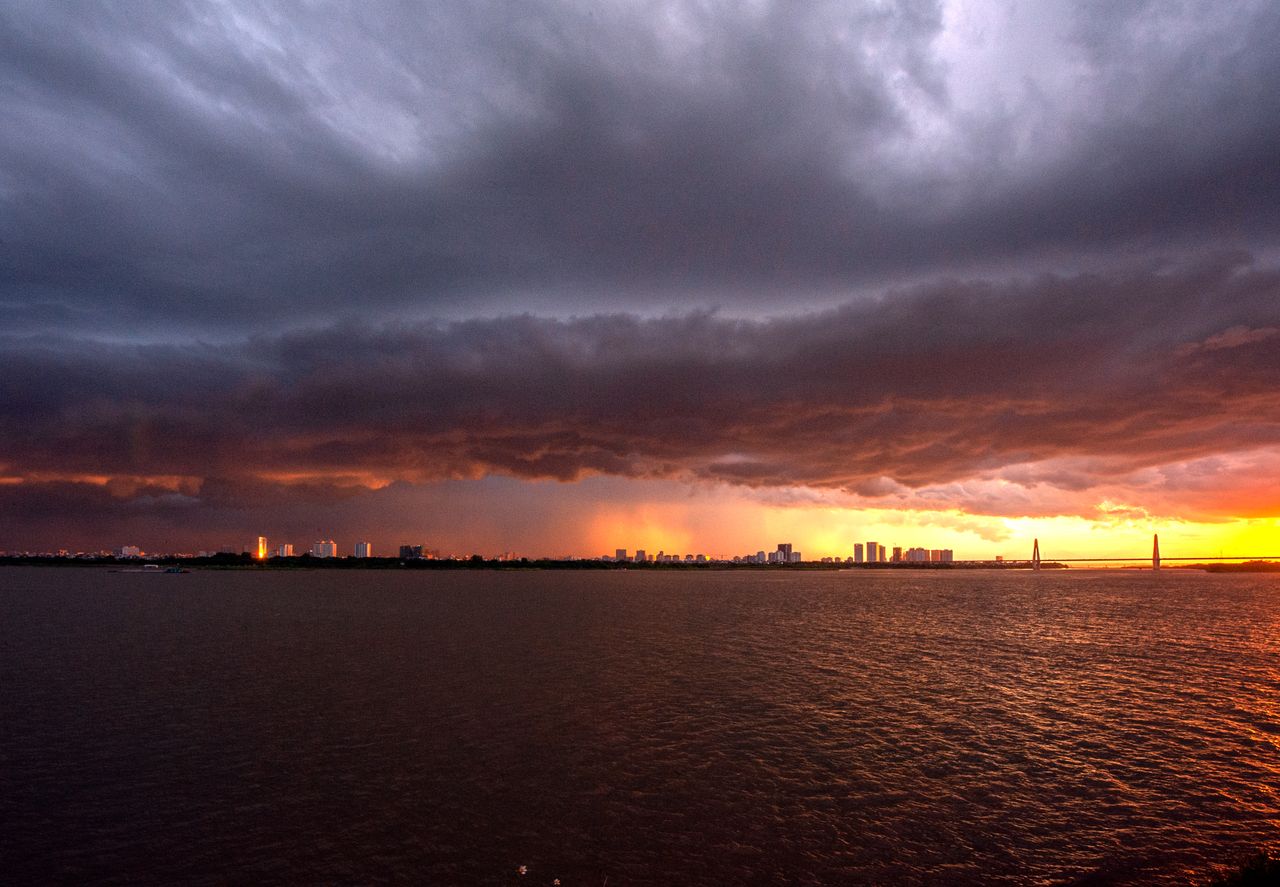
A Record-Breaking El Niño Is Almost Certain
Forecasters are converging on a striking consensus: the 2026-2027 El Niño is on track to become the strongest ever recorded. An analysis by Zeke Hausfather, a research scientist at Berkeley Earth and an author of the IPCC’s Seventh Assessment Report, now assigns a 90% probability that this event will surpass all historical records, with Pacific Ocean temperatures potentially climbing 3.6 degrees Celsius (6.5 degrees Fahrenheit) above baseline. The World Meteorological Organization projects the El Niño — officially declared on June 11 — will rapidly intensify into a “strong” event between July and September, while NOAA’s Climate Prediction Center puts the odds of “very strong” conditions by year’s end above 80%.
“These are striking forecasts,” said Emily Black, a professor of terrestrial processes and climate at the University of Reading and senior scientist at the UK’s National Centre for Atmospheric Science. “El Niño forecasts always come with uncertainty, but the level of agreement between models at this time of year, combined with the observed warming already underway in the tropical Pacific, means this should be taken very seriously”. Hausfather’s July analysis, drawing on 667 ensemble members across 14 seasonal forecast models, found roughly 91% of models projecting this event will exceed the previous record set in 2015-2016.
Why This Matters More Than Past El Niños
El Niño is the warm phase of a natural, multiyear ocean-atmosphere cycle that has always shaped global weather. What makes this iteration different is the backdrop against which it is unfolding. “El Niño is a natural climate phenomenon, but it is now happening against the backdrop of a much warmer planet,” Black explained. “That matters because a strong El Niño releases heat and energy into an already warmed world”. The last El Niño, in 2023-2024, pushed both years into record-breaking territory, with 2024 becoming the hottest year ever measured and the first to breach the 1.5-degree-Celsius warming threshold set by the Paris Agreement. This event is forecast to be even more intense.
Carbon Brief projects 2026 will likely rank as the second-warmest year on record, and the intensifying El Niño raises the odds that 2027 could claim the top spot outright. The mechanics are straightforward but consequential: during El Niño, warm water pools in the eastern equatorial Pacific and pushes the jet stream south, typically bringing warmer, drier conditions to the U.S. Northeast and heightened flood risk to the Gulf Coast and Southeast. Globally, that redistributed heat adds to the warming already driven by greenhouse gas emissions.
Pushing Fragile Ecosystems Past the Point of No Return
Beyond short-term weather chaos, scientists warn of a deeper danger: irreversible ecological tipping points. Jong-Seong Kug, a professor at Seoul National University who models El Niño events using observational data and artificial intelligence, has found that super El Niño events significantly raise the odds of triggering climate regime shifts that cannot be undone. “A super El Niño can push an already-stressed climate ecosystem across a critical threshold,” Kug said. “If a system is near a critical threshold, then strong forcing can induce irreversible change”.
Kug’s greatest concern centers on the Amazon rainforest, which he warns could be pushed toward a drier, savannah-like state reminiscent of its distant past. “Imagine it becomes drier and drier, and there’s some die-back of the forest,” he said. “Now, [carbon] sink becomes source. This could amplify global warming long after an El Niño event”. That shift would strip away one of the planet’s most important carbon sinks precisely when the world can least afford to lose it, creating a feedback loop that compounds warming well beyond the El Niño’s lifespan.
A Preview of Humanitarian Stakes
History offers a sobering warning about what a truly extreme El Niño can do to human populations. The devastating 1877-1878 super El Niño fueled a drought that contributed to the 1876-1878 global famine, which killed more than 50 million people, making it among the worst humanitarian catastrophes ever recorded — though extractive colonial agricultural policies were also central to that disaster. The 2015-2016 event, the current modern-day record holder, brought a record-breaking central North Pacific hurricane season and severe drought in the Caribbean and Ethiopia.
Today’s vulnerabilities are different but no less serious. The International Rescue Committee has warned that this year’s intense El Niño conditions threaten severe flooding and drought across East Africa and Asia, striking some of the world’s most vulnerable communities. “The important point is that a very strong El Niño would substantially shift the odds of damaging weather in many parts of the world, particularly in the Global South — with severe impact on livelihoods,” Black said. Researchers note that food insecurity is no longer confined to low-income nations, as climate change is already pushing global agricultural systems toward their limits.
Not every expert is ready to declare a foregone conclusion. Black stressed that forecasts, however striking, remain estimates rather than guarantees. “This event has not peaked yet, and El Niño events usually reach their maximum strength later in the year,” she noted, adding that “strongest ever recorded” depends heavily on which index, dataset, and baseline is used. Kug echoed this measured tone regarding ecosystem collapse: “We should be concerned but not alarmist, because our study does not suggest that every super El Niño inevitably causes a climate regime shift”.
Still, both experts agree that the stakes of inaction are rising. Black put it plainly: “Records are compelling, but impacts are what matter. Even if it falls just short of a record, a very strong El Niño can still have serious consequences”. Kug was more direct about the broader trajectory of the climate system: “Every additional degree of warming increases this possibility that an extreme natural event will trigger lasting damage”.
Neither expert offers false comfort, but both point toward concrete actions. Kug emphasized that while humanity cannot stop El Niño itself, governments can blunt its human and ecological toll. “We can greatly reduce its human impact or ecosystem impact,” he said. “Governments should use precision forecasts to strengthen our heat health plan, water and food management and flood and wildfire preparedness”. He also raised the specter of climate engineering — including direct air capture and stratospheric aerosol injection — as options that may eventually be considered if emissions reductions continue to lag, while cautioning that such interventions carry their own risks, including “climate inequality” between nations affected differently by artificial cooling.
Black frames the forecasts themselves as an opportunity rather than only a warning. “These forecasts are concerning, but they are also useful: they give societies time to anticipate possible impacts and act before the worst effects are felt”. That window — the months between now and the El Niño’s projected peak later this year — is where preparation, resource allocation, and public awareness can still make a measurable difference for the communities and ecosystems most exposed to a record-breaking event.
Amplifying:
and


Leave a comment