The Global Anthem of Shared Humanity
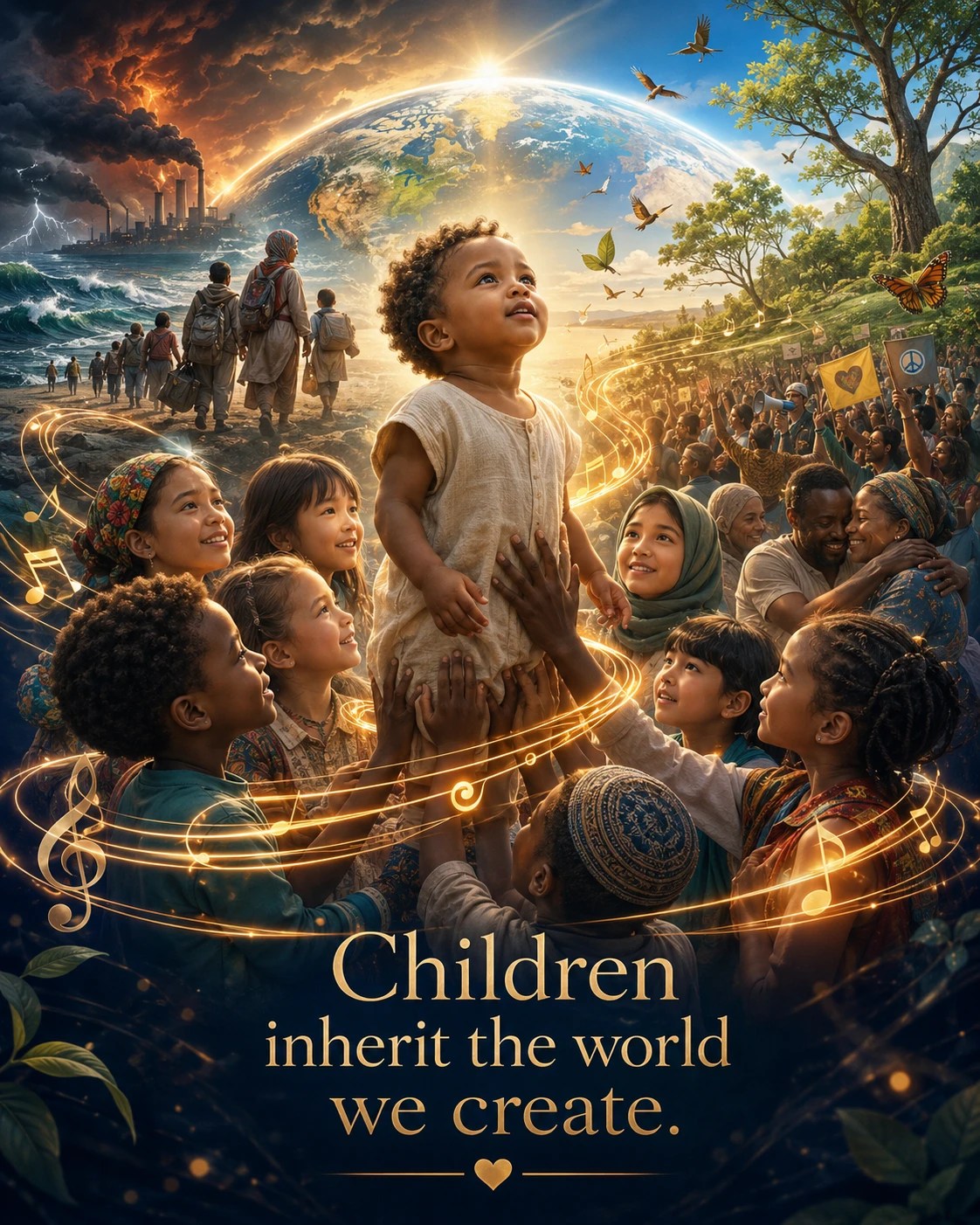
Music has always had the power to cross borders, languages, and identities. Few songs demonstrate that more clearly than “7 Seconds,” the 1994 collaboration between Senegalese singer Youssou N’Dour and Neneh Cherry. More than three decades later, the song remains striking because its message begins with something almost impossibly simple: a child enters the world before society has taught that child its divisions, prejudices, fears, and hierarchies.
That idea makes “7 Seconds” more than a memorable international hit. It is an anti-racist song about innocence, shared humanity, and the world adults create around children. In 2026, its central question feels just as urgent: what kind of world are we teaching the next generation to accept—and what kind of world are we willing to build for them?
A Fusion of Cultures and Voices
Youssou N’Dour is one of Senegal’s most internationally recognized musicians and a central figure in the development and global reach of mbalax, a Senegalese style that combines local rhythmic traditions with influences from across Africa and beyond. Neneh Cherry brought a different but equally layered musical history: born in Stockholm to a Swedish mother and a Sierra Leonean father, she later became deeply involved in Britain’s punk, post-punk, hip-hop, and alternative music scenes.
Their partnership therefore represented more than a simple meeting between “Africa” and “Europe.” It brought together multiple cultural histories, family backgrounds, musical traditions, and languages. That complexity is part of what gives “7 Seconds” its enduring strength.
Source: AllMusic – Youssou N’Dour biography | The Guardian – Neneh Cherry interview/background
The Meaning Behind “7 Seconds”
The title refers to the first moments of a child’s life. Neneh Cherry later explained that the idea was about those earliest moments, before a child knows about the problems and violence of the world. The song developed from an explicitly anti-racist collaboration, and its lyrics confront the ways prejudice and division are imposed onto human beings rather than carried into the world at birth.
That distinction matters. The song is not claiming that injustice disappears if we simply “see everyone the same.” Instead, it points toward the tragic contrast between a newborn’s innocence and the racial, social, political, and economic systems that children eventually encounter. The responsibility belongs to the world that receives them.
Source: The Independent – Story of the Song: “7 Seconds”
A Global Success
“7 Seconds” became a major international success. The song was performed in Wolof, French, and English, a multilingual choice that reinforced its global character rather than forcing its message into a single language. In the United Kingdom, it eventually reached No. 3 on the Official Singles Chart and remained in the Top 100 for 27 weeks.
Its commercial success helped carry an anti-racist message across national boundaries at a scale few multilingual songs achieve. The song’s melody is restrained rather than triumphant, which gives the words space to carry the emotional weight.
Source: Official Charts – “7 Seconds” chart history | The Independent – recording, languages, and international impact
The Power of Collaboration
The voices of N’Dour and Cherry do not erase their differences; they work because those differences remain audible. N’Dour’s soaring, deeply expressive vocal style and Cherry’s grounded, intimate delivery create a conversation rather than a competition. The result mirrors the message of the song itself: unity does not require sameness.
That may be one of the most useful lessons “7 Seconds” still offers. Cooperation across cultures is strongest when people are not asked to abandon their histories, identities, or perspectives, but instead bring them into a shared effort.
A Legacy Beyond the Song
N’Dour’s public life has extended far beyond music. He has been associated with humanitarian and civic work, served as a UNICEF Goodwill Ambassador, and later held government roles in Senegal. His career demonstrates how cultural influence can move beyond entertainment and become part of public life, social responsibility, and international dialogue.
Source: UNICEF – Goodwill Ambassadors and alumni | AllMusic – Youssou N’Dour biography
Why This Song Belongs in Our Five Emergencies Conversation
“7 Seconds” was not written as a climate song, and we should not rewrite the artists’ intention. But its child-centered message gives us a powerful moral lens for thinking about the Five Emergencies. A newborn did not create any of these crises. Children inherit them.
- Climate Emergency: Children are born into a changing climate shaped largely by decisions made before they had any voice in them.
- Ecological Emergency: They inherit damaged or protected ecosystems, disappearing or recovering species, polluted or restored landscapes—depending on what adults choose to do.
- Democracy-Based Emergency: Children grow into political systems they did not design. Whether those systems protect truth, participation, rights, and accountable government will shape their futures.
- Humanity-Centered Emergency: This is the song’s most direct connection. Racism, prejudice, poverty, dehumanization, and exclusion are not burdens children should be taught to accept as normal.
- Climate Refugee Emergency: Children displaced by climate impacts, disasters, or instability can quickly be reduced to categories, borders, and labels. “7 Seconds” reminds us to see the child before the label.
Seen through this lens, the Five Emergencies are also a question of intergenerational responsibility. What are we placing into the hands of children after those first moments of life: fear or security, division or solidarity, collapse or resilience, indifference or care?
A Song for the Ages—and for the Next Generation
Thirty-two years after its release, “7 Seconds” still carries a message that feels unfinished. Humanity continues to struggle with racism, inequality, violence, displacement, ecological decline, and a climate crisis that will shape the lives of today’s children long after many of us are gone.
The song does not give us a policy plan or a technical solution. It gives us something more elemental: a reminder of who we were before society taught us to divide one another, and a challenge to decide what we will teach the generations that follow.
Perhaps that is why “7 Seconds” still resonates. It asks us to remember that every child begins with a future that has not yet been written—and that the world surrounding that child is, in no small part, our responsibility.
Video Source
Youssou N’Dour – “7 Seconds” ft. Neneh Cherry (YouTube)
Research note: This article was independently researched and is not a summary or transcription of the video.

