COP, Three Decades of Climate Diplomacy, and the Road to Antalya
Global climate talks. Real-world consequences.
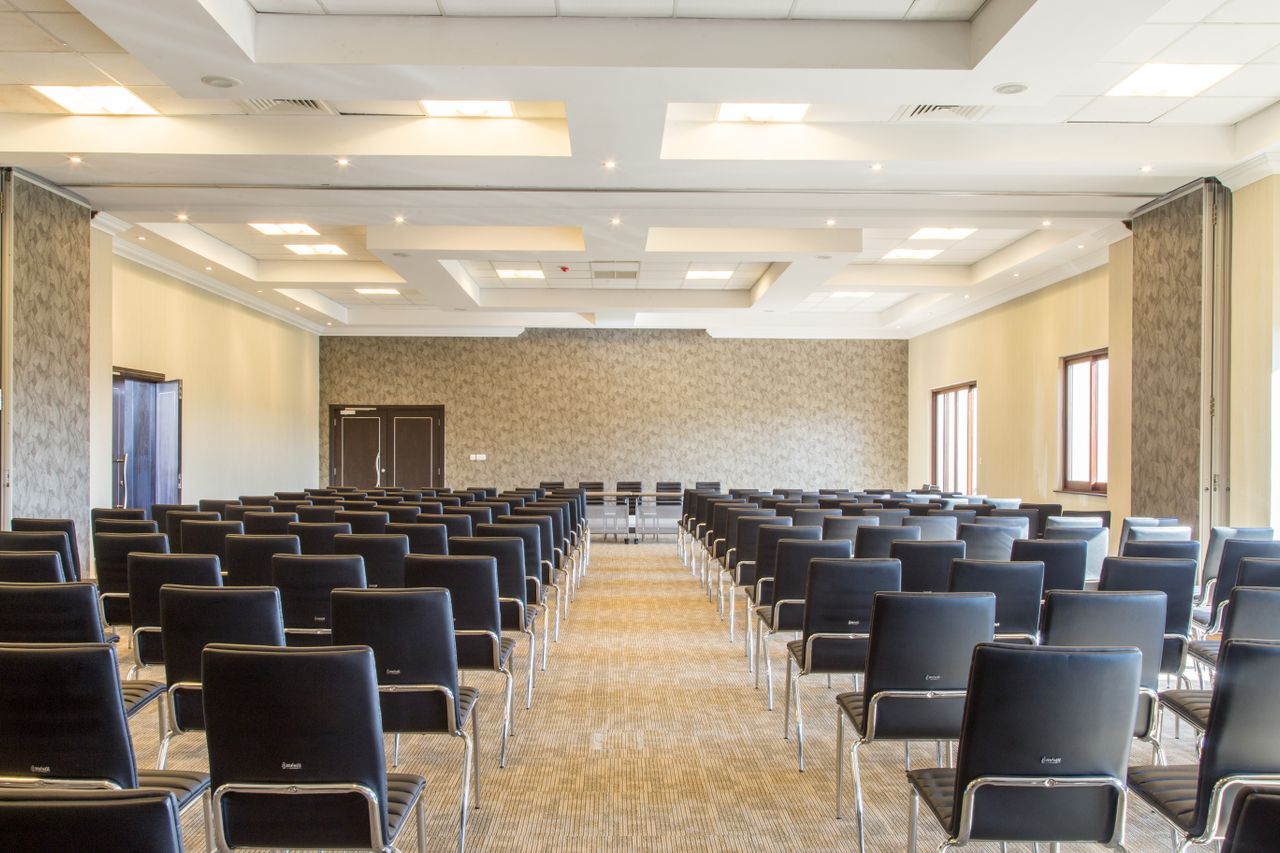
On November 9, 2026, delegations from nearly every nation on Earth will file into the Antalya EXPO Center on Türkiye’s Mediterranean coast for COP31, the thirty-first United Nations climate summit. For two weeks, ministers and negotiators will argue over finance, fossil fuels, adaptation, and the fine print of promises made in earlier years. Outside the conference halls, much of the world will hardly notice.
That gap between the negotiating room and everyday life is exactly why this post exists. COP decisions shape the price and source of our energy, the money available to protect coastlines and farms, the rights of Indigenous and frontline communities, and the pace at which the world moves away from the fuels heating the planet. They also shape something harder to measure: whether ordinary people still believe international cooperation can work. What follows is a plain-language guide to what COP is, how it got here, who is crowding into the room, and where the process is heading.
What COP Actually Is
COP stands for Conference of the Parties. It is the supreme decision-making body of the United Nations Framework Convention on Climate Change (UNFCCC), the treaty adopted at the 1992 Earth Summit in Rio de Janeiro and in force since 1994. The “Parties” are the governments that have joined the treaty, 198 in all (197 countries plus the European Union). The number after the name simply counts the sessions: COP1 met in Berlin in 1995, COP21 produced the Paris Agreement in 2015, and COP31 is the thirty-first gathering.
A modern COP is really several meetings sharing one venue. Alongside the COP itself, governments meet as the CMA, the body that governs the Paris Agreement, and as the CMP, which still oversees the older Kyoto Protocol. Two technical bodies prepare much of the groundwork, meeting every June in Bonn, Germany, and again during the summit. COP is best understood not as a single annual event but as the most visible moment in a diplomatic process that never really stops.
Only national governments make the decisions. Scientists, Indigenous Peoples, youth groups, local officials, journalists, businesses, and advocacy organizations attend as accredited observers. They can speak at some sessions, host side events, and lobby delegates, but the final text belongs to the Parties. Because the UNFCCC has never adopted formal voting rules, decisions are taken by consensus. That gives every outcome broad legitimacy, but it also means a small number of determined governments can water down or stall language most of the world supports. It is the single most important fact for understanding why COP outcomes so often feel like lowest-common-denominator compromises.
The summits have also grown enormous. Dubai’s COP28 drew roughly 85,000 participants, and the UNFCCC now describes its conferences as the largest annual meetings the United Nations convenes.
Why the Words Matter
In COP texts, a single verb can carry years of struggle. “Shall” creates an obligation; “should” expresses an expectation; “urges,” “encourages,” and “invites” descend from there into polite suggestion. “Phase out” means ending something, “phase down” means reducing it, and “transition away” describes a direction without a deadline. When negotiators fight past midnight over one word, they are fighting over how much accountability a promise will carry once the cameras leave.
A Brief History: Three Decades at the Table
Before the First Gavel
The scientific alarm came well before the diplomacy. The 1972 Stockholm Conference put the environment on the UN agenda, the first World Climate Conference met in Geneva in 1979, and the Intergovernmental Panel on Climate Change (IPCC) was created in 1988 to give governments a shared scientific foundation. Its first assessment in 1990 helped push nations to negotiate the UNFCCC, which opened for signature at Rio in 1992 with a clear objective: prevent dangerous human interference with the climate system. The treaty also enshrined a principle that still drives today’s arguments, “common but differentiated responsibilities,” recognizing that the nations that industrialized first carry greater responsibility and greater capacity to act.
Berlin to Kyoto (1995–2005)
The first COP met in Berlin in 1995, chaired by Germany’s then environment minister, Angela Merkel, and concluded that the commitments industrialized nations had made so far were inadequate. Two years later, COP3 produced the Kyoto Protocol, which set binding emissions targets for industrialized countries only. Kyoto was a landmark, but a fragile one. The United States signed it and never ratified it, and the protocol did not enter into force until 2005. Its top-down, rich-countries-first design would shape, and eventually limit, much of what followed.
Bali, Copenhagen, and Hard Lessons (2007–2014)
My own climate awakening dates to February 2007, when the IPCC released its Fourth Assessment Report and the scientific case became impossible for me to ignore. That December, COP13 in Bali adopted a road map aimed at a new global deal by 2009. The deal did not arrive. COP15 in Copenhagen collapsed into acrimony, and the last-minute Copenhagen Accord was merely “taken note of” rather than adopted. Still, it carried a pledge from wealthy nations to mobilize 100 billion dollars a year in climate finance for developing countries by 2020, a goal the OECD later reported was first met in 2022, two years late.
The following years rebuilt the architecture piece by piece. Cancún (2010) created the Green Climate Fund. Durban (2011) launched talks toward an agreement covering all countries, not just the industrialized ones. Warsaw (2013) established the first formal mechanism on loss and damage, the harms that cannot be prevented through emissions cuts or adaptation.
Paris and the Rulebook Years (2015–2021)
COP21 in Paris changed the model. Instead of assigning targets from the top, the Paris Agreement asks every country to set its own climate plan, a Nationally Determined Contribution (NDC), and to strengthen it every five years. The collective goal is to hold warming well below 2°C while pursuing efforts to limit it to 1.5°C, with a Global Stocktake every five years to measure how far the world still has to go. The agreement entered into force in November 2016, faster than almost anyone expected.
The next several years were spent writing the operating manual. Katowice (2018) adopted most of the Paris rulebook. Glasgow (2021), delayed a year by the pandemic, produced the first COP decision to name coal, though a last-minute intervention changed “phase-out” to “phase-down” of unabated coal power, and the summit’s president apologized from the podium for how the ending unfolded.
Money, Loss, and the Word “Fossil” (2022–2025)
Sharm el-Sheikh (2022) delivered a long-fought victory for vulnerable nations: agreement to create a dedicated fund for loss and damage. Dubai (2023) put that fund into operation on the summit’s opening day and concluded the first Global Stocktake with a call for “transitioning away from fossil fuels in energy systems, in a just, orderly and equitable manner,” alongside goals to triple renewable energy capacity and double the rate of energy-efficiency improvement by 2030. It was the first time a COP decision called on the world to move away from all fossil fuels, not just coal.
Baku (2024) set a new collective climate finance goal of at least 300 billion dollars a year by 2035, with a call to scale total flows toward 1.3 trillion dollars. Many developing countries condemned the core figure as far too little. Belém (2025), the first COP held in the Amazon region, was billed as the “implementation COP.” It closed a day late with a package called the Global Mutirão, a Tupi-Guarani word for people working together toward a shared goal. The package calls for tripling adaptation finance by 2035, adopted 59 indicators to track the global goal on adaptation, launched a Belém Mission to 1.5 and a Global Implementation Accelerator, and agreed to develop a new mechanism for a just transition. What it did not include was any roadmap for moving away from fossil fuels, even though more than 80 countries pushed for one.
COP Milestones at a Glance
| Year | Meeting | What changed |
| 1995 | COP1, Berlin | First COP; agreed industrialized nations’ existing commitments were inadequate |
| 1997 | COP3, Kyoto | Kyoto Protocol sets binding targets for industrialized countries |
| 2007 | COP13, Bali | Bali Road Map toward a new global deal |
| 2009 | COP15, Copenhagen | Accord noted, not adopted; $100 billion-a-year finance pledge |
| 2010 | COP16, Cancún | Green Climate Fund created |
| 2013 | COP19, Warsaw | First formal mechanism on loss and damage |
| 2015 | COP21, Paris | Paris Agreement: well below 2°C, pursue 1.5°C, national plans, five-year cycles |
| 2018 | COP24, Katowice | Most of the Paris rulebook adopted |
| 2021 | COP26, Glasgow | First COP decision to name coal; “phase-down” wording |
| 2022 | COP27, Sharm el-Sheikh | Agreement to create a loss and damage fund |
| 2023 | COP28, Dubai | First Global Stocktake; call to transition away from fossil fuels |
| 2024 | COP29, Baku | Climate finance goal of $300 billion a year by 2035 |
| 2025 | COP30, Belém | Global Mutirão; tripling adaptation finance; no fossil fuel roadmap |
| 2026 | COP31, Antalya | Türkiye presides, Australia leads negotiations (Nov 9–20) |
| 2027 | COP32, Addis Ababa | Ethiopia hosts (Nov 8–19) |
The Crowded Room: Corporate Influence at the Climate Talks
In recent years, participants and observers have raised the same alarm again and again: the industries most responsible for the climate emergency have become some of the best-represented voices at the talks meant to address it. The evidence supports the concern, and it now reaches well beyond oil and gas.
Fossil Fuels by the Numbers
Each year, the Kick Big Polluters Out coalition, a network of more than 450 organizations, combs through the official participant lists name by name. It counted 2,456 fossil fuel lobbyists at COP28 in Dubai and 1,773 at COP29 in Baku. At COP30 in Belém it found 1,602. Overall attendance was smaller, so that meant roughly one in every 25 participants was tied to the oil, gas, or coal industry, the highest share since the coalition began tracking in 2021. Those lobbyists outnumbered every national delegation except host Brazil’s, and they received about two-thirds more passes than the delegates of the ten most climate-vulnerable nations combined. At least 164 of them entered on government badges, which can bring them closer to the negotiations themselves.
A separate analysis by the Center for International Environmental Law identified 531 lobbyists promoting carbon capture and storage at COP30, a technology critics say is often used to justify continued fossil fuel production. Across the last five summits, roughly 7,000 fossil fuel lobbyists have been accredited.
When the Host Is Also the Industry
The concern is not only about who attends, but about who presides. COP28 was led by Sultan Al Jaber, who was at the same time chief executive of the UAE’s national oil company, ADNOC. Leaked briefing documents suggested the presidency planned to raise commercial energy deals in meetings with other governments, which Al Jaber denied. The following year, an undercover investigation by Global Witness recorded Elnur Soltanov, the chief executive of COP29 and Azerbaijan’s deputy energy minister, discussing oil and gas investment opportunities with investigators posing as a fossil fuel investment firm interested in sponsoring the summit. The COP29 team also appeared willing to relax the climate commitments normally required of sponsors. It was the second consecutive year a host presidency faced accusations of using the world’s climate summit to advance fossil fuel business.
Big Agriculture Joins the Queue
Industrial agriculture, including factory farming, has followed the same path. A joint investigation by DeSmog and The Guardian found 302 lobbyists for industrial agriculture at COP30, representing meat and dairy, pesticides, fertilizers, commodity trading, and food processing. That was 14 percent more than at COP29, about 71 percent more than at COP27, and larger than Canada’s entire delegation. Meat and dairy corporations formed the largest bloc. Pesticide maker Bayer brought 19 delegates, the most of any single company, and meatpacker JBS, the world’s largest beef producer, brought eight, including its chief executive. About one in four of these agribusiness lobbyists attended as part of an official national delegation. Brazilian media also reported that the host government granted the billionaire brothers who control JBS access to the Blue Zone, the restricted area where negotiations take place.
This matters because agriculture accounts for roughly a quarter to a third of global greenhouse gas emissions, and cattle ranching is the leading driver of deforestation in the Amazon, the very region that hosted COP30. Friends of the Earth US has calculated that the combined emissions of the 45 largest meat and dairy companies rival those of Saudi Arabia. Some agribusiness delegations also promoted an alternative way of counting methane that critics say allows large livestock producers to downplay their climate impact.
Why It Matters, and What Is Changing
The UNFCCC has a code of conduct but no formal conflict-of-interest policy. Civil society pressure has produced some progress. Since COP28, participants have had to declare their affiliations, and COP30 was the first summit where all non-government participants were expected to disclose who funds their attendance and affirm that their goals align with the treaty’s. Campaigners want far more: a binding accountability framework that keeps polluting industries from writing the rules, an end to corporate sponsorship of the talks, and stricter standards for host countries. Many point to the World Health Organization’s tobacco treaty, which explicitly shields public health policy from tobacco industry interference, as a proven model.
The call for reform has reached the process’s own elders. In November 2024, more than twenty former leaders and scientists, including former UN Secretary-General Ban Ki-moon, former UNFCCC chief Christiana Figueres, and former Irish President Mary Robinson, published an open letter declaring COP “no longer fit for purpose” in its current form. They urged strict eligibility criteria to exclude host countries that do not support moving away from fossil energy, along with smaller, more frequent, solution-focused meetings. Figueres later stressed that she still considers the COP process essential and irreplaceable.
There is another side to this debate worth hearing. Some argue that energy, food, and finance companies control much of the capital and technology the transition requires, and that engaging them inside the process beats negotiating around them. The question for our community is not whether businesses should ever be part of the conversation. It is whether the industries with the most to lose from climate action should enjoy outsized access to the room where that action is decided, while the most climate-vulnerable nations arrive with far smaller delegations.
Where COP Is Heading
The Road to Antalya
COP31 runs from November 9 to 20, 2026, at the Antalya EXPO Center under an unusual shared arrangement. Türkiye hosts and holds the presidency, with Environment Minister Murat Kurum serving as COP President, while Australia, through Climate Change and Energy Minister Chris Bowen, leads the formal negotiations. Australia is staging a Pacific pre-COP in Fiji from October 5 to 8, including a leaders’ event in Tuvalu intended to show world leaders the damage already unfolding across the Pacific. In another break with tradition, the World Leaders’ Summit will take place on November 11 and 12, the third and fourth days of the conference, rather than at the opening.
The Turkish presidency has organized its Action Agenda around ten themes with measurable 2035 targets, from zero waste, oceans, and food security to resilient cities, clean energy, green industrialization, and health systems, and it is championing a global push for electrification. On the formal agenda, governments will take up next steps on the just transition mechanism agreed in Belém, adaptation, loss and damage, carbon markets, and delivery of the finance goal, all while assessing the new 2035 national climate plans. Countries also face a December 31, 2026 deadline for their second Biennial Transparency Reports, the Paris Agreement’s main tool for checking whether governments are doing what they say.
Fossil fuels remain the unresolved center of gravity. Because Belém’s formal text omitted a roadmap, the Brazilian COP30 presidency committed to prepare one on its own authority and presented its key elements in Bonn in June, with the finished version due before COP31. Brazil describes it as a shared knowledge base and a set of options, not a negotiated plan with national targets or timelines. Meanwhile, nearly 100 civil society groups from Türkiye and Australia have urged both governments to lead by example. They note that coal still supplies about a third of Türkiye’s electricity, with new coal units still planned, and that Australia ranks as the world’s third-largest fossil fuel exporter. Neither country has yet adopted a national roadmap for winding down fossil fuels.
The Gap the Science Keeps Measuring
The negotiations are chasing a moving target. The UN Environment Programme’s 2025 Emissions Gap Report found that fully implementing current national pledges would still put the world on course for 2.3 to 2.5°C of warming this century, and current policies alone for about 2.8°C. Global emissions grew 2.3 percent in 2024, reaching 57.7 billion tonnes of carbon dioxide equivalent. Staying on a 1.5°C pathway would require annual emissions 55 percent below 2019 levels by 2035. UNEP warns that exceeding 1.5°C is now very likely within the next decade, which makes the speed of every decision in Antalya more consequential, not less.
A Fractured Table
The geopolitical ground has shifted. The United States, the largest historical emitter, sent no official delegation to Belém. Its second withdrawal from the Paris Agreement took effect on January 27, 2026, and on January 7, 2026, the administration announced it would also leave the UNFCCC itself, along with the IPCC, a step no country has ever taken. Withdrawal from the treaty takes effect one year after formal notice. Aid cuts by major donors have also squeezed public climate finance, even though developed countries reported a record 136.7 billion dollars in climate finance for 2024.
The strain showed at the June 2026 intersessional talks in Bonn, which ended with few tangible results. Negotiators deadlocked over adaptation and finance, and UN climate chief Simon Stiell warned against “you-first-ism,” in which groups refuse to move until others commit first. The first formal dialogue on climate and trade, created in Belém, did at least open in a pragmatic spirit.
Coalitions of the Willing
Frustration with consensus is pushing ambition into new venues. In April 2026, Colombia and the Netherlands co-hosted the First Conference on Transitioning Away from Fossil Fuels in Santa Marta, a Colombian coal-export city. Fifty-seven countries representing about a third of the world economy took part, against a backdrop of war and a global oil crisis, and left with plans to develop national roadmaps away from coal, oil, and gas, along with new tools to address harmful subsidies and carbon-intensive trade. The final outcome report, released in June, acknowledged that existing multilateral forums have not yet produced sufficiently practical instruments for the transition and recorded interest in exploring a dedicated international mechanism, an opening that supporters of a Fossil Fuel Treaty have welcomed. A second convening, led by Pacific nations, is expected to follow. During the Bonn talks, several countries pointed to Santa Marta as proof that the climate regime can evolve through coalitions that refuse to wait.
The Law Is Catching Up
On July 23, 2025, the International Court of Justice, the UN’s highest court, delivered a unanimous advisory opinion on the climate obligations of states, a case that began with Pacific Island law students and was championed by Vanuatu. The court treated 1.5°C as the primary temperature goal and found that a state’s failure to protect the climate system, including through fossil fuel production, consumption, exploration licensing, or subsidies, may constitute an internationally wrongful act, potentially opening the door to reparations. Although advisory, the opinion hands negotiators, courts, and communities a powerful reference point: climate commitments are legal obligations, not merely political gestures.
Beyond Antalya
Ethiopia will host COP32 in Addis Ababa from November 8 to 19, 2027, placing African priorities on adaptation and finance at center stage. The second Global Stocktake runs through that summit and culminates at COP33 in India in 2028, setting up the next major test of whether national plans add up. Reform of the process itself will most likely arrive in increments rather than overhauls. Scholars note that sweeping changes are hard to win under consensus rules, so the most realistic avenues are procedural fixes negotiated under the UNFCCC’s standing agenda item on arrangements for intergovernmental meetings, combined with better practices by successive presidencies.
What This Means for Our Community
At Climate Change Community, we frame our work around Five Emergencies: Climate, Ecological, Humanity, Democracy, and Displacement. COP touches every one of them. Emissions decisions shape the Climate Emergency. Choices about forests, oceans, and food systems shape the Ecological Emergency. Finance, adaptation, and loss and damage determine whether the Humanity Emergency is met with solidarity or neglect. The question of who gets into the room, and whose money pays for it, is the Democracy Emergency in miniature. And every sea-level projection and disaster statistic discussed in those halls is, in the end, a story about people forced from their homes.
Adaptive Resiliency asks us to meet global decisions with local competence. As COP31 approaches, here are four ways to follow along with clear eyes.
Watch the verbs. When the final text appears, look for “shall” versus “should,” and for deadlines versus aspirations. The strength of a promise lives in its grammar.
Follow the money. Ask whether finance is new or recycled, grants or loans, and whether it actually reaches the communities that need it most.
Count who is in the room. New lobbyist tallies will be published during COP31. Compare them with the size of delegations from the most climate-vulnerable nations.
Bring it home. Global targets mean nothing without local delivery. Here in New York, that means asking how the Climate Leadership and Community Protection Act and Local Law 97 are performing. Wherever you live, it means asking your own officials what their climate plans are actually delivering.
Our COP & Global Negotiations space is built for exactly this work: a Road to COP31 series, COP Explained primers, Negotiation Watch updates during the summit, a Climate Justice Lens centered on frontline communities, Promises vs. Progress tracking, and After the Gavel analysis once the decisions are made. Bring your questions, your sources, and your healthy skepticism. Diplomacy works best when people are watching.
Thirty-one summits in, the verdict on COP is not yet written. It has built the architecture of global climate cooperation, and it has repeatedly fallen short of the speed that science demands. What happens next depends partly on negotiators in Antalya, partly on coalitions acting beyond them, and partly on whether the public insists that promises become policy. Delay is a decision. So is paying attention.
Global climate talks. Real-world consequences.
Compiled & Mr. Alvarez’s Thoughts | AI Enhanced.
A note on method: I use artificial intelligence to enhance my creativity and thinking, not to replace either one. The questions, the convictions, and the responsibility for what is said here remain mine. AI helps me research faster, organize what I have learned, test my reasoning, and say it more clearly, which is exactly the kind of practical, human-centered use of these tools that our work is meant to model.
#COP #COP31 #ConferenceOfParties #UnitedNations #UNFCCC #ParisAgreement


Leave a Reply