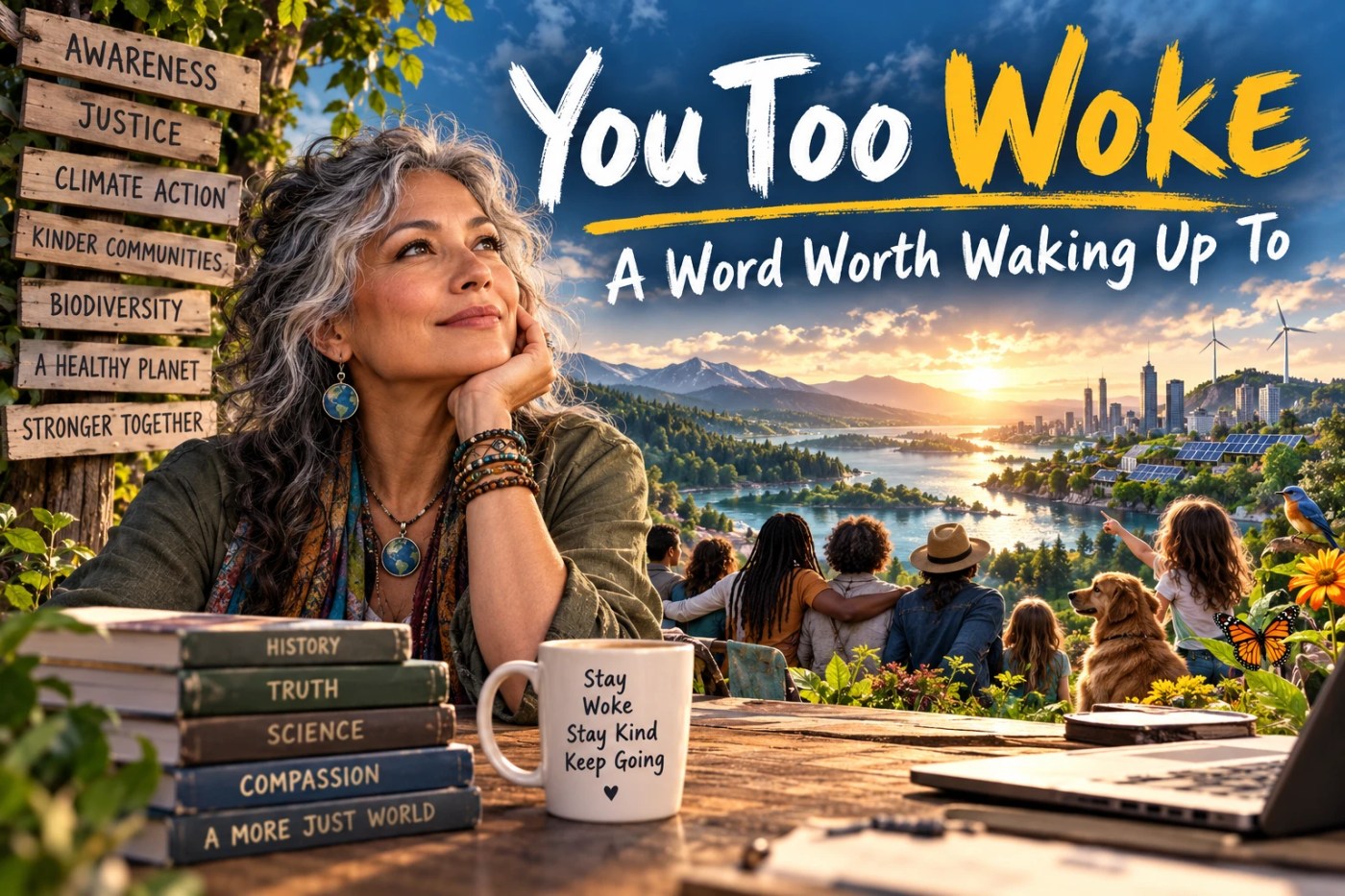
A few weeks ago, a woman walked up to me, said “You too woke,” and walked away. No conversation, no explanation. Just a label, delivered and left behind like a note on a windshield.
I shrugged it off at the time. But ever since, I hear that word everywhere: in political speeches, on the news, in comment sections, at the dinner table. So I did what I try to do with anything that keeps showing up in my life. I went and learned about it.
Where “Woke” Comes From
“Woke” did not start as an insult. It grew out of African American Vernacular English, where “stay woke” meant stay alert, stay aware, and do not let anyone lull you to sleep about the dangers and injustices around you. In the late 1930s, the blues musician Lead Belly used the phrase while singing about the Scottsboro Boys, nine Black teenagers falsely accused in Alabama, as a warning to stay watchful.
In 1962, novelist William Melvin Kelley brought the word to the pages of The New York Times. Decades later, Erykah Badu’s refrain “I stay woke” gave it new life, and after 2014 it spread widely through the Black Lives Matter movement. For most of its history, being woke was a compliment. It meant you were paying attention.
How a Compliment Became an Insult
Over the last decade, the word drifted. As it went mainstream, it got stretched to cover almost anything: diversity programs, school curricula, corporate ads, climate policy, even what people eat. Politicians across the U.S. and abroad began using “woke” as a catch-all for ideas they oppose, and today it is often thrown as a quick put-down rather than a point to debate.
That is the real problem with “you too woke” as a sentence. It does not tell you what you got wrong. It ends a conversation instead of starting one.
The Case for Staying Woke
If woke means awake, informed, and willing to see hard truths, then I will make the case for it, especially when it comes to the Climate and Ecological Emergency.
Being awake means looking at the science even when it is frightening. It means noticing that the communities hit first and hardest by heat, flooding, and displacement are often the ones that did the least to cause the crisis. It means caring about the children who will inherit what we leave behind and about the biodiversity that cannot speak for itself. None of that is a fashion. It is paying attention.
The opposite of awake is asleep. And this is not a moment we can afford to sleep through.
What the Critics Say
To be fair, not everyone who uses the word is simply hostile. Some critics, including people on the left and center, argue that certain activism has become preachy, quick to shame, or more focused on correct language than on real results, and that this can push away the very people a movement needs. Others say “woke” now means so many different things that it is useless on both sides of the argument. Those concerns deserve a hearing, because a movement that cannot hear criticism is not really awake either.
A Note to Myself
Here is where I have to hold up a mirror. When that woman spoke to me, I assumed I knew her politics. I did not. I do not know what she meant, what she has lived through, or what she saw in me that day. Maybe it was dismissal. Maybe it was a challenge. Maybe it was something else entirely.
Assuming the worst about someone in a single moment is exactly the kind of sleepwalking I want to avoid. Staying woke has to include staying curious about people who see the world differently, because climate resilience will be built by neighbors who talk to one another, not by people trading labels.
So yes, I am awake. And I intend to stay that way, with my eyes open and my door open too.
Read posts at climatechangecommunity.com
Protecting our Children & Biodiversity’s future towards a more sustainable and habitable Earth!
Compiled & Mr. Alvarez’s Thoughts | AI Enhanced.
Note: Artificial intelligence was used to enhance my creativity and thinking in preparing this post.


Leave a Reply